

- 🏨 Announcement · global expansion of the partnership between InterContinental and Timeshifter
- 📅 Date · 26 August 2026, the year of the brand’s 80th anniversary
- 🌍 Reach · 242 hotels in nearly 70 countries
- 📱 Access · complimentary for all guests, via QR code
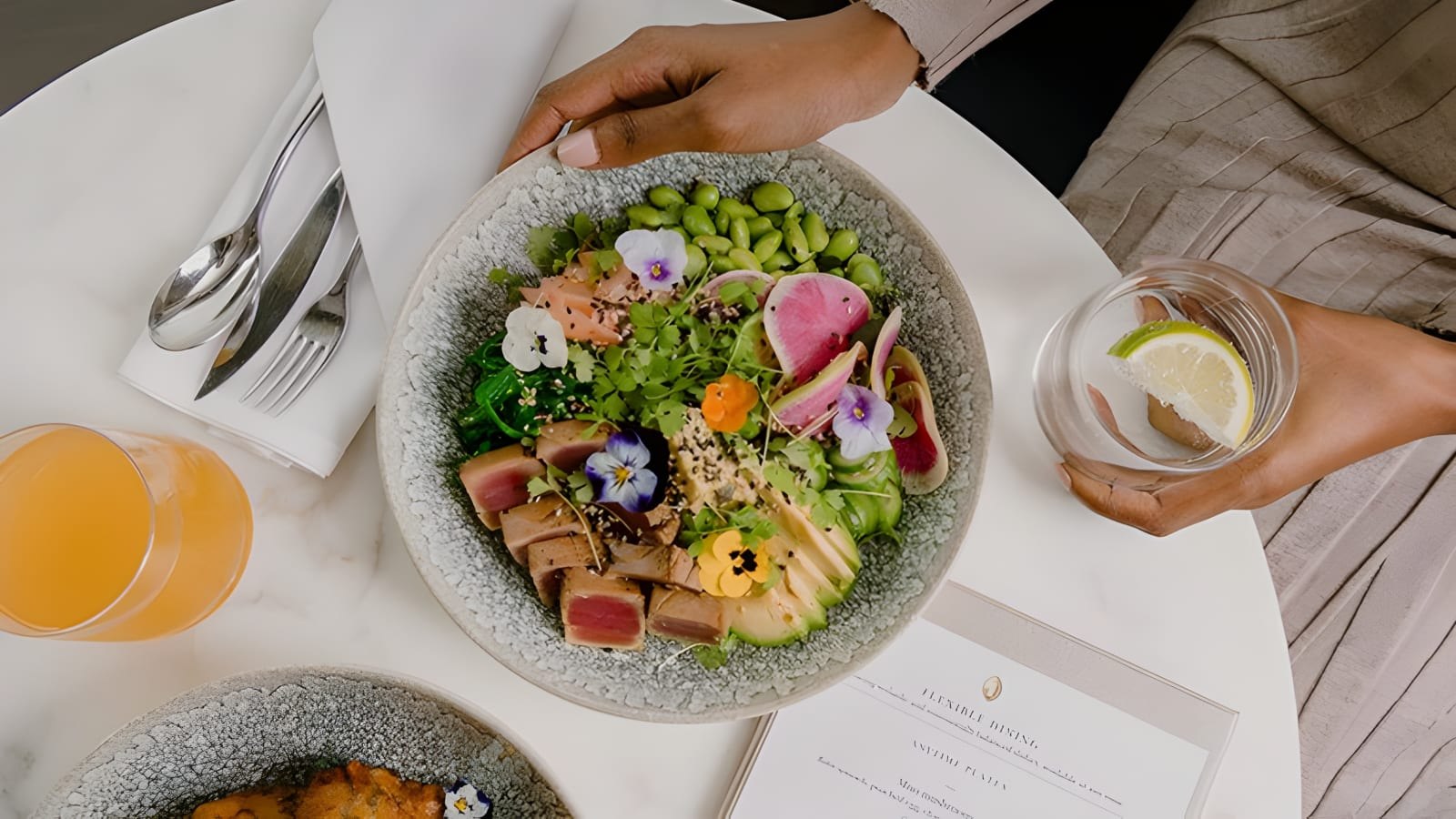
- 🍜 Dining · Nourish Bowls and Anytime Plates added to Flexible Dining menus
- 🧪 Foundation · circadian protocols derived from space research
Jet lag is the final discomfort that luxury hospitality had yet to address. We know how to remedy an overly warm room, a delayed flight, a missed dinner. We never knew what to do with a guest waking up at three in the morning. On 26 August 2026, InterContinental announced the expansion of its partnership with Timeshifter, the circadian resynchronisation app, across all 242 of its hotels.
What guests actually get
Access is free and operated via a QR code. The app creates a personalised plan based on the traveller’s chronotype, sleep habits and precise itinerary, then advises them when to seek light, when to avoid it, when to consume caffeine and when to abstain. The plan covers both outbound and return journeys, which is the true innovation: return jet lag is the one most often overlooked.
“Our partnership with Timeshifter is about putting the right technology into the hands of our guests,” summarises Tom Rowntree, Vice President of Luxury and Lifestyle Brands for the group. From the developer’s side, Mickey Beyer-Clausen, co-founder and CEO of Timeshifter, highlights the scientific rationale: “Science shows that the only way to adapt quickly to a new time zone is to reset the central circadian clock in the brain.”
| February 2024 | Partnership announced, available in ten countries |
|---|---|
| July 2024 | Wider rollout and introduction of Flexible Dining menus |
| 26 August 2026 | Extension to the entire network, representing 242 hotels |
242 hotels, nearly 70 countries
The scale of the rollout is what distinguishes this announcement from a pilot operation. The partnership began in February 2024 across a dozen countries, before expanding the following summer. It now covers the entire InterContinental network, coinciding with the brand’s 80th anniversary.
For a group whose historic flagship was born in 1946 alongside Pan Am’s long-haul routes, the symbolism is fitting. InterContinental was built around the intercontinental traveller, precisely the individual most affected by jet lag.



The most interesting aspect is on the plate
Beyond the app, the Flexible Dining menus feature Nourish Bowls and Anytime Plates, designed to support the body during hours when it shouldn’t be eating. This is where the initiative moves beyond a technological gimmick and touches the core of the hotellerie profession.
A guest arriving at dawn and feeling hungry is usually offered either breakfast or nothing at all. Creating a culinary offering indexed to biological rhythm rather than the wall clock requires a complete overhaul of kitchen schedules and supply chains. This represents a genuine operational effort, less visible than an app, and undoubtedly harder to copy.
Our perspective
Hotel wellness has generated plenty of rhetoric and very few protocols. This initiative has the merit of being verifiable: either the guest sleeps, or they do not. It is backed by established chronobiology research, and the developer cites data from approximately 130,000 post-flight questionnaires.
The open question is execution. An app accessible via QR code costs next to nothing to deploy across 242 addresses. Adapted menus, however, depend on each individual kitchen. It is on this point, rather than the technology, that commitment will be measured from one hotel to the next.