

- Where · corner of Jindřišská, in Prague’s New Town (Czech Republic)
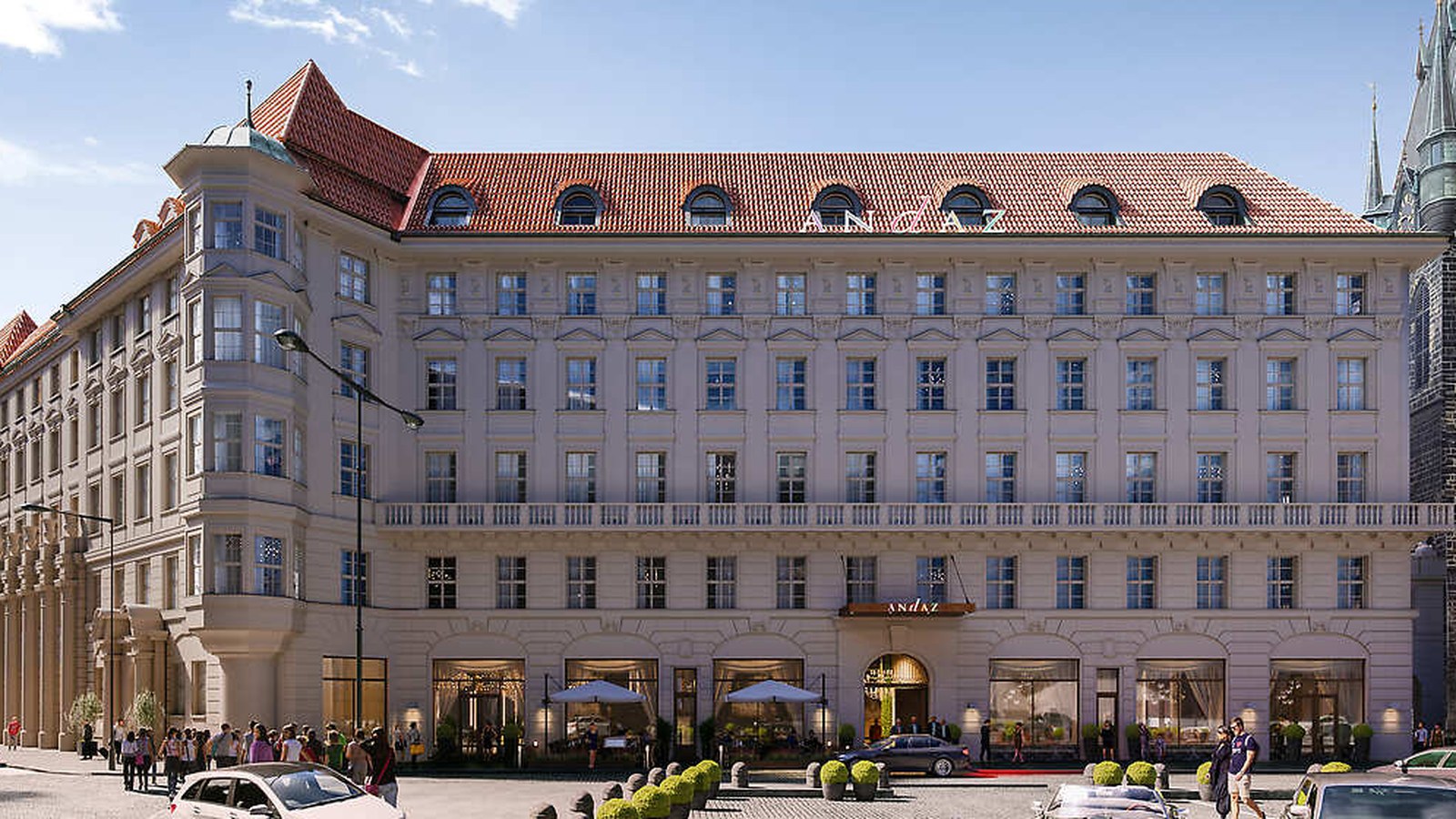
- What · the Sugar Palace, a listed 1912 monument converted into a five-star hotel
- How many · 152 rooms and 24 suites
- Who · Andaz, Hyatt’s lifestyle brand · developed by UBM Development
- Design · Madrid-based studio Brime Robbins for the interiors
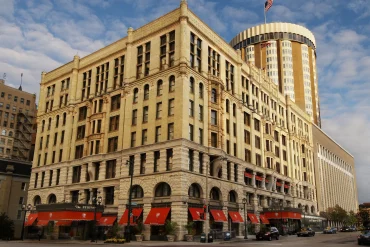
Prague has become one of Central Europe’s most competitive hotel markets, and this is where the true value of a listed building comes into play. Andaz Prague occupies the Sugar Palace, a 1912 neoclassical building protected since 1993, converted in two and a half years by developer UBM Development. The result comprises 152 rooms and 24 suites, offering proportions that no developer would build today.
1. The Sugar Palace: From insurance to hospitality
The building was erected between 1912 and 1916 by Josef Zasche and Theodor Fischer for the Sugar Industry Insurance Association. Locals quickly dubbed it the Sugar Palace, after the sector driving Bohemia’s prosperity at the time. It is adorned with monumental sculptures by German sculptor Franz Metzner.
Its geometry is what made it difficult to convert: an irregular pentagonal footprint, two inner courtyards, all backed up against the Jindřišská Tower. Listed as a historical monument by the Czech Ministry of Culture in 1993, it required working with the existing layout rather than partitioning it afresh.
2. Two and a half years for a listed monument
UBM Development completed the transformation in two and a half years, a remarkably swift timeframe for a protected building. The project demanded the restoration of period features, from soaring ceiling heights to stucco work, whilst integrating the thermal and acoustic treatments required of a five-star hotel.
It is this dual constraint that makes heritage conversions so challenging: modern hotel comfort standards do not easily fit into floors and walls that cannot legally be altered. The project was recognised with several real estate and design awards.
3. What the Andaz brand changes on arrival
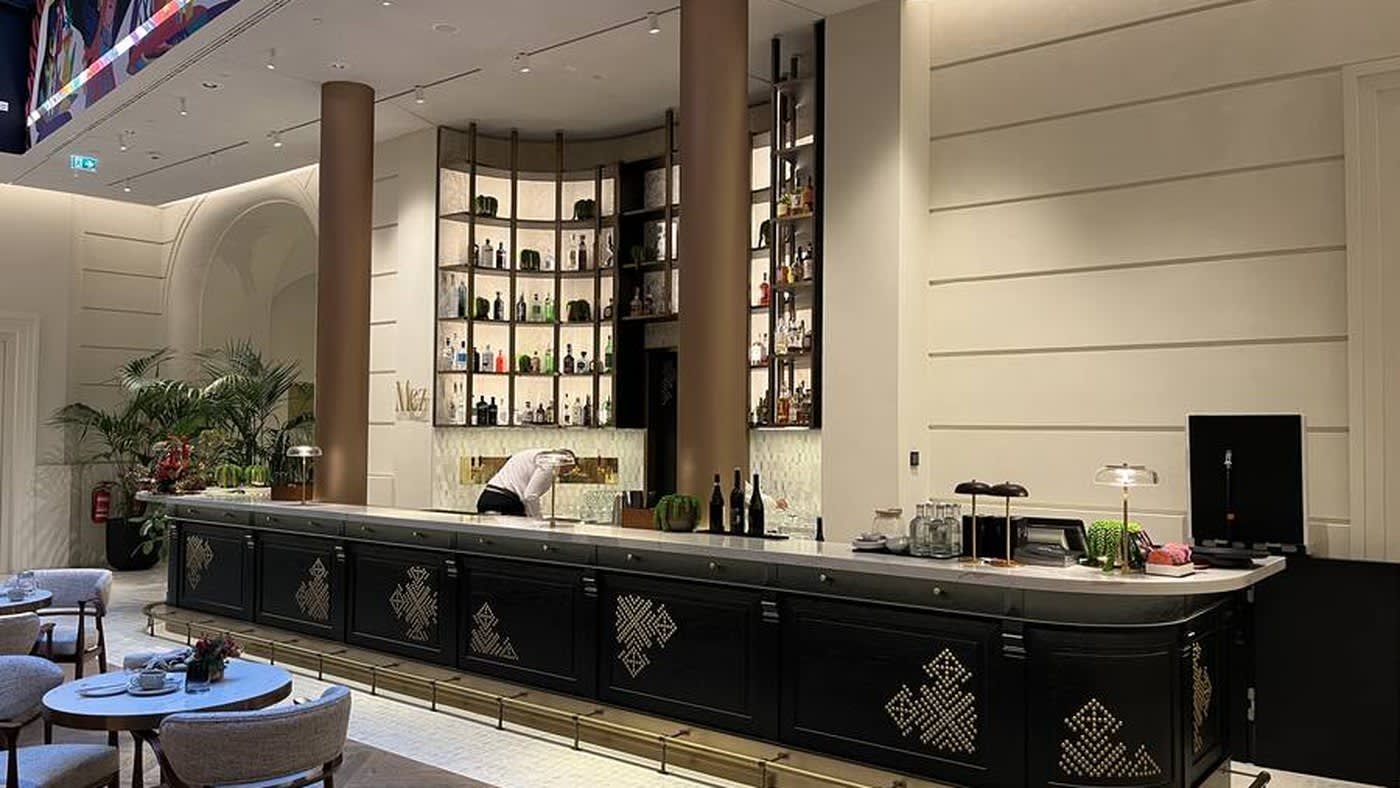
Andaz is Hyatt’s lifestyle brand, built on dismantling traditional hotel rituals. Here, the check-in desk is done away with in favour of a lounge welcome, creating no physical barrier between staff and guest.
This approach is not decorative, it is operational: it relies on teams trained to host whilst mobile, handling management tools on handheld devices. It is a choice that becomes glaringly obvious if poorly executed.

4. 152 rooms in former insurance offices
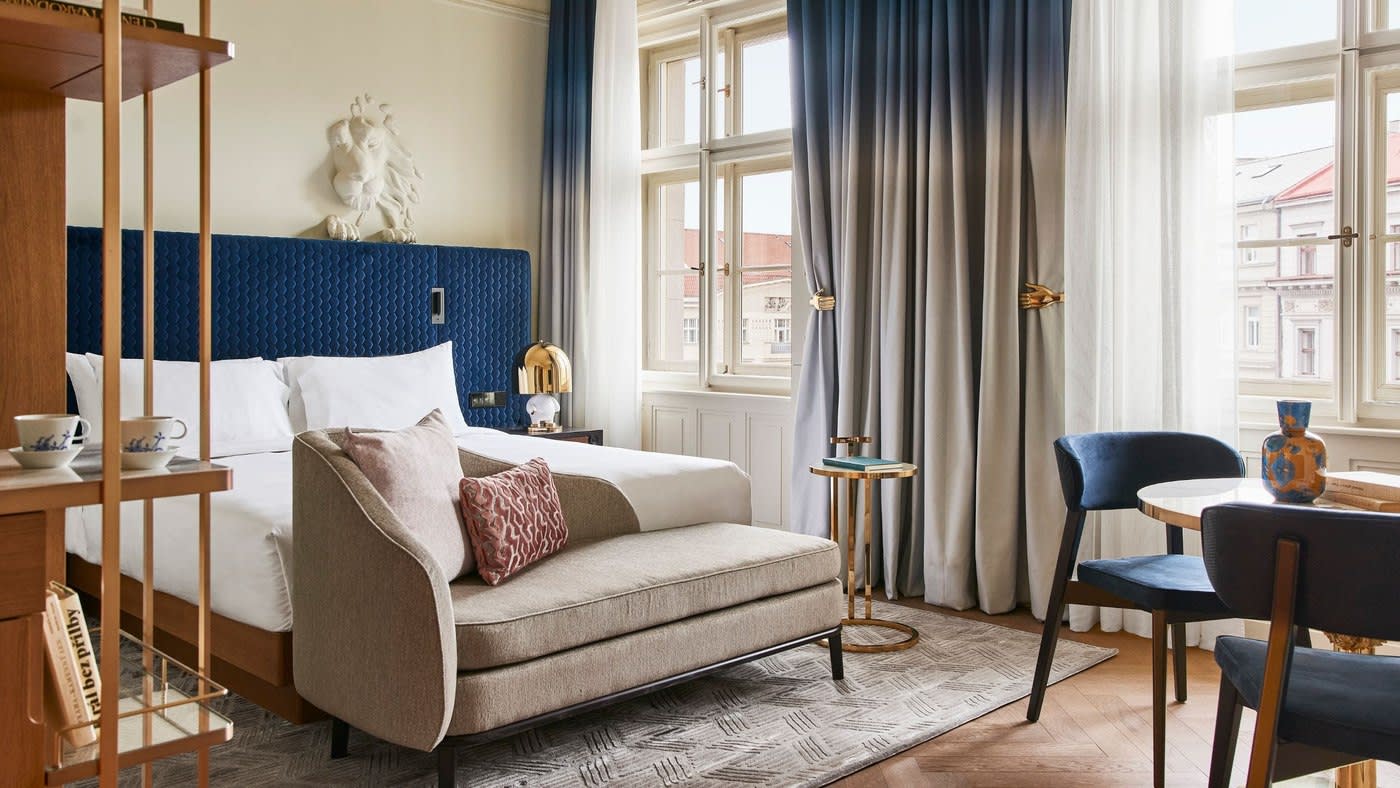
The 152 rooms and 24 suites span the former office spaces, resulting in generous proportions and non-repetitive layouts dictated by the original architecture. This is the distinct advantage of such conversions over new builds, where guest rooms are identical duplicated modules.
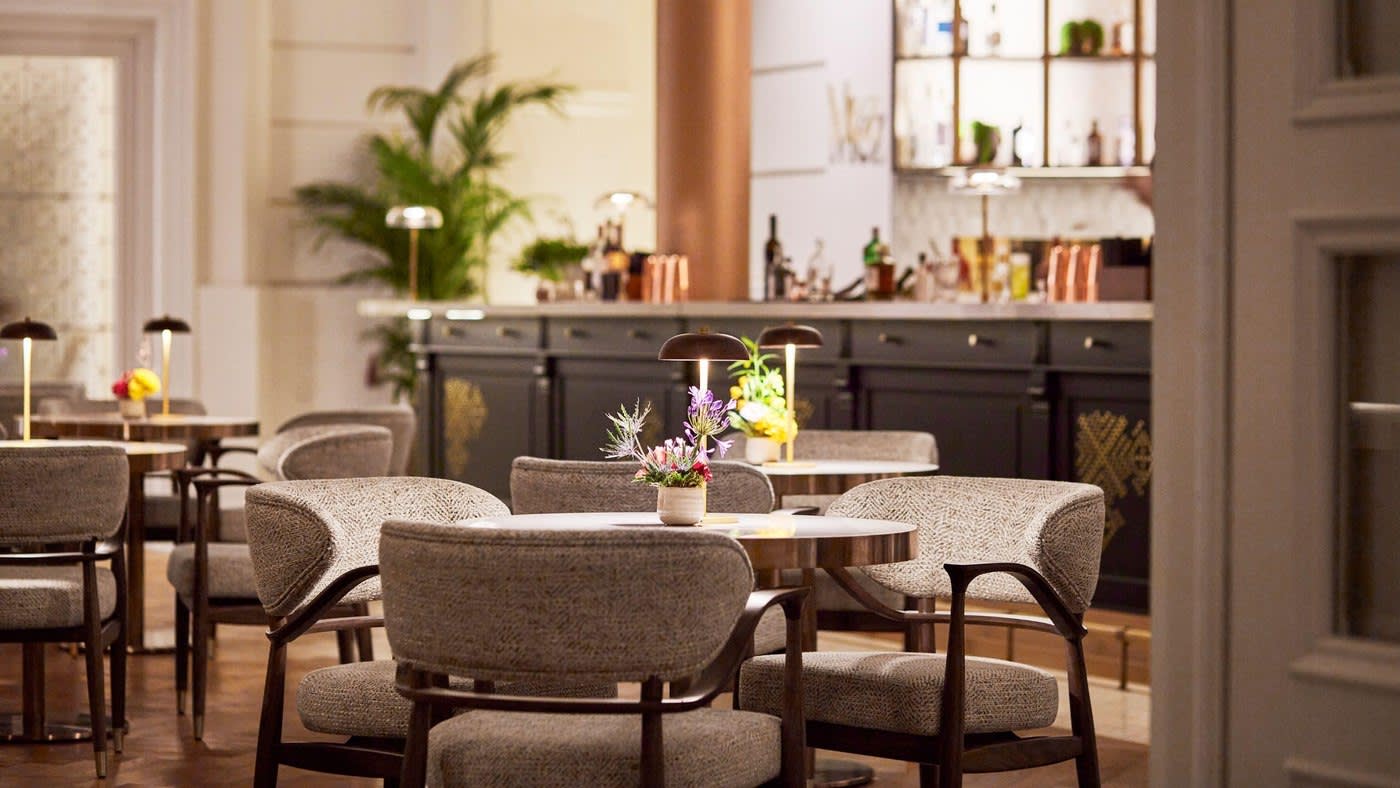
The interiors were entrusted to Madrid studio Brime Robbins, specialists in narrative hospitality design: furniture, lighting, and artworks are crafted to echo Prague’s identity and the palace’s industrial heritage, right down to custom headboards and rich velvet accents.



5. What the address reveals about the Prague market
Prague is not short of luxury hotels; it lacks available buildings capable of housing them. Every converted heritage monument takes a prime address off the market for thirty years while setting price points that new-build developments struggle to match.
This is the true barrier to entry in this city: location and historic stonework, far more than the brand name itself.
- 📍 Location · Prague New Town, near the Jindřišská Tower (Czech Republic)
- 🏨 Brand · Andaz, Hyatt Group
- 🏛️ Building · Sugar Palace, 1912–1916, listed historic monument in 1993
- 🔑 Capacity · 152 rooms and 24 suites
- 🏗️ Developer · UBM Development · original architects Josef Zasche and Theodor Fischer
- 🎨 Interiors · Brime Robbins studio (Madrid)
- 🔗 Website · hyatt.com · Andaz Prague