
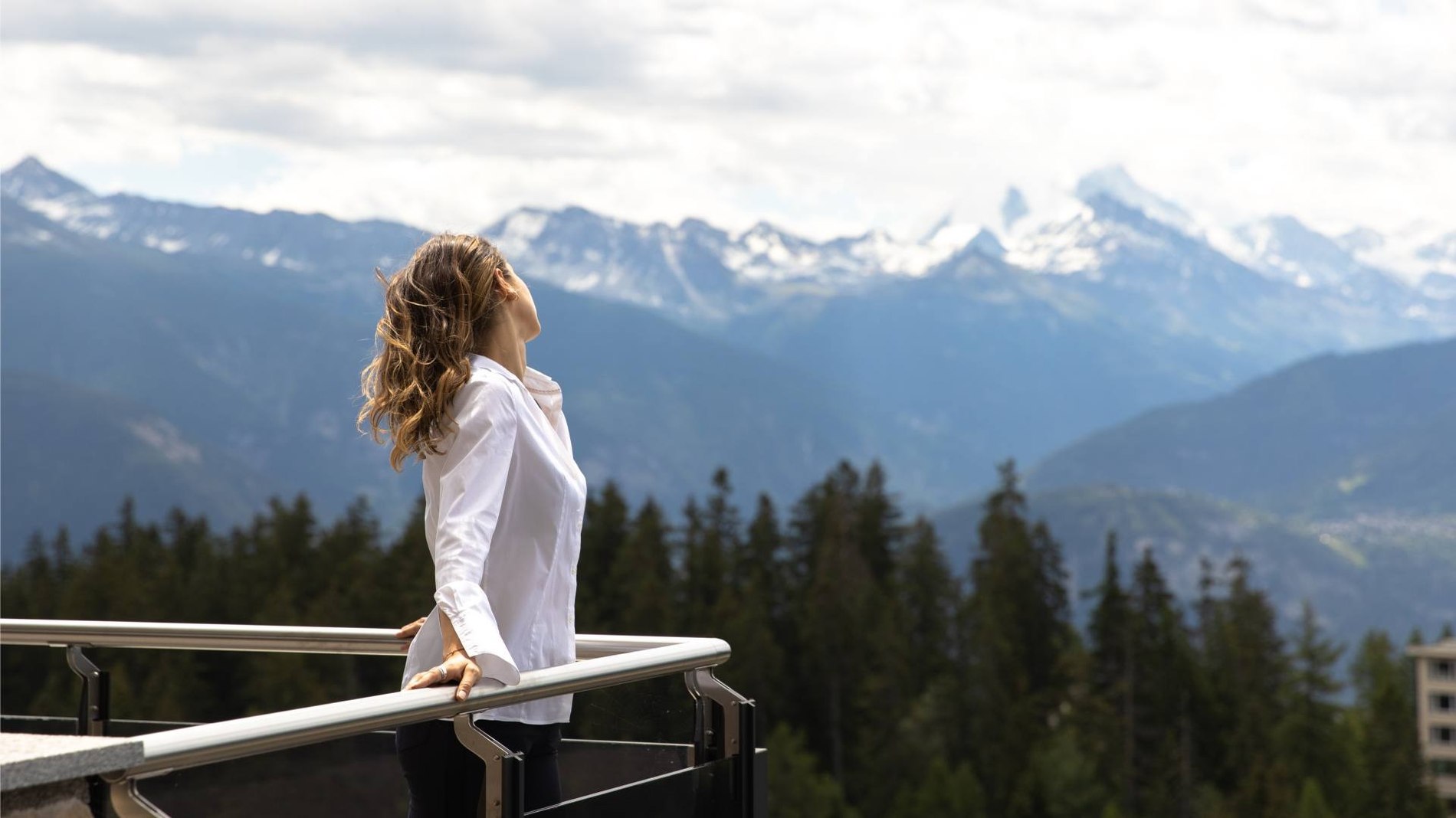

- The Crans Ambassador is a five-star hotel perched above Crans-Montana, in the Swiss Valais.
- It belongs to Michel Reybier Hospitality, the parent company of La Réserve and Cheval Blanc Randheli.
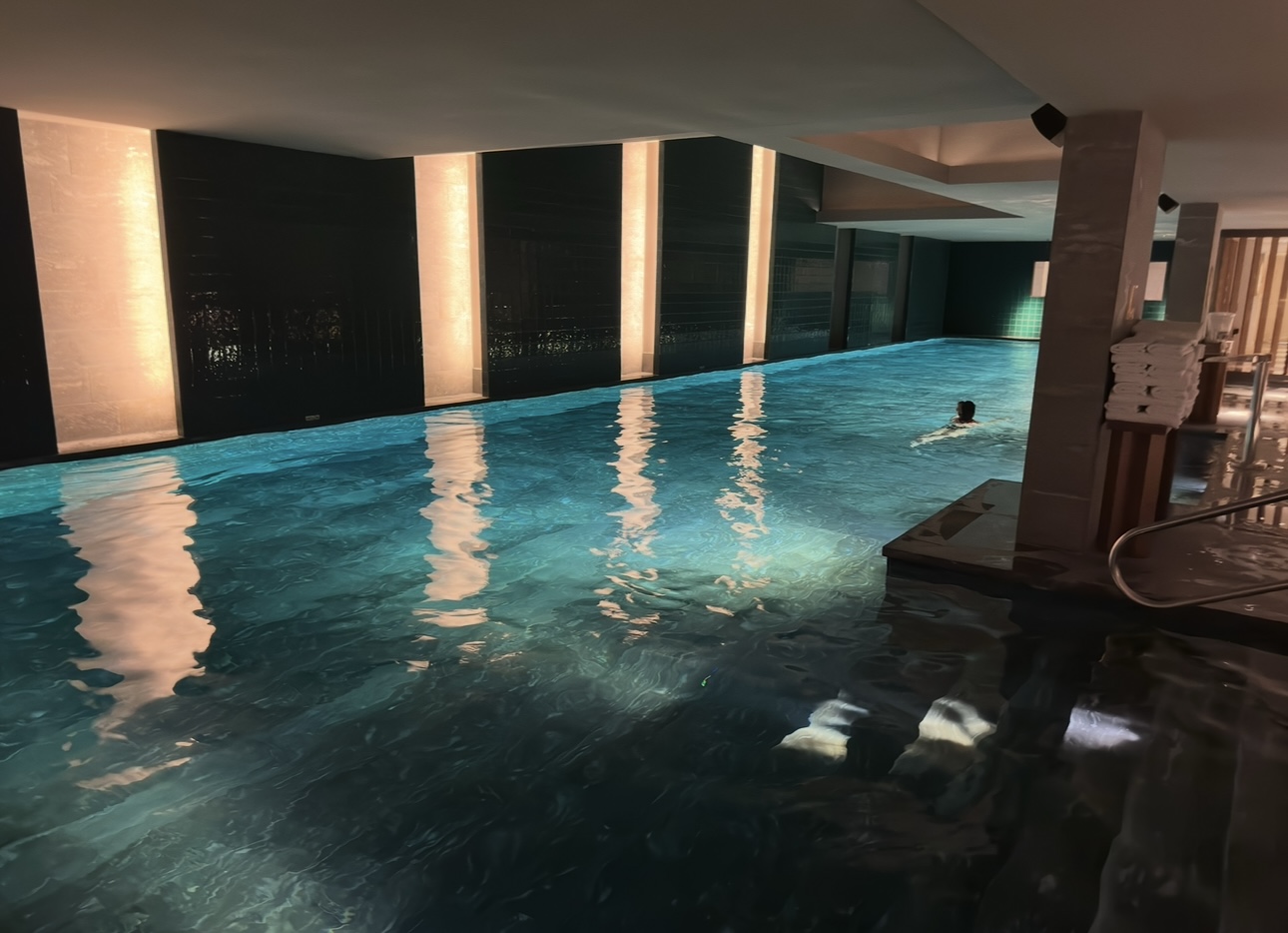
- Its Spa Nescens applies a preventive medicine approach, rather than simple relaxation.
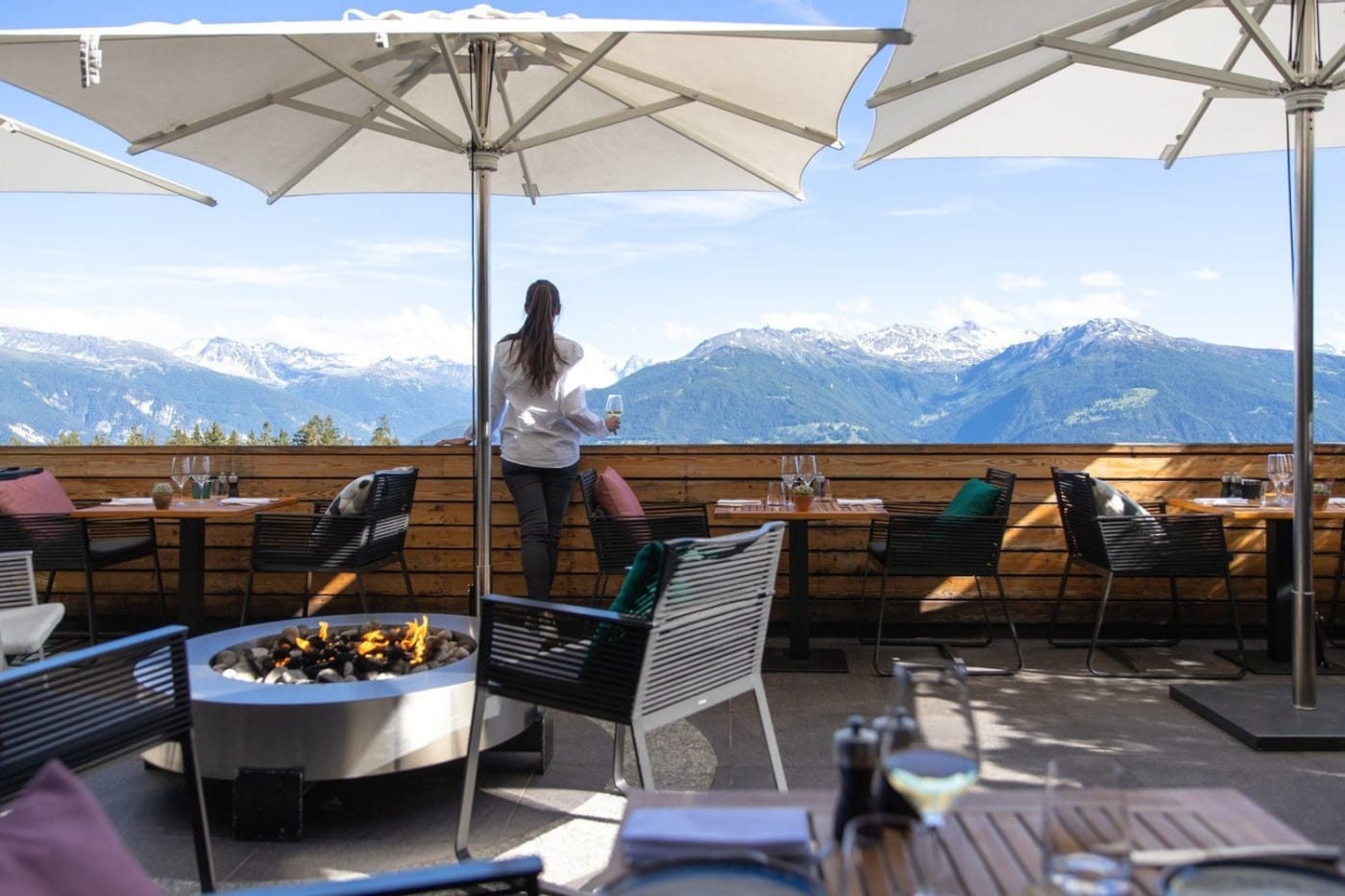
- Three dining venues and a summer season that now carries as much weight as winter in the resort’s model.
A balcony facing the giants of the Valais
The hotel occupies a position that few Alpine addresses can claim: a projection over the Rhône Valley, facing the line of the Valais four-thousand-metre peaks. The architecture does not strive for a pastiche chalet but rather large, wide-open bay windows that bring the landscape into the living spaces. Here, the decor is not inside the hotel, it is right in front of it. This is a choice that has its price in winter, when the light fades early, but pays off handsomely from May to October.


What ownership by Michel Reybier Hospitality changes
The group owns La Réserve in Geneva, Paris and Ramatuelle, as well as Bordeaux wine estates and a longevity clinic in Geneva. This combination is not decorative: it explains the nature of the spa, the presence of a wine list of unusual depth for a resort, and an approach to the stay oriented towards wellness rather than après-ski. The Crans Ambassador applies a recipe proven elsewhere to the mountains, that of a health hotel in all but name.
The Spa Nescens, or longevity as a selling point
Nescens is the group’s preventive medicine brand, born from the Geneva clinic. The spa applies assessment protocols and multi-day programmes, whereas most Alpine spas sell individual treatments. The difference lies in the duration: you do not come for an hour, you come for a structured stay. It is a model that is better suited to a long summer than a winter dictated by ski lifts.
Why the Alpine summer has become the real focus
High-altitude Swiss resorts are experiencing a shift that visitor numbers have confirmed for several seasons: summer is no longer just a supplement to winter, it is becoming a season in its own right, driven by the escape from urban heat and by a clientele seeking hiking, cycling and cool air rather than snow. At 1,500 metres, Crans-Montana offers nights in July that southern cities no longer experience. For an address like this, whose main asset is a view and a terrace, the calculation is easily made.
Key facts about the property
| Where | Crans-Montana, Valais, Switzerland |
|---|---|
| Category | Five stars |
| Owner | Michel Reybier Hospitality |
| The spa | Spa Nescens, preventive medicine approach |
| The dining | Three restaurants, from fine dining to Alpine specialities |
| Peak season | Historically winter, increasingly summer |
| Resort altitude | Around 1,500 metres |
The opinion of La Revue des Hôtels
What is at stake in Crans-Montana goes beyond a single address. High-altitude resorts have spent fifty years building an economic model backed by snow, and this model is cracking from the bottom up, as ski areas below 1,800 metres become unreliable. The hotels that will survive are those whose main selling point is not the ski slope but the view, the air and the wellness. The Crans Ambassador ticks all three boxes.

There remains one unknown common to all of Alpine Switzerland: the price. A multi-day wellness stay in the Valais is now compared to an Austrian or Italian equivalent, and the Swiss franc does not play in favour of the former. It is on this ground, more than on that of comfort, that the competition will be played out.