

- Losses divided by nearly three · 135.5 million Hong Kong dollars in the first half of 2026, compared with 382.7 million a year earlier.
- The key driver · the sale of the Regal Oriental Hotel, completed in April, yielding a gain of 601.1 million HKD.
- Activity · turnover up 28.8% to 1,527.3 million HKD, gross margin up 30.6%.
- Hotel operations back in the black · Regal Hotels International posts 158 million HKD in profit, following a loss of 677.6 million.
Contents
A half-year that keeps the group afloat
On August 26th, Hong Kong conglomerate Century City International Holdings published significantly improved half-year accounts. Its net loss attributable to the group fell to 135.5 million Hong Kong dollars, compared with 382.7 million a year earlier, representing a 64% decrease. The loss per share followed the same trend, dropping from 13.17 to 5.17 cents.
Consolidated turnover rose by 28.8% to 1,527.3 million HKD, with the gross margin increasing even faster, up 30.6% to 526.6 million. Operating profit before depreciation, financial expenses, and taxes returned to 614 million, following a loss of 14.5 million in the first half of 2025. Lower interest rates also eased the financial burden.
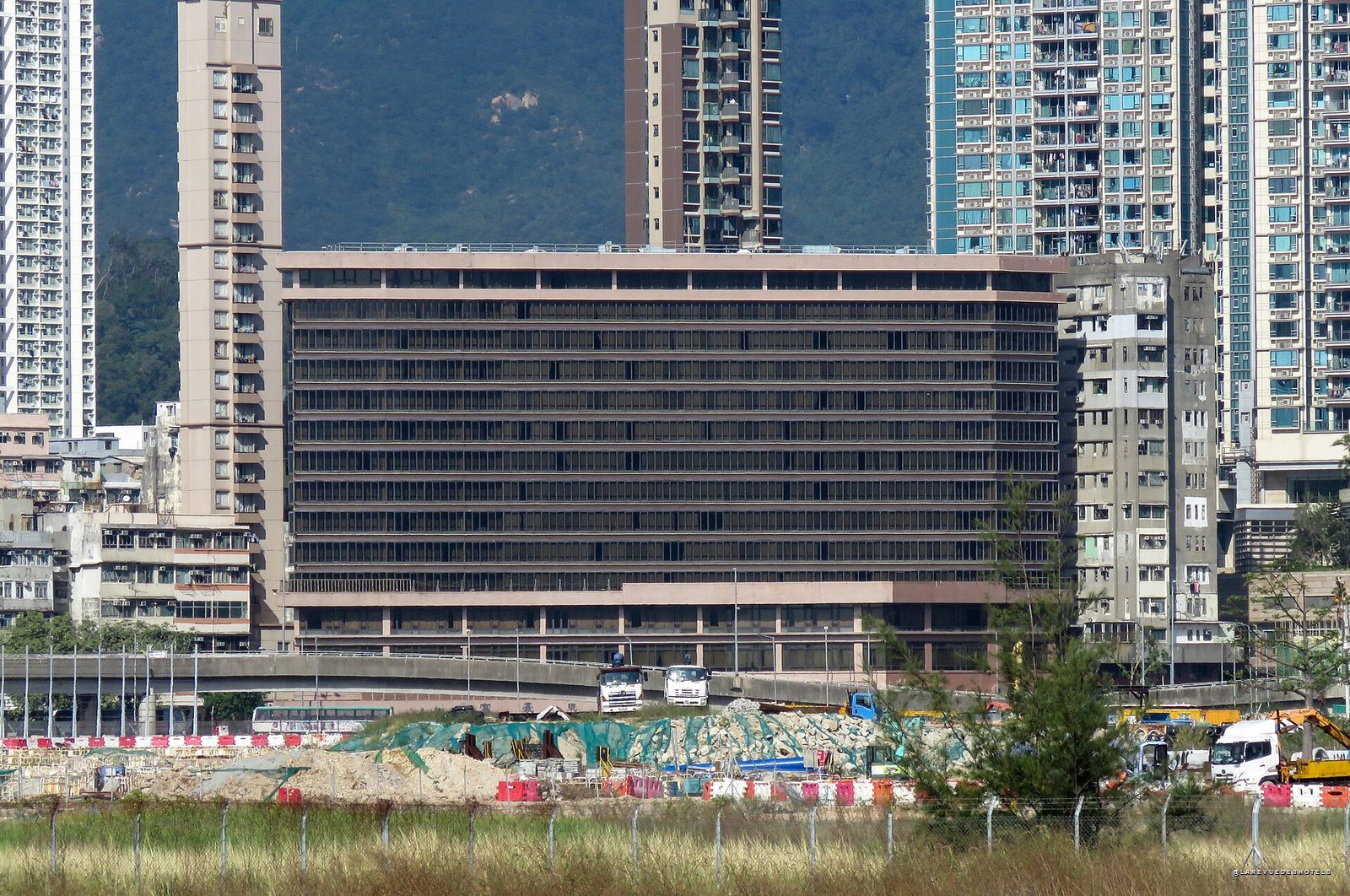
The sale of the Regal Oriental, the only true driver of the half-year
These figures must be read for what they are. The sale of the Regal Oriental Hotel in Kowloon City generated a gain of 601.1 million HKD, an operation completed in April 2026. Without it, the half-year would have remained in deficit. The property belonged to Regal Real Estate Investment Trust, the group’s listed real estate investment trust, which is itself owned by Regal Hotels International.
The group’s structure explains why a single sale carries such weight. Century City oversees five companies listed in Hong Kong. It holds a 62.3% stake in Paliburg Holdings, which controls 69.3% of Regal Hotels International, which in turn holds a 74.9% stake in Regal REIT. This trust still owns four Regal hotels and four iclub hotels in the territory.
Hotel operations return to profit, but not the REIT
Beyond the exceptional items, the most telling line for the hotel industry can be summed up in a single figure. Regal Hotels International posted a net profit of 158 million HKD in the first half of the year, following a loss of 677.6 million a year earlier. This turnaround is driven by the return of business and leisure travellers to Hong Kong.
The real estate trust, however, remains in the red: Regal REIT posted a loss of 186.2 million before distributions to unitholders, a clear decrease compared to the 508.1 million in 2025. Paliburg limited its loss to 209.8 million, down from 613.4 million. In other words, operations are recovering faster than the brick-and-mortar assets.
What depreciation conceals in the accounts
One point deserves the attention of anyone reading these results. The group’s Hong Kong hotels are all owned and operated internally, which subjects them to a massive depreciation charge: 288.8 million HKD for the half-year alone, compared with 335.4 million a year earlier. This charge does not cost a single dollar in cash flow, but it mechanically depresses the net result.
The group highlights this in its own way. According to independent valuations as of June 30th, 2026, the market value of its Hong Kong hotel portfolio far exceeds its book value, precisely because accumulated depreciation has eroded it. Restated at this market value, the net asset value per share would rise from 1.55 to 2.70 Hong Kong dollars. A discrepancy worth noting: the properties are worth nearly double what the books show.
The remaining dark spots
The picture is not uniform. Cosmopolitan International, another listed company in the group, saw its loss widen to 232.4 million HKD, compared with 56.5 million a year earlier, due to a depreciation on its afforestation and land concession project in Xinjiang, mainland China. Added to this are fair value losses on the investment property portfolio.
| Turnover | 1,527.3 M HKD (+28.8%) |
|---|---|
| Gross margin | 526.6 M HKD (+30.6%) |
| Operating profit before depreciation | 614.0 M HKD (loss of 14.5 M in 2025) |
| Net loss attributable to the group | 135.5 M HKD (382.7 M in 2025) |
| Gain on the sale of the Regal Oriental | 601.1 M HKD |
| Depreciation on Hong Kong hotels | 288.8 M HKD |
| Net asset value per share | 1.55 HKD on balance sheet · 2.70 HKD restated at market value |
Our perspective
A recovery driven by asset sales is not an operational recovery, and one must be careful not to confuse the two. Century City has turned asset rotation into an exercise in accounting survival, which is understandable in a Hong Kong market that is still convalescing, but it cannot be repeated indefinitely: every hotel sold is a hotel that will no longer generate revenue.
The true signal of the half-year lies elsewhere, in the 158 million profit recorded by Regal Hotels International. It shows that visitor numbers are returning and that operations are standing on their own two feet without crutches. The question for the coming half-years will be whether this upturn is enough to absorb a depreciation charge of nearly 290 million per half-year, without having to sell yet another asset.
- →Highland Coast Hotels invests one million pounds in four North Coast 500 properties
- →London Bridge Hotel joins Tapestry Collection by Hilton: 153 rooms and £12 million in renovations by 2028
- →The Hoxton Dubai Media City hotel to open in 2027: 230 rooms, a unique wellness club and Paris Society behind the stoves
- →Cameron House resort on Loch Lomond sold for nearly 100 million pounds