

In brief
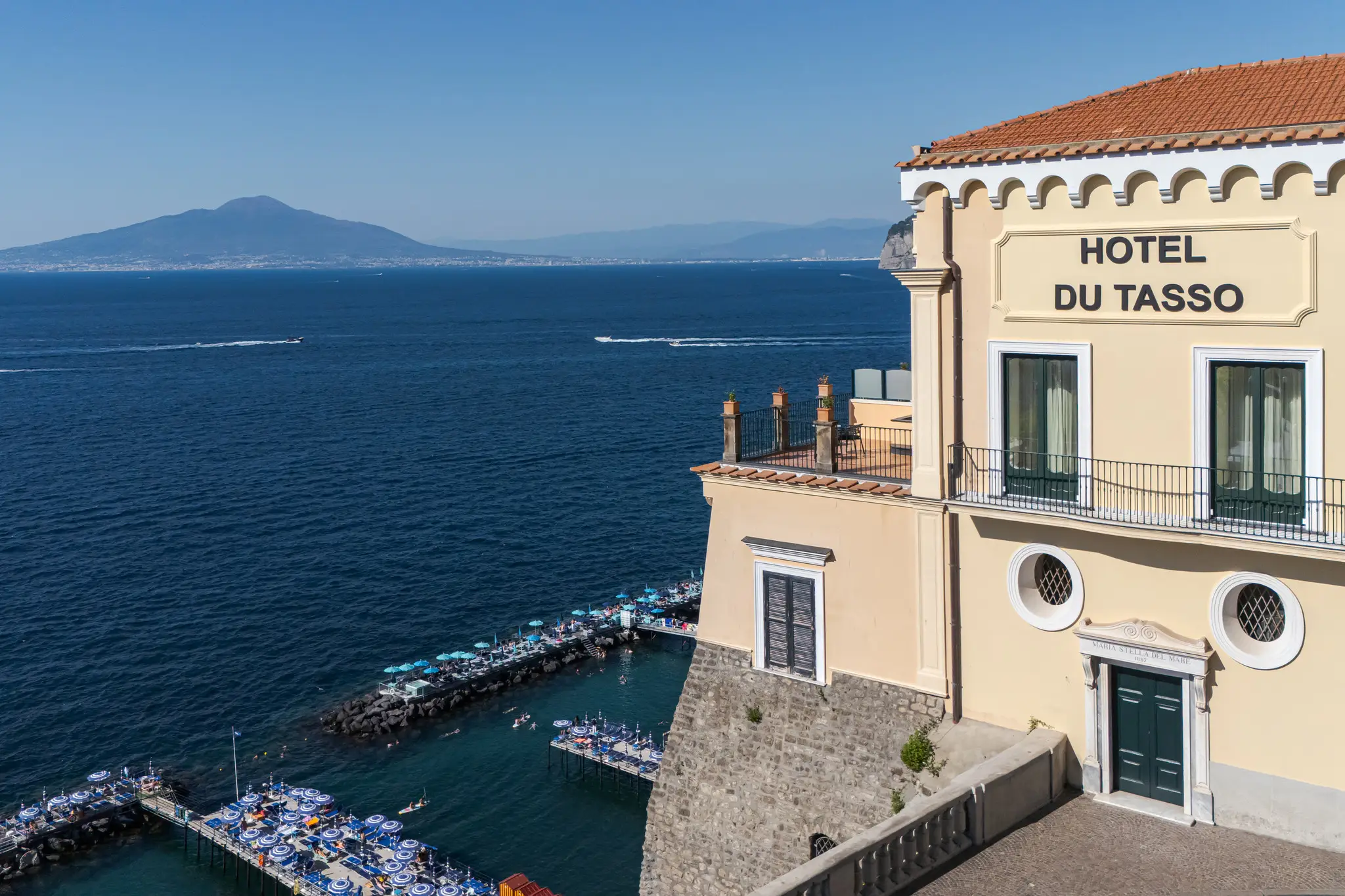
- Hotel Du Tasso has opened in Sorrento, on Piazza della Vittoria, in the 16th-century palace where the poet Torquato Tasso was born in 1544.
- Thirty-three keys, including fifteen suites and junior suites, in a boutique five-star hotel designed by architect Antonio Girardi.
- A wellness area set in ancient Roman tuff caves, and a lift carved into the rock descending to San Francesco beach.
- A private 15th-century frescoed chapel, dedicated to the Madonna Stella Maris, preserved within the grounds.
- A restaurant open to non-residents, led by chef Marco Del Sorbo.
There are some properties that borrow their narrative from their interior designer, and others that have inherited it. Hotel Du Tasso belongs to the second category. The palace it occupies, on Piazza della Vittoria in Sorrento, is the birthplace of Torquato Tasso, author of Jerusalem Delivered, born here in 1544. Grand Tour travellers were already stopping here in the 18th century. Today, the venue reopens as a thirty-three-key five-star hotel, and the question it poses is the right one: what do you do with such a house without overwhelming it?
 All openings · Italy →
En images



Faites glisser pour parcourir · cliquez pour agrandir
A poet’s house above the Tyrrhenian Sea
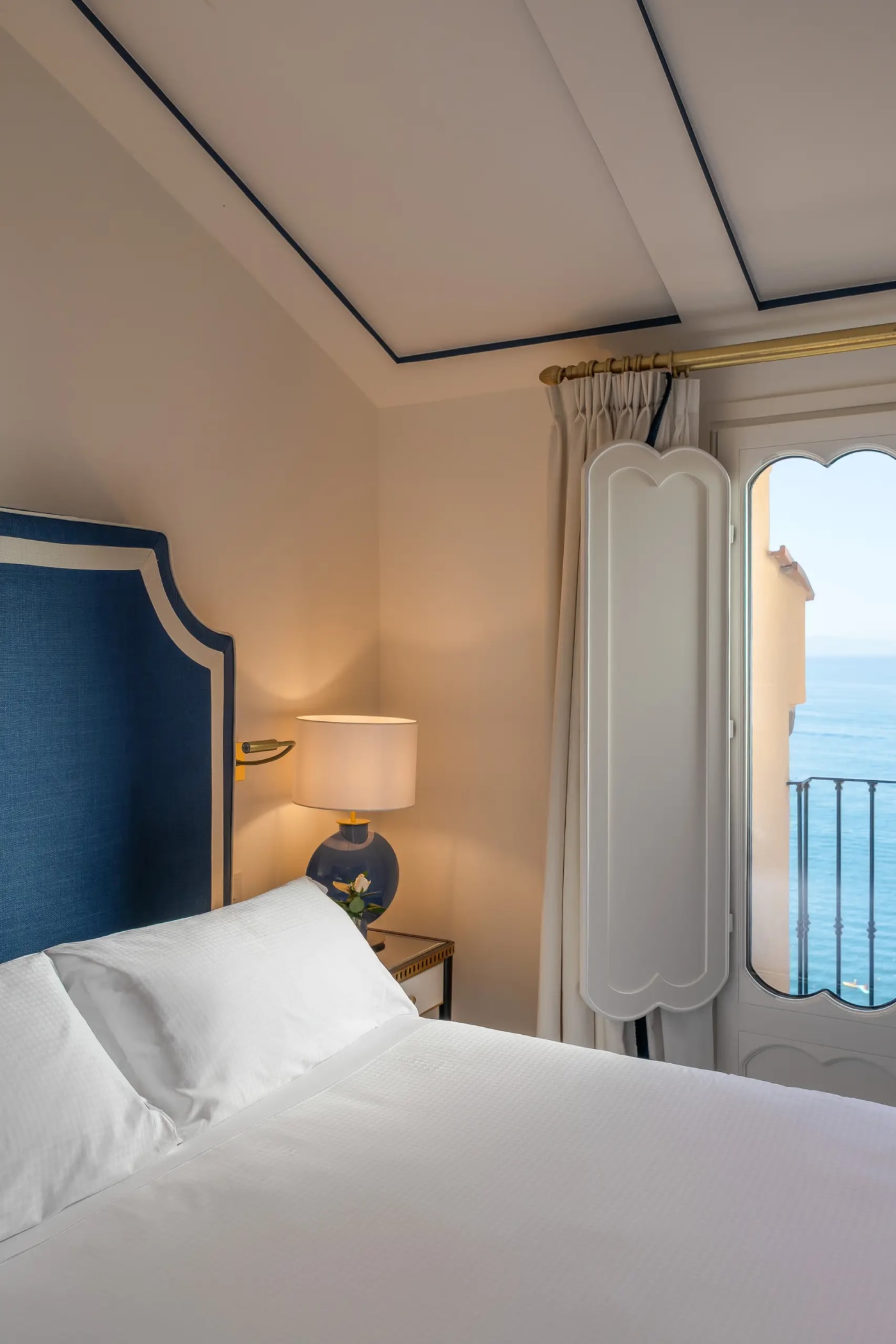
The answer lies first in what has been left untouched. The restoration has preserved the original structures rather than redesigning them, starting with the vaults, highlighted by a simple blue border that recalls the horizon line. The palace retains the scale of a private residence, and the hotel draws its atmosphere from this: thirty-three keys in a building of this size means short corridors, lived-in landings, and the total absence of what high-volume hospitality usually imposes.
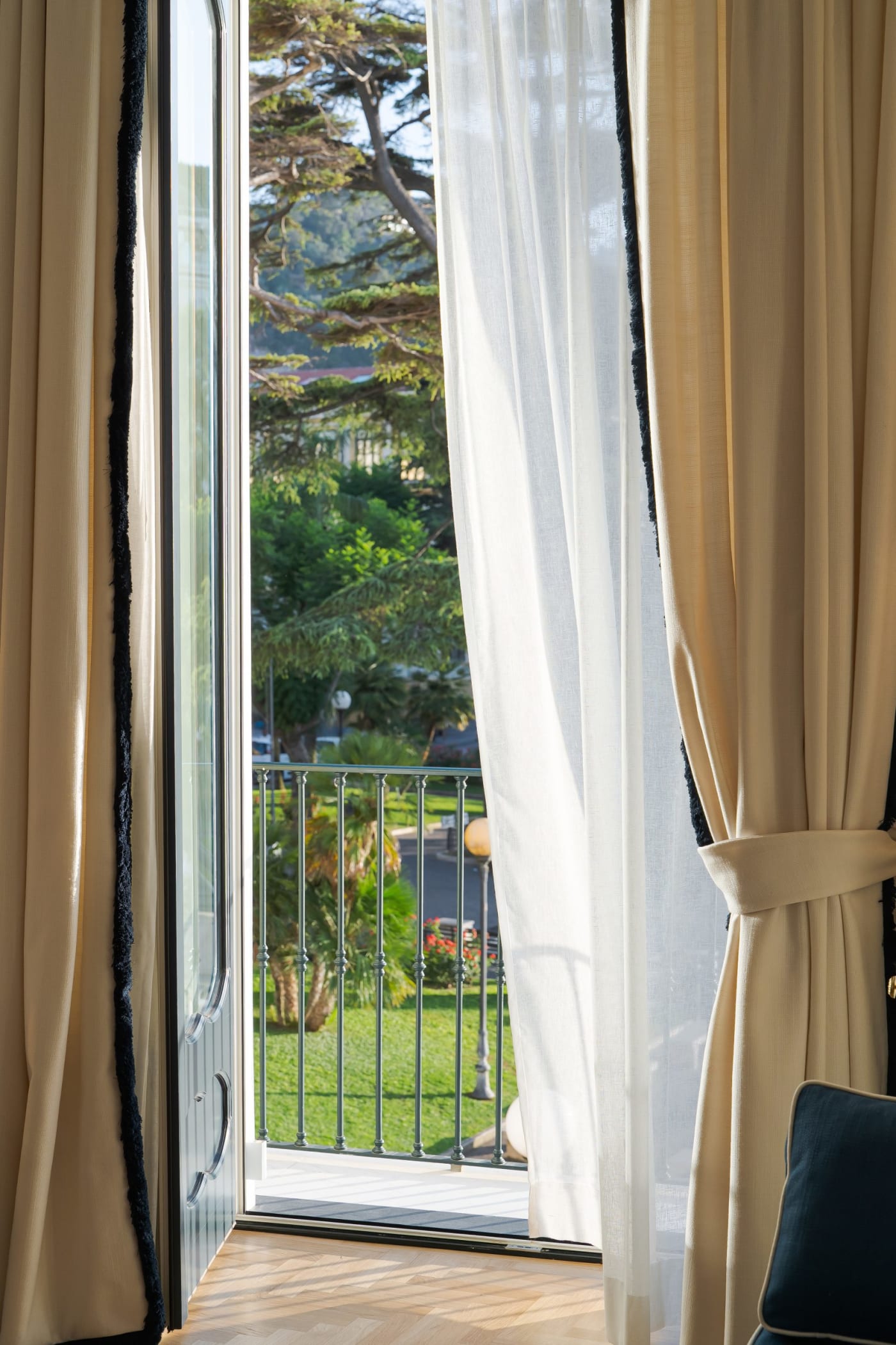
The location does the rest. Sorrento is built on a tuff cliff, and Piazza della Vittoria occupies its edge. From the facade, the view looks out over the Gulf of Naples and, on a clear day, Mount Vesuvius. The historic citrus garden, inherited from the house, extends the building on the landward side.
The contemporary touch of Antonio Girardi
Architect Antonio Girardi worked with light rather than decor. The public areas pair Venetian glass chandeliers with a black-and-white marble checkerboard, two styles that could cancel each other out but hold together because the rest is kept quiet. The vocabulary is that of the Sorrentine coast, not that of a catalogue.
In the rooms, craftsmanship takes over: natural raffia inserts, understated textiles, low furniture. The bathrooms play on the mineral contrast between Carrara marble and a deep Brazilian blue. It is the kind of detail that does not photograph well but is noticed upon waking.
Roman caves, a chapel, a lift in the cliff
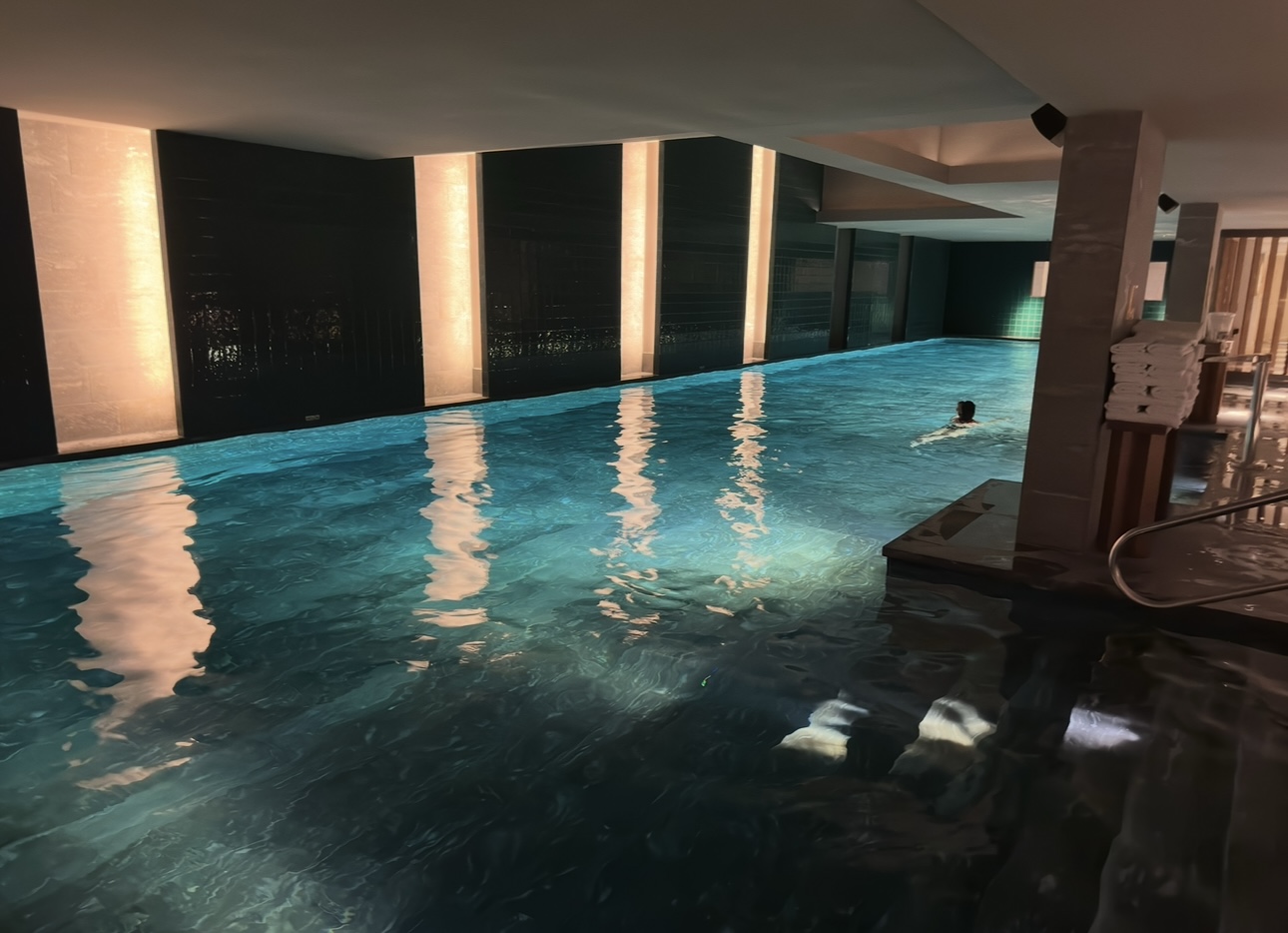
This is where the property stops being just a beautiful hotel and becomes a singular place. The wellness area occupies ancient tuff caves carved out in Roman times, beneath the palace. You do not go down into a spa; you go down into the cliff. The thermal contrast with the terrace, a few metres above, is part of the experience.
Two other elements are worth the detour. A private 15th-century chapel, dedicated to the Madonna Stella Maris, preserves its period frescoes within the walls of the house. And a lift carved into the rock directly connects the hotel to San Francesco beach and the port, solving in one minute the problem Sorrento poses to all its visitors: the town is at the top, the sea is at the bottom.
The table of Marco Del Sorbo
The restaurant is entrusted to chef Marco Del Sorbo, with a Campanian focus: local produce, seasonal cuisine, a direct rather than demonstrative approach. An important detail: the restaurant is open to non-residents, making it a venue for the town and not just a service for guests. In a resort where hotel dining often closes itself off to outside clients, this is a notable choice.
Who it is for, and when to go
Du Tasso is for those who want Sorrento without the crowds of Sorrento. Its size makes it ideal for a short stay of two to four nights, ideally in the shoulder season, in May or September, when the Amalfi Coast becomes manageable again and the light is at its best. Large families will find it less suitable than couples and solo travellers, for whom the scale of the house is precisely the draw.
It is an opening that says something about Italian hospitality today: heritage is ceasing to be a brochure talking point and is once again becoming the very substance of the project. Here, the house existed before the hotel, and you can feel it.