


- 📈 Luxury is the only segment that is growing · +5.2% revenue per available room expected in luxury in 2026, +0.7% in midscale, −0.6% in economy (CBRE).
- 🧖 Wellness is no longer a facility, it is the architecture of the stay · $1,100 billion today, $2,100 billion expected by 2030. Sleep tourism alone will jump from 93 to 149 billion.
- 🏠 Hotels are now selling walls · 910 branded residence programmes at the end of 2025, compared with 764 a year earlier, and more than 1,500 expected by 2030 (Savills).
- 🏷️ Converting is more common than building · repositioning an existing hotel under a major brand is faster than building anew, and costs less.
- 🤖 AI has won over the back office and lost the front desk · 98% of hoteliers use it, but 59% believe reception must remain human.
- 🧹 The constraint is no longer demand, it is staff · 71% of hotels have unfilled positions, especially in housekeeping and reception.
A trend in the hotel industry cannot simply be decreed in January: it is proven by openings, acquisitions, and the year’s figures. Here is where the luxury hotel industry truly stands at the end of 2026, what has changed over the past year, and what failed to happen despite announcements.
In a nutshell: at the end of 2026, luxury hospitality is the only hotel segment with rising prices, wellness has become the purpose of the stay rather than an amenity, groups are now selling walls as much as nights, conversions outpace new builds, artificial intelligence is at work without guests seeing it, and the main constraint is no longer finding guests but finding staff.
Ten movements structure the present moment. The first commands all the others.
- 📊 RevPAR · revenue per available room. All room revenue divided by the total number of rooms, including those left empty. A single figure that shows both whether the hotel is filling up and how well it is pricing its rooms. It is the key metric followed by the entire industry.
- 🏷️ A conversion · an existing hotel that keeps its walls and staff, but changes brand to join a major group. The opposite of a new build.
- 🏠 Branded residences · apartments sold to private individuals within a hotel complex, branded and managed by the hotelier. Buyers acquire a home and palace-level services.
- 🏗️ The pipeline · rooms announced but not yet open. A group’s order book and the best indicator of its market outlook.
Four figures to frame the end of 2026
Luxury is the only segment that is growing
This is the starting point, and it is far from obvious in a year of uncertainty. CBRE expects a 5.2% increase in luxury revenue per available room in 2026, compared with 0.7% in the midscale segment and a 0.6% decline in economy. At one end of the market prices are rising, at the other they are falling, and the gap is approaching six points.
This divergence dictates everything else. When only one segment maintains its pricing power, capital shifts there, brands reposition themselves, and owners invest because it is the only place where spending is recouped. In the UK, £2.1 billion worth of hotels changed hands in the first half of the year, including £1.4 billion in London. In Spain, €2.46 billion. Blackstone is preparing the stock market listing of 61 Mediterranean resorts valued at up to €7 billion.
Why this gap dictates everything else
A caveat, however, for anyone reading this as a global boom: performance varies greatly by region. The Middle East became the planet’s worst hotel market in revenue performance over a single quarter. Luxury is growing, but not everywhere nor at the same pace.
Wellness has become the purpose of the stay
This is the most profound transformation, and its nature has changed. The hotel spa used to be an amenity, much like a swimming pool. It has become the reason for booking. Wellness tourism was valued at $1,100 billion and is expected to reach $2,100 billion by 2030.
From leisure spa to medical protocol
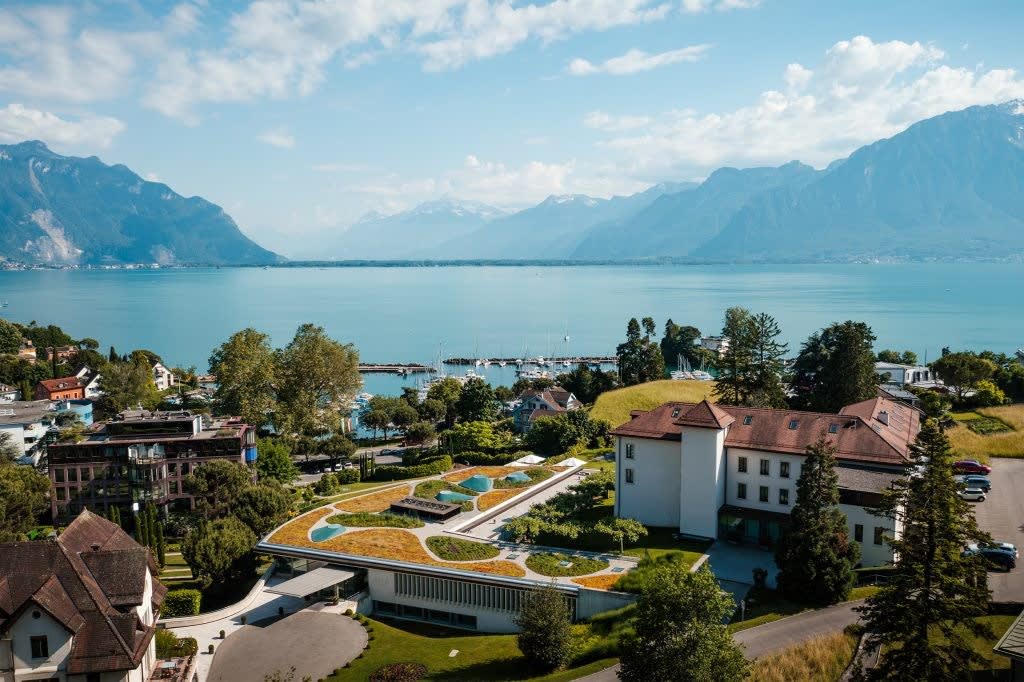
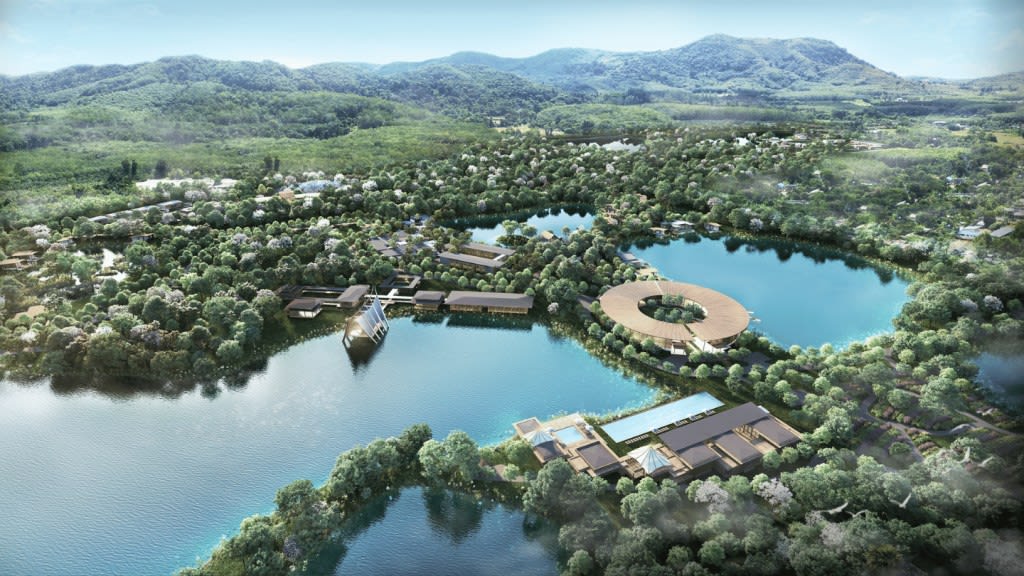
The vocabulary has followed suit: biomarkers, genetic testing, multi-day protocols. Clinique La Prairie, which operates a medical facility within a hotel on Lake Geneva, is opening in Phuket in November 2026 and has announced Saudi Arabia for 2027. SHA Wellness is preparing an entire island in the Emirates combining a clinic, resort, and 137 residences. Six Senses will open seven addresses in 2027, featuring residences designed around nutrition, sleep, and nature immersion.
The signal: the cure has left the hotel
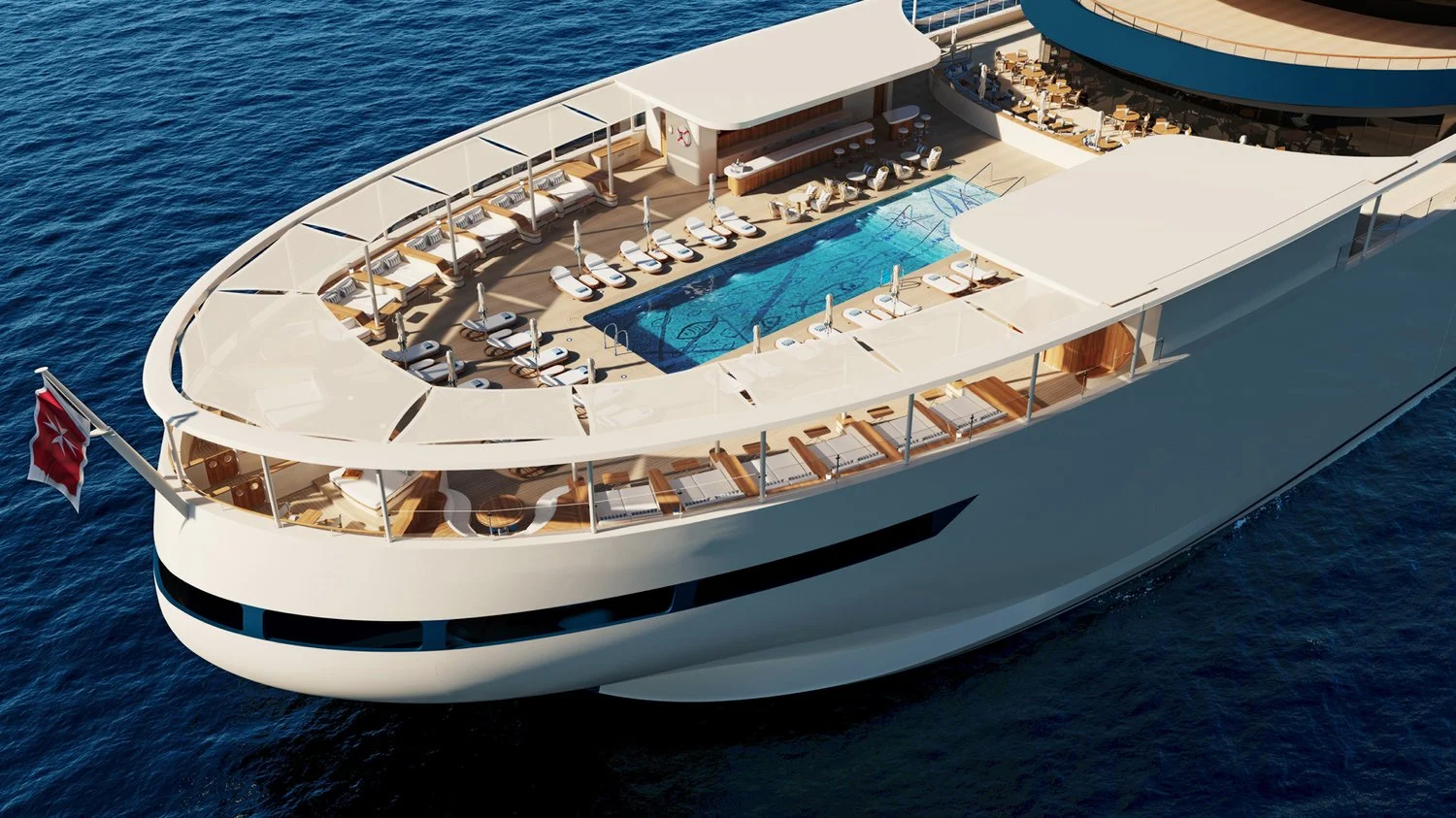
The most telling shift, however, is not a hotel. In September, the yacht Four Seasons I welcomed the Lanserhof clinic on board for an eight-day retreat during a transatlantic crossing. When a medical protocol boards a vessel to occupy travel time, wellness no longer accompanies the stay: it has become its purpose.
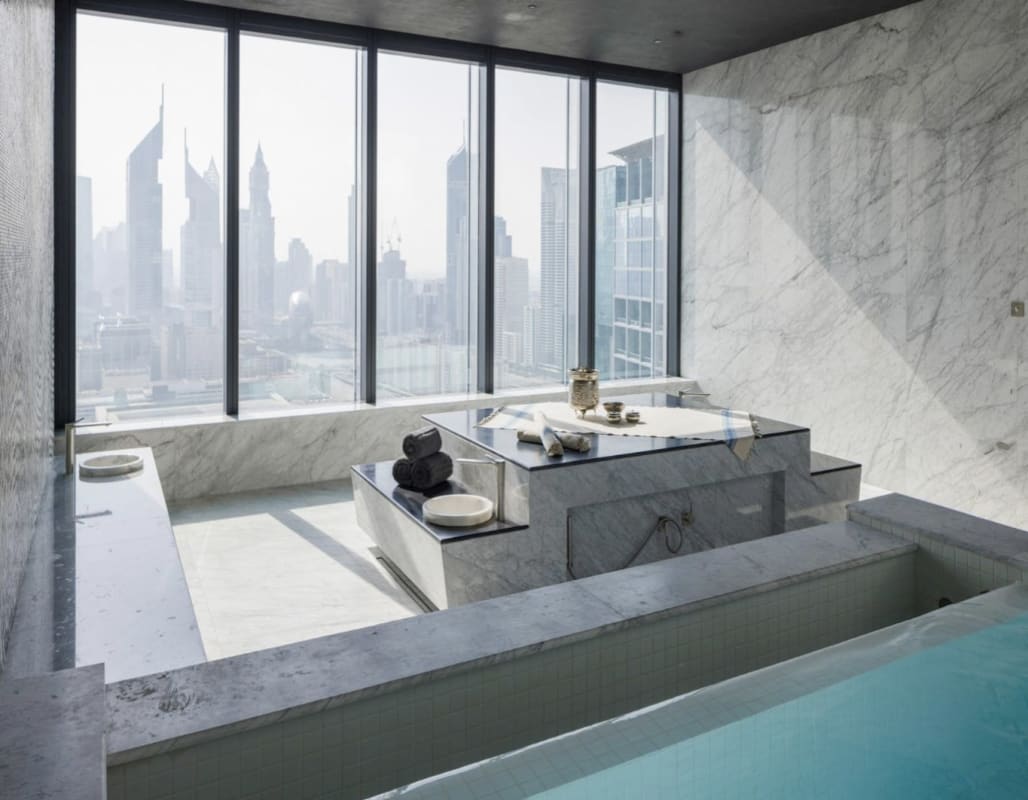

A nuance is necessary, borne out by our own data. Counting what hotels highlight across the 704 news items we have published since March, spas come first at 18.3%, ahead of dining and chefs at 13.2% · the order has inverted over the past decade. Yet three quarters of these mentions still relate to traditional spas, and only 8.2% to longevity or medical wellness. The clinic is not the norm: it is the vanguard.
Our survey · what luxury hotels highlight
In-house tally of 704 news items published between March and September 2026. An article may cite several selling points.
Sleep is a marketable product
This is the fastest-growing and most tangible branch of wellness. Sleep tourism is valued at $93 billion in 2026 and is projected to reach $149 billion by 2030, representing annual growth of over 12%.
Major hotel brands have industrialised the concept. Park Hyatt New York has introduced Restorative Sleep Suites equipped with software-driven beds that adjust pressure points throughout the night. Rosewood has rolled out its Alchemy of Sleep programme across twenty properties. Six Senses begins its retreats with a consultation with an in-house sleep physician who tailors the stay.
What is being sold here is not a room, but an outcome. This marks a seismic shift for an industry whose product has always been space and a night’s lodging.
Silence has become a product
This is the logical extension of sleep and arguably the year’s sharpest cultural shift. According to Hilton’s 2026 trends report, the primary reason for travel is no longer discovery: it is “resting and recharging.” Quiet has overtaken curiosity.
When the industry invents a word for it
The sector has coined the term “hushpitality” to describe this hospitality of silence: calm environments, low-stimulation design, and screen-free stays. Silence has become a high-end currency, engineered through enhanced acoustic insulation, vibration-absorbing materials, and lighting aligned with the body’s natural rhythms.
Some properties go further, treating network connectivity itself as a nuisance: paints and wallcoverings that block Wi-Fi and mobile signals in guest rooms. Elsewhere, devices are handed in upon arrival in exchange for an offline itinerary comprising walking, sound baths, reading, and writing workshops.


What this says about luxury itself
The change goes deeper than mere fashion. Luxury used to be measured by what was displayed; it is increasingly measured by what is felt. Privacy, slowness, silence, and authenticity have become markers where ostentation once reigned. This aligns with everything else in this article: if wellness is the purpose of the stay and sleep is a product, then noise is the defect to be eliminated.
Hotels are now selling walls
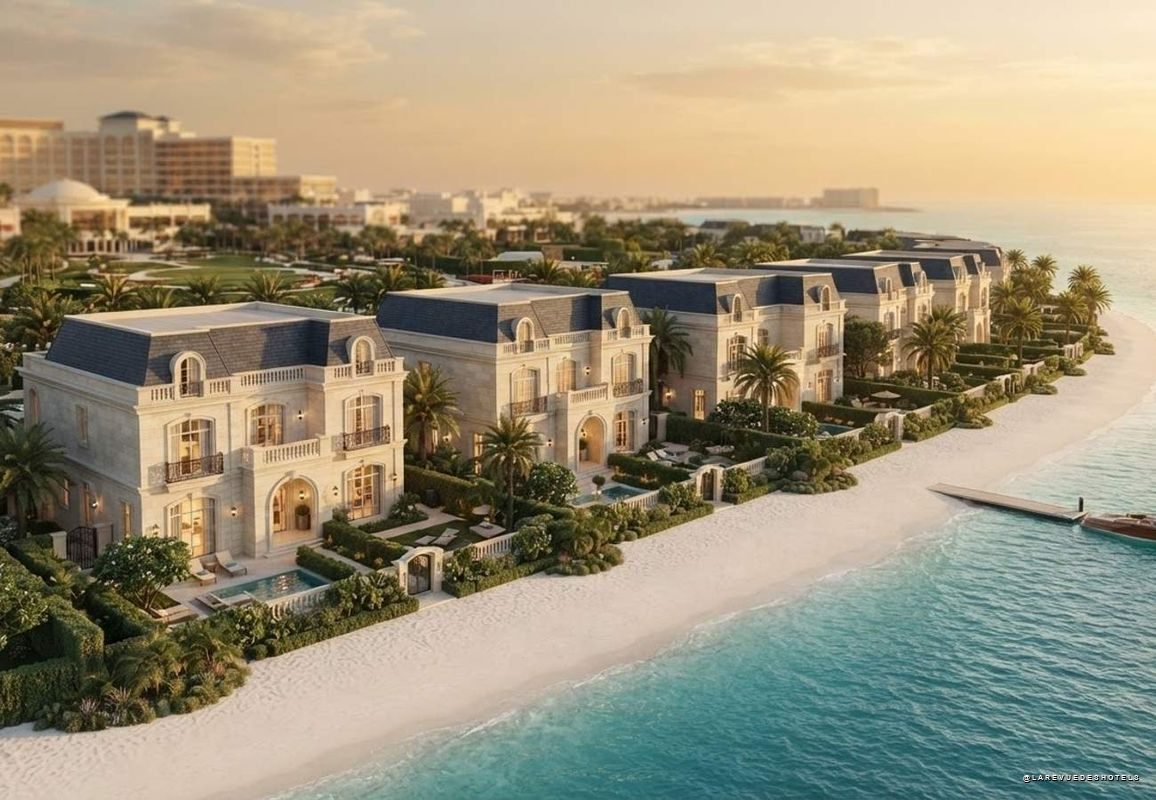
The movement is massive yet largely invisible to the public. The world boasted 910 branded residence programmes at the end of 2025, compared with 764 a year earlier · representing 19% growth in twelve months. Savills expects over 1,500 by 2030. The Middle East and Africa region shows the strongest five-year growth at 187%.
Why all hotel groups are jumping on board
The principle is simple: hoteliers no longer just rent out nights; they sell apartments and subsequently charge for management and branding. For developers, the brand increases the price per square metre. For hoteliers, the sales help finance construction. This has become one of the few financing structures that makes a luxury project viable, explaining part of the pipeline announced for 2029 and 2030.
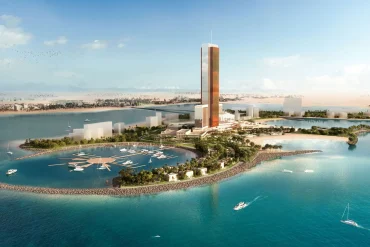
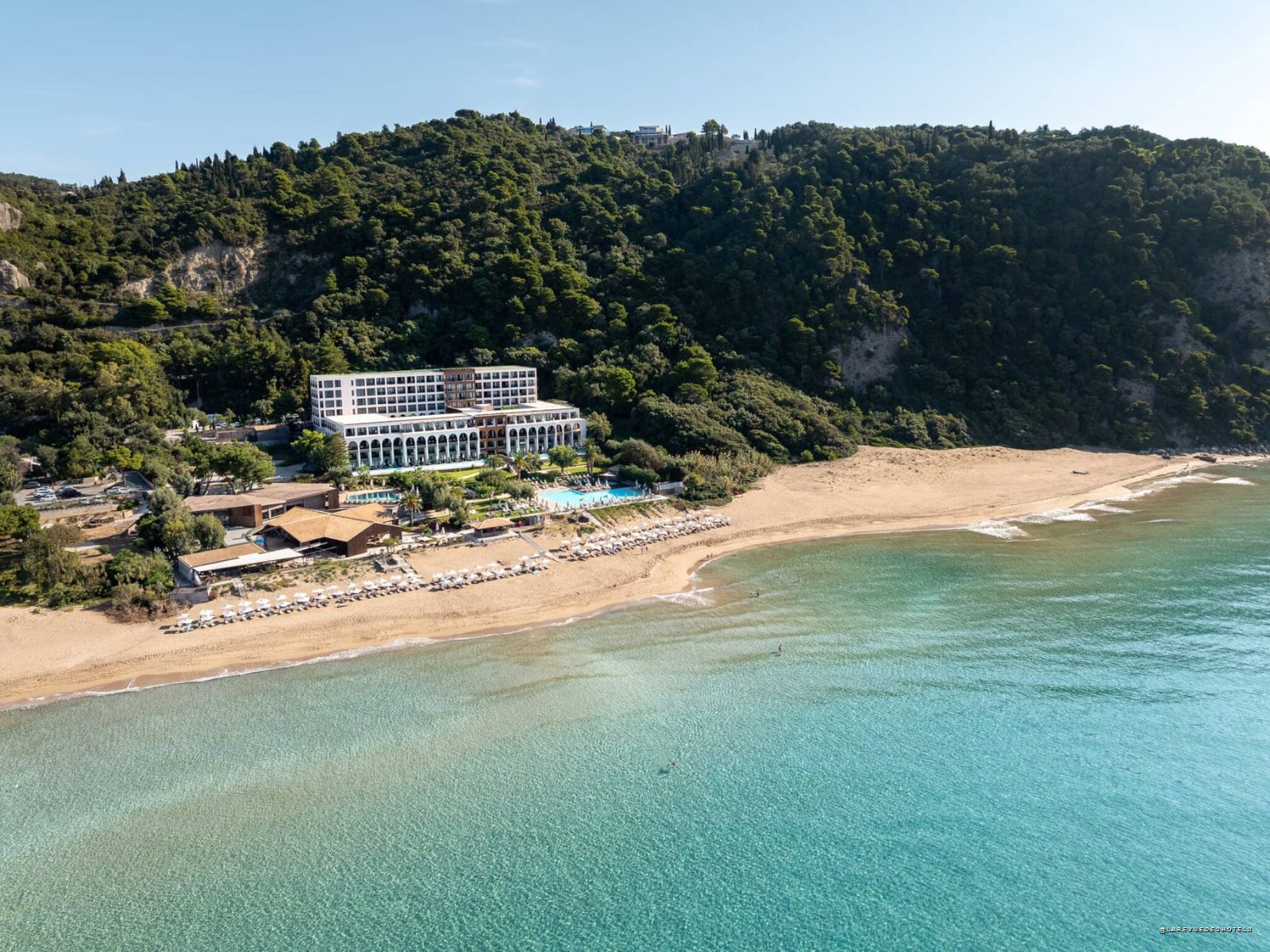
Examples are multiplying: Wynn Al Marjan Island has unveiled 1,110 sq m townhomes even before opening, and Hotel Emiliano will open in Brazil within a Foster + Partners development comprising 83 private residences.


Converting is more common than building
When luxury is the only segment maintaining its pricing power, repositioning an existing building under a major brand is faster than building a new one. The brand becomes an asset enhancement tool, and hotel pipelines are filling up with pre-existing properties.
Three conversions that illustrate the method
Naples Grande Beach Resort will become Signia by Hilton in January 2027, Oxford Witney Hotel will become the UK’s first JdV by Hyatt in late 2026, and London Bridge Hotel will join the Tapestry Collection by Hilton in 2028. None of these three are new builds.
The balance of power is clear: over our six months of monitoring, there were 159 openings compared to 85 takeovers of existing properties, meaning one conversion or major renovation for every two inaugurations. Furthermore, buyer profiles have shifted: in the UK, owner-operators account for 40% of acquisitions, ahead of investment funds at 37%. These are hoteliers expanding their portfolios, not merely financiers deploying capital.
AI has won over the back office
This is the topic where the gap between rhetoric and reality is most intriguing, though not in the way one might think. Artificial intelligence is massively deployed: 98% of hoteliers surveyed in May 2026 report using it. Simply put, it has settled where guests cannot see it.
Where artificial intelligence actually works
It sets pricing: Hilton attributes a 5% to 8% revenue increase to its AI-driven segmentation, while citizenM reports 18% higher revenue per available room. It monitors buildings: Hilton’s LightStay platform has generated over $1 billion in verified savings and reduced the portfolio’s energy and water consumption by roughly 20%. It handles routine demand: conversational agents independently resolve 60% to 80% of repetitive queries.
And where the sector refused to let it go
Yet it stops at the front desk, and that is a deliberate choice. In the same survey, 59% of hoteliers believe that guest reception and check-in must remain handled by humans. The sector has decided without making a song and dance about it: AI takes care of pricing, energy, and correspondence, but not the handshake. For luxury guests, the only visible trace of this revolution will be better-adjusted pricing.
Where the world is actually booking
A simple question, rarely asked in trend reports: where are travellers actually going? The answer contradicts much of the media noise.
Europe remains dominant
The world recorded 1.52 billion international arrivals in 2025, a record. And Europe captured 793 million of them on its own, accounting for more than half the globe. Asia-Pacific followed with 331 million, the Americas with 218 million, the Middle East with just 100 million, and Africa with 81 million.

International arrivals by continent, 2025
1.52 billion travellers in total. Figures in brackets show year-on-year growth.
Source: UN Tourism. ⚠️ These figures count traveller arrivals, not hotel nights: they indicate market hierarchy rather than exact hotel booking volumes.
But growth lies elsewhere
Rankings by volume mask underlying trends. Africa is growing the fastest at +8%, driven by North Africa at +11%. Asia-Pacific is up 6%, Europe 4%, the Middle East 3%, and the Americas trail at just 1%.
Two conclusions emerge, pulling in opposite directions. Asia-Pacific remains 9% below its 2019 level · it is the only region that has not fully recovered, representing a major growth reservoir. Conversely, the Middle East stands 39% above pre-2019 levels, an unprecedented surge which makes the recent collapse in its hotel revenues all the more striking.
Most visited countries · international arrivals 2025
Followed by China, Italy, Turkey, Mexico, Thailand, Germany, and the United Kingdom.
At country level, France remains the world’s leading destination with 102 million arrivals, ahead of Spain at 96.8 million and the United States. It is the first country in history to cross the hundred-million-visitor threshold.
What this means for hoteliers
Early 2026 confirms the hierarchy without shaking it up: +4% in Europe in the first quarter, +3% in Asia-Pacific, +4% in Africa, contributing to global growth of 2%. UN Tourism expects 1.58 billion arrivals over the year.
The conclusion is modest yet robust: luxury is built where people are already going. The loudest announcements concern regions that account for less than 12% of global arrivals combined. Europe absorbs one in every two travellers, which explains why capital has returned there.
A luxury hotel can buy marble. It cannot buy a housekeeper in three weeks.What the staff shortage reveals
The missing link is no longer the guest
This is the constraint discussed least, and arguably the most serious. 71% of hotels report unfilled positions, and 65% of American establishments face persistent labour shortages. The affected roles are hardly minor: housekeeping, reception, food and beverage, maintenance · precisely those that create the luxury experience.
The initial response has been financial: by March 2026, 70% of owners had raised wages to retain staff, and 54% offered flexible hours. A luxury hotel can buy marble, but it cannot buy a housekeeper in three weeks.
This is the friction point that could hinder the previous five trends. Opening a medical spa, selling residences, and converting a brand are all well and good, but you still need people to uphold the standards promised by the brand.


Handing back a star, the weak signal
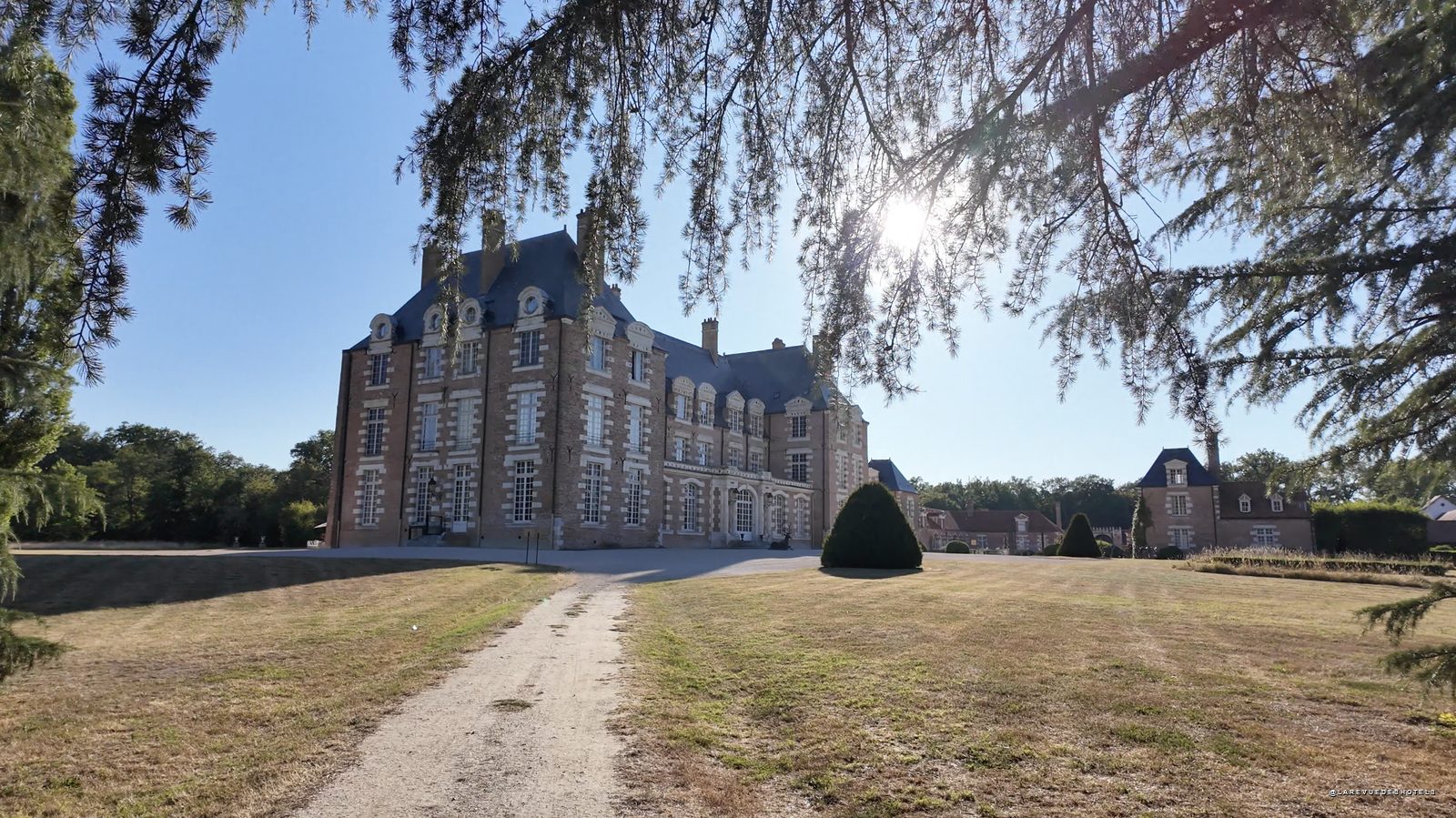
One final trend, minor yet instructive because it runs counter to the other six. In September, we reviewed a Perigord estate which, upon change of ownership, voluntarily requested to be down-graded from five to four stars · not to cut back on services, which remained unchanged, but to remove the psychological barrier keeping local residents away.
The question other trends avoid
An isolated case does not make a trend, and we will not claim it does. But it raises a question that the other six trends sidestep: what is the point of a star rating when local clientele, those who fill a countryside hotel mid-week, view it as a keep-out sign? If luxury growth stops relying solely on international travellers, this trade-off will become more common.
- 📊 Market performance · CBRE, 2026 revenue per available room forecasts by segment.
- 🏠 Branded residences · Savills, 2025-2026 annual report · 764 programmes at end of 2024, 910 at end of 2025, over 1,500 expected by 2030.
- 🧖 Wellness and sleep · Global Wellness Institute for wellness tourism market size · Grand View Research for the sleep market.
- 💷 Investment · Savills, EMEA hotel capital markets, data as of 30 June 2026.
- 🤖 Artificial intelligence · May 2026 industry survey · data published by Hilton regarding LightStay and pricing.
- 🧹 Employment · 2026 US industry surveys on unfilled positions and retention policies.
- 📚 Our survey · 704 news items published in French on La Revue des Hôtels between 1 March and 14 September 2026, categorized by theme based on titles and summaries. It measures what we cover rather than the entire market, and reflects a French perspective.
- 🗓️ Update · 14 September 2026.
- →Longevity tourism: seven European addresses where hotels become clinics
- →Sleep tourism: the trend of hotels where people travel to sleep better
- →Palace Merano: our comprehensive review of Italy’s premier medical spa
- →The Middle East becomes the planet’s worst hotel market
- →We tested Domaine de Rochebois, its Nuxe Spa, and its restaurant facing the Dordogne Valley