
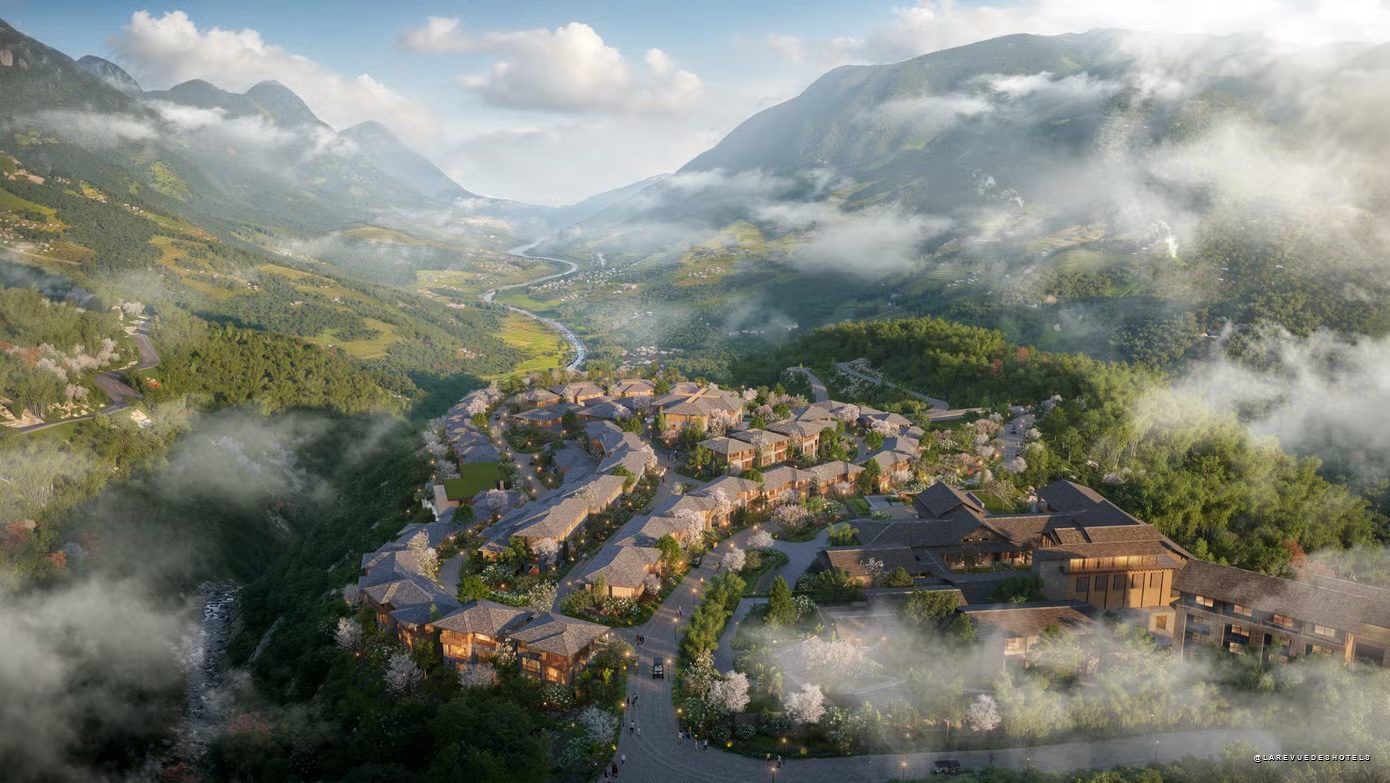

- 🏔️ The project · The Residences at InterContinental Sapa Resort · 79 branded villas in the Muong Hoa valley in Sapa, northwestern Vietnam.
- 🤝 The stakeholders · Vietnamese developer Alphanam Group and IHG Hotels & Resorts for the InterContinental brand · launched in Hanoi on 7 September 2026.
- 📐 The site · An 83-hectare complex, the Alphora Muong Hoa International Resort Complex, which will also host the InterContinental Sapa Resort, announced with around 200 keys.
- 🌿 The label · Design aiming for EDGE certification · DP Architects, Avalon, SCSY and P Landscape leading the design.
- 📈 The context · IHG aims to grow from 16 to over 40 hotels in Vietnam · the group has 35 branded residence programmes across 19 countries.
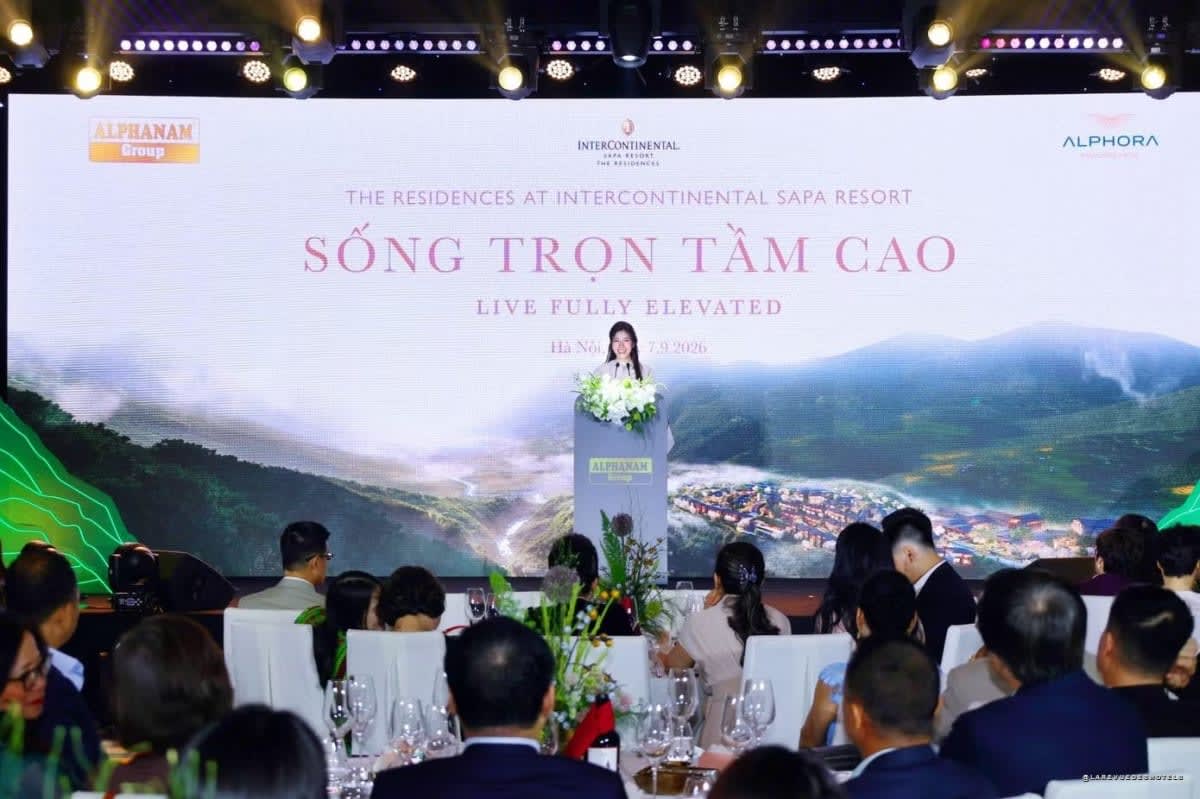
Sapa is not a seaside resort. It is a small mountain town in northwestern Vietnam, perched at around 1,500 metres, a five- or six-hour drive from Hanoi, at the foot of Fansipan, the highest peak in Indochina at 3,143 metres. Tourists come here for the terraced rice fields and the Hmong and Dao villages of the Muong Hoa valley. It is precisely here that IHG Hotels & Resorts and developer Alphanam Group have chosen to locate the northern region’s first InterContinental residences: 79 branded villas, launched in Hanoi on 7 September 2026, within an 83-hectare estate that will also house the future InterContinental Sapa Resort.
Contents
What The Residences at InterContinental Sapa Resort are
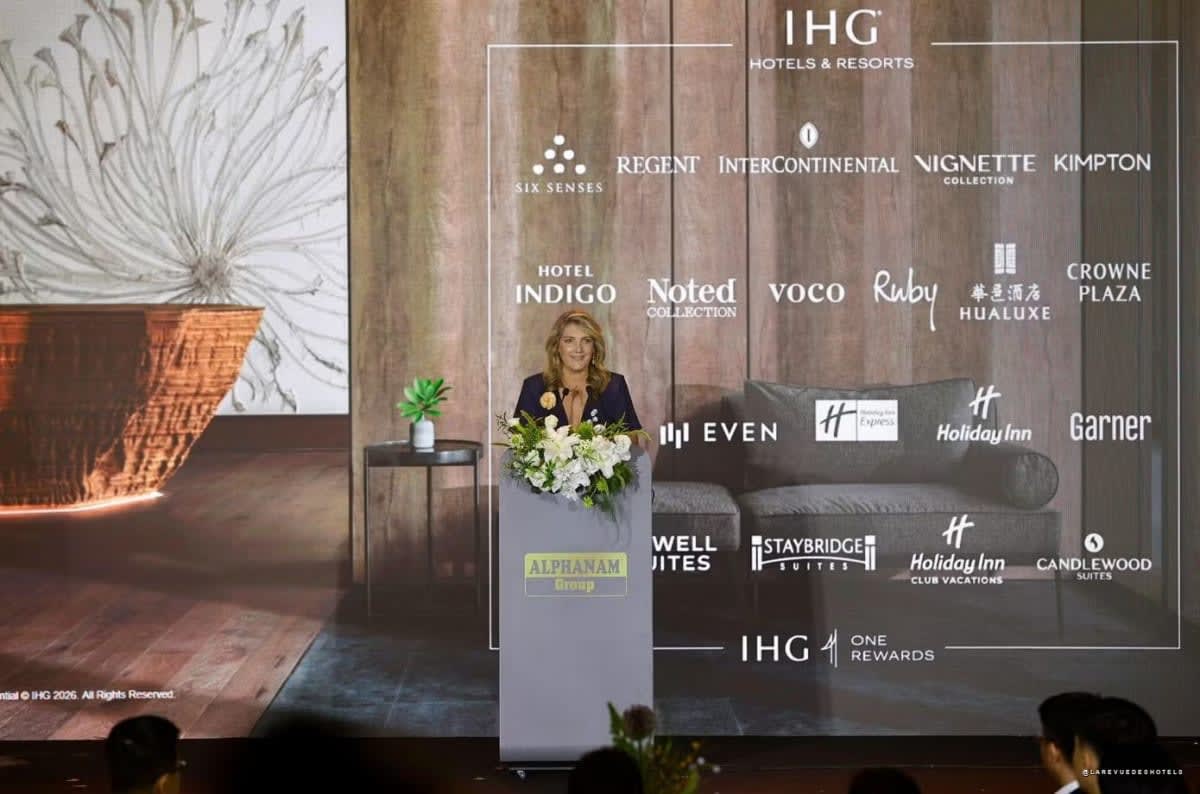
The concept is that of branded residences, a model that has established itself in luxury hospitality over the past decade: villas sold to private individuals, designed and operated to hotel brand standards, with access to the neighbouring hotel’s services. Here, owners will have access to the concierge, restaurants, spa, swimming pools and butler service of the InterContinental Sapa Resort, subject to charges for some of these services, and will be able to join the IHG One Rewards loyalty programme.
The estate is called the Alphora Muong Hoa International Resort Complex. Across its 83 hectares, Alphanam has planned since 2021 a cultural park with botanical gardens, a gallery and a climbing trail, the InterContinental Sapa Resort, whose initial signing mentioned around 200 villas and rooms, and a Holiday Inn Resort Sapa · with both hotels totalling 475 rooms according to the agreement signed in Edinburgh in the presence of the Vietnamese Prime Minister. The 79 villas form the residential component of this development and, according to the developer, represent the highest-altitude InterContinental residential programme in the world.
◆ The villas and the Muong Hoa valley
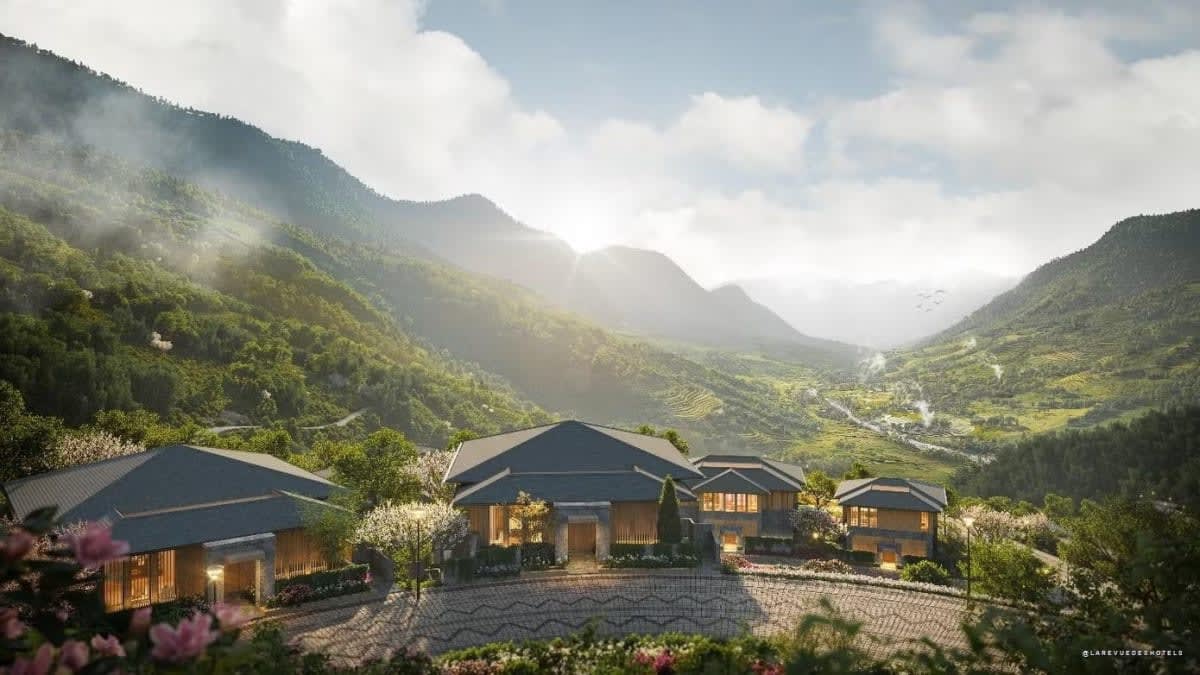

Tiered architecture designed for a mountain climate
Alphanam has brought together four firms to design the estate: DP Architects, Avalon, SCSY, and P Landscape for the landscaping. The villas are terraced along the slope following the contours of the land, mirroring the terraces they overlook, featuring steeply pitched roofs and floor-to-ceiling windows oriented towards the valley. The choice of British and Swiss architects is not merely decorative: Sapa experiences cold, damp winters, with fog for a good part of the year and snow in some years, requiring insulation and moisture management that the country’s seaside projects ignore.
The programme is targeting EDGE certification, the sustainable building standard of the International Finance Corporation, a World Bank affiliate, which requires a minimum of 20% savings in energy, water and embodied energy compared to a local baseline building. This is a more common certification in Southeast Asia than the American LEED standard, and better suited to new builds of this type.
“Developing a project on heritage land demands the highest level of respect and discipline,” stated Nguyen Ngoc My, Vice President of Alphanam Group, at the launch. On behalf of IHG, Bryan Chan, Vice President of Development for Southeast Asia and Korea, noted that the project extends an existing partnership with the developer centered around the InterContinental and Holiday Inn Resort brands.
Alphanam, the developer bringing major brands to Sapa
The Hanoi-based family-run group is not betting on a single brand. A few kilometres from the InterContinental estate, Alphanam has launched construction on a second complex, valued at 5,500 billion dong (approximately $208 million) and scheduled for completion in 2027, which will house a 316-room Courtyard by Marriott Sa Pa, 192 serviced apartments and 9 bungalows, as well as Apartments by Marriott Bonvoy Sapa, featuring 354 residences and 18 townhouses. Sapa is thus becoming the only mountain destination in Vietnam to combine the world’s two largest hotel groups, across two distinct segments: luxury with IHG, and accessible upscale with Marriott.

| The Residences at InterContinental Sapa Resort | 79 villas |
| InterContinental Sapa Resort (signed 2021) | ≈ 200 keys |
| Holiday Inn Resort Sapa (signed 2021) | 475 rooms with InterContinental |
| Courtyard by Marriott Sa Pa (completion 2027) | 316 rooms · 192 apts · 9 bungalows |
| Apartments by Marriott Bonvoy Sapa (2027) | 354 residences · 18 houses |
| InterContinental sub-zone investment | ≈ 5,000 bn VND |
| Bank financing (BIDV) | ≈ 2,300 bn VND |
Why IHG is betting on Vietnam’s peaks
As we wrote at the end of August: IHG wants to grow from around 16 hotels in Vietnam to over 40, increasing from 4,800 to some 12,000 rooms, with two additional brands. This plan is backed by a market that welcomed nearly 13.9 million international visitors in the first seven months of 2026, up 13.8%. Until now, the group’s presence has been concentrated in Hanoi, Ho Chi Minh City, Da Nang, Nha Trang, Phu Quoc and Ha Long Bay, meaning cities and the coastline. Sapa is its first mountain location in the country.
On the residential front, IHG had 35 branded residence programmes open or selling across 19 countries as of 30 June 2026, and signed The Regent Ho Tram earlier this year on the coast southeast of Ho Chi Minh City. The rationale is as financial as it is hotel-driven: villa sales fund the construction of the hotel, and the hotel, once open, enhances the value of the villas. For a Vietnamese developer, the international brand is also what makes the product marketable to buyers from Hanoi, Singapore or Hong Kong who would not buy an unbranded villa at the bottom of a valley.
| Current hotels | ≈ 16 |
| Target hotels | over 40 |
| Current rooms | ≈ 4,800 |
| Target rooms | ≈ 12,000 |
| Current brands present | 7 → 9 |
| IHG branded residences worldwide (30 June 2026) | 35 programmes · 19 countries |
What to check before showing interest
No opening schedule has been announced, neither for the hotel nor for the delivery of the villas, and the sizes and prices of the 79 units were not made public at the launch. Financing, on the other hand, is confirmed: BIDV bank is providing nearly 2,300 billion dong out of a total investment of around 5,000 billion for the InterContinental sub-zone. For a foreign buyer, the decisive issue remains the ownership regime: in Vietnam, non-residents acquire a limited-term, renewable right of use rather than freehold ownership of the land. This should be examined before looking at the price per square metre.
Fifteen years ago, Sapa was limited to guesthouses and a renovated colonial hotel. The fact that two global groups are committing nearly $400 million in projects there, including a luxury brand, says something about the Vietnam of 2026: the country is no longer just selling its beaches. It remains to be seen whether the InterContinental will open before the villas are handed over · in branded residences, the order of operations dictates the value of the product.