
- 🏙️ The world’s first urban Ritz-Carlton Reserve · Marriott’s most exclusive brand leaves secluded retreats for a megacity.
- 📍 Shanghai North Bund Center, Hongkou District · 785 Dongchangzhi Road, on the west bank of the Huangpu.
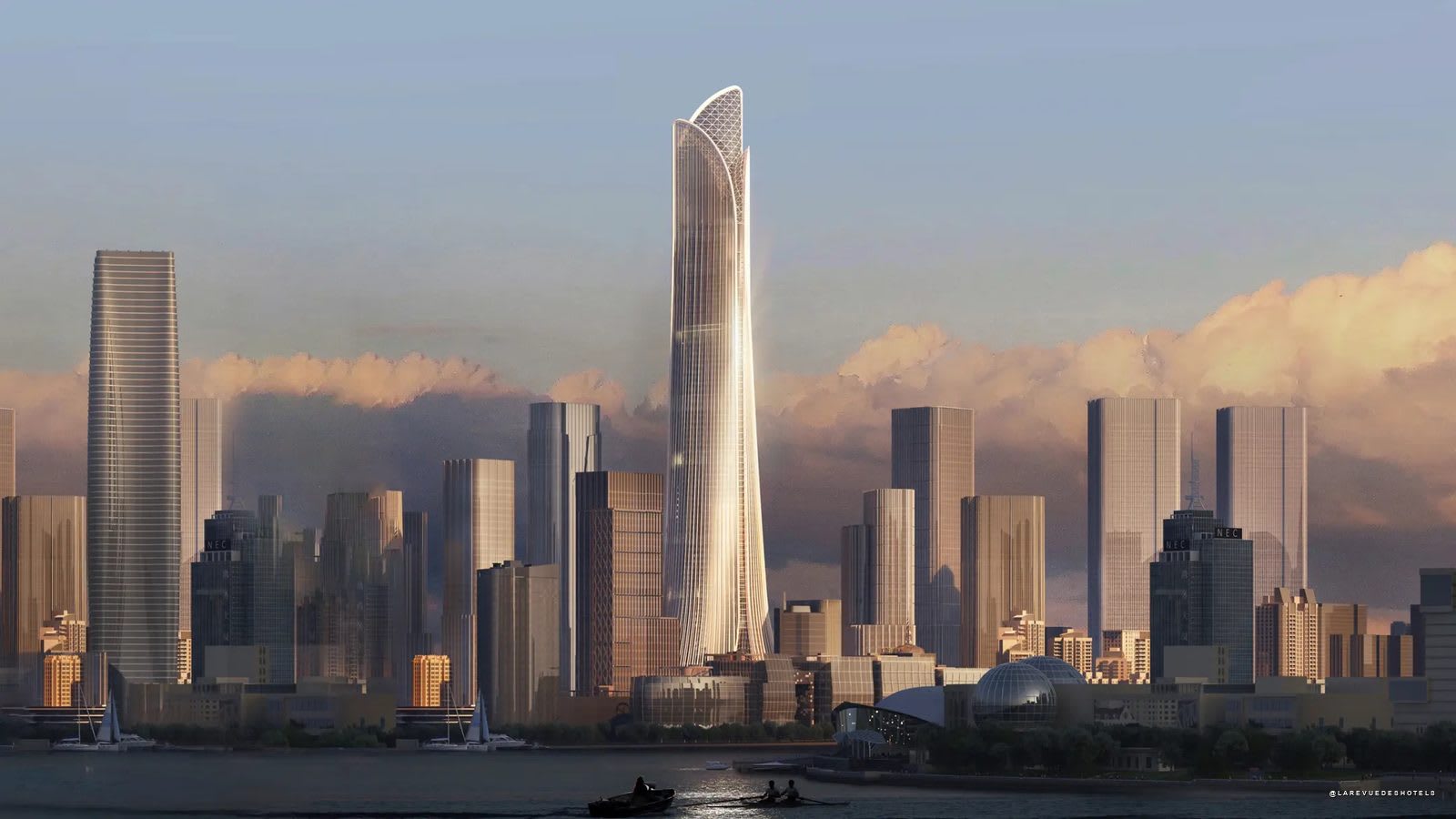
- 🏗️ 480 metres, 99 storeys above ground · the tallest tower in Puxi, designed by Kohn Pedersen Fox, under construction since March 2023.
- 🔑 110 rooms and suites · including a presidential suite, with an opening announced for 2030.
- ⚡ The world’s tallest all-electric tower · no fossil fuels burned on site, targeting LEED Platinum.
- 🏆 Shanghai is set to become the only city in the world to bring together all eight of Marriott’s luxury brands.
Ritz-Carlton Reserve comprises six properties worldwide, all set in secluded locations: a coffee plantation in Bali, a reserve in the Mexican jungle, a Maldivian island. Marriott has just announced that the seventh will sit at the top of a 480-metre tower in Shanghai. The agreement signed with Chinese developer Shanghai SIIC schedules an opening in 2030 at the Shanghai North Bund Center, making this property the first urban Reserve in the brand’s history.
Contents
What Marriott is announcing, and what it is not
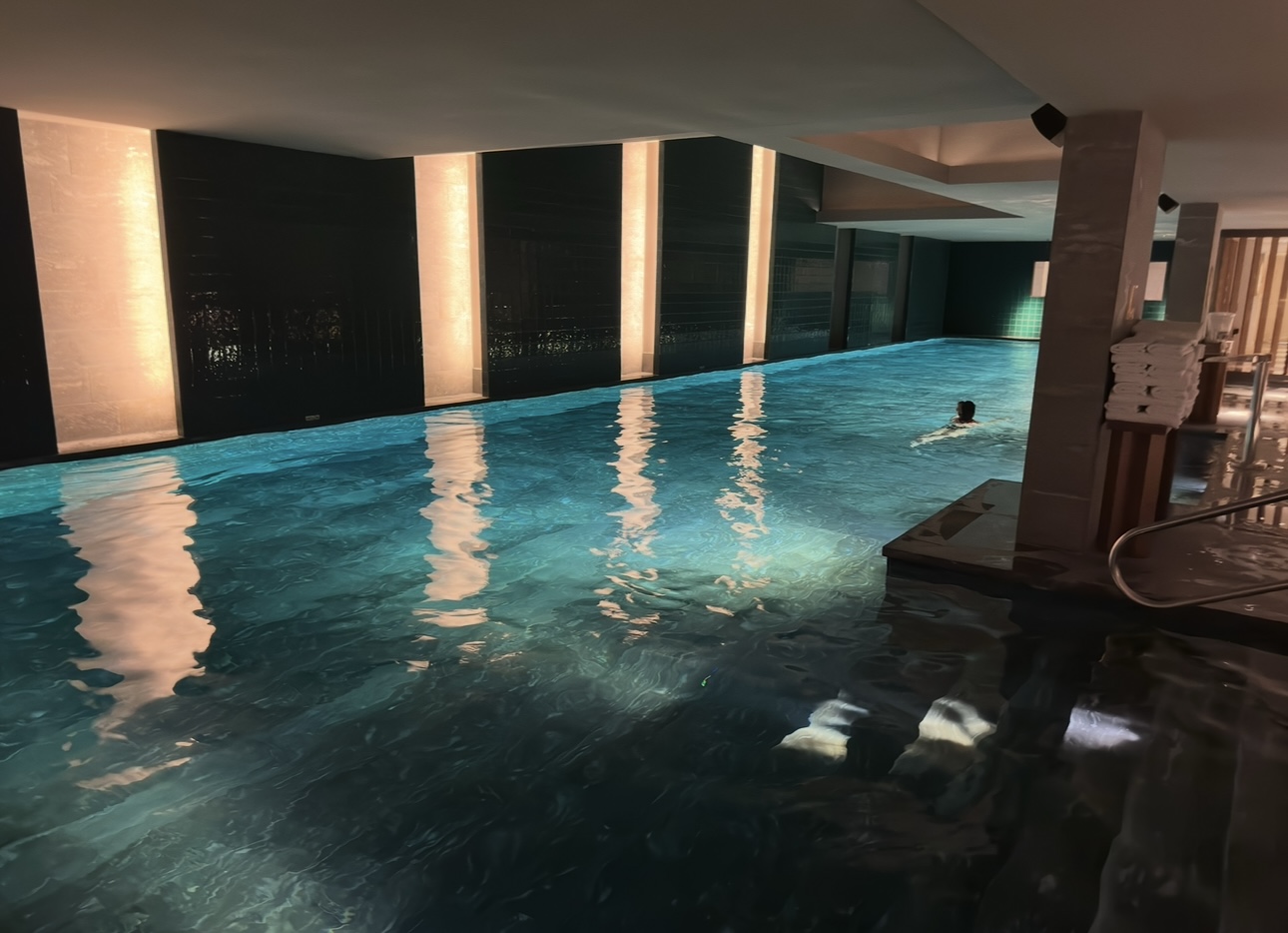
The press release remains deliberately understated. The hotel will occupy the upper section of the tower, with 110 rooms and suites including a presidential suite, and a service programme that fits into a few lines: a speciality restaurant, a Chinese dining venue, a lobby lounge, a signature bar, an indoor pool, a fitness centre and a spa.
This is minimal, and understandably so: between signing an agreement and the opening, there are four years of design work ahead. Anything else circulating about longevity treatments, local craftsmanship or materials is mere projection, not an announcement. Tina Edmundson, President of Luxury at Marriott International, sticks to the essentials, referring to an ‘evolution’ of the Reserve philosophy.
A useful clarification regarding the floors, as conflicting figures are circulating: the tower has 99 storeys above ground and four below ground, which accounts for the 103 levels sometimes mentioned. The hotel will occupy the top of the building, though Marriott has not specified the exact floors at this stage.
The tower is more interesting than the hotel
The Shanghai North Bund Center is not just any office building with a hotel placed on top. The land was acquired in 2021 by a consortium comprising Shanghai Industrial Development, Shanghai City Investment Group and Shanghai Construction Engineering Group, before being put out to international tender. American firm Kohn Pedersen Fox won the bid, partnering with the East China Architectural Design & Research Institute as executive architect. Construction began on 24 March 2023, covering 450,000 square metres, with completion scheduled for 2030.
The design starts as a circle at ground level and transitions into a triangle as it rises. The crown evokes a magnolia flower, Shanghai’s floral emblem, and its triple-arched structure gives the silhouette its signature look. Upon completion, it will be the tallest tower in Puxi, the historic riverbank, which has long been dominated by the skyscrapers opposite in Lujiazui.
The most notable point lies elsewhere. KPF claims the world’s tallest all-electric tower: no fossil fuels burned on site, an announced 40 to 50% reduction in operational carbon and 20 to 30% reduction in embodied carbon compared to a similar skyscraper. The development targets LEED Platinum certification as well as the Chinese Three Star rating. Thornton Tomasetti is responsible for the structure, Arup for the facade, and WSP for the building services.
A summit open to the public, above the hotel
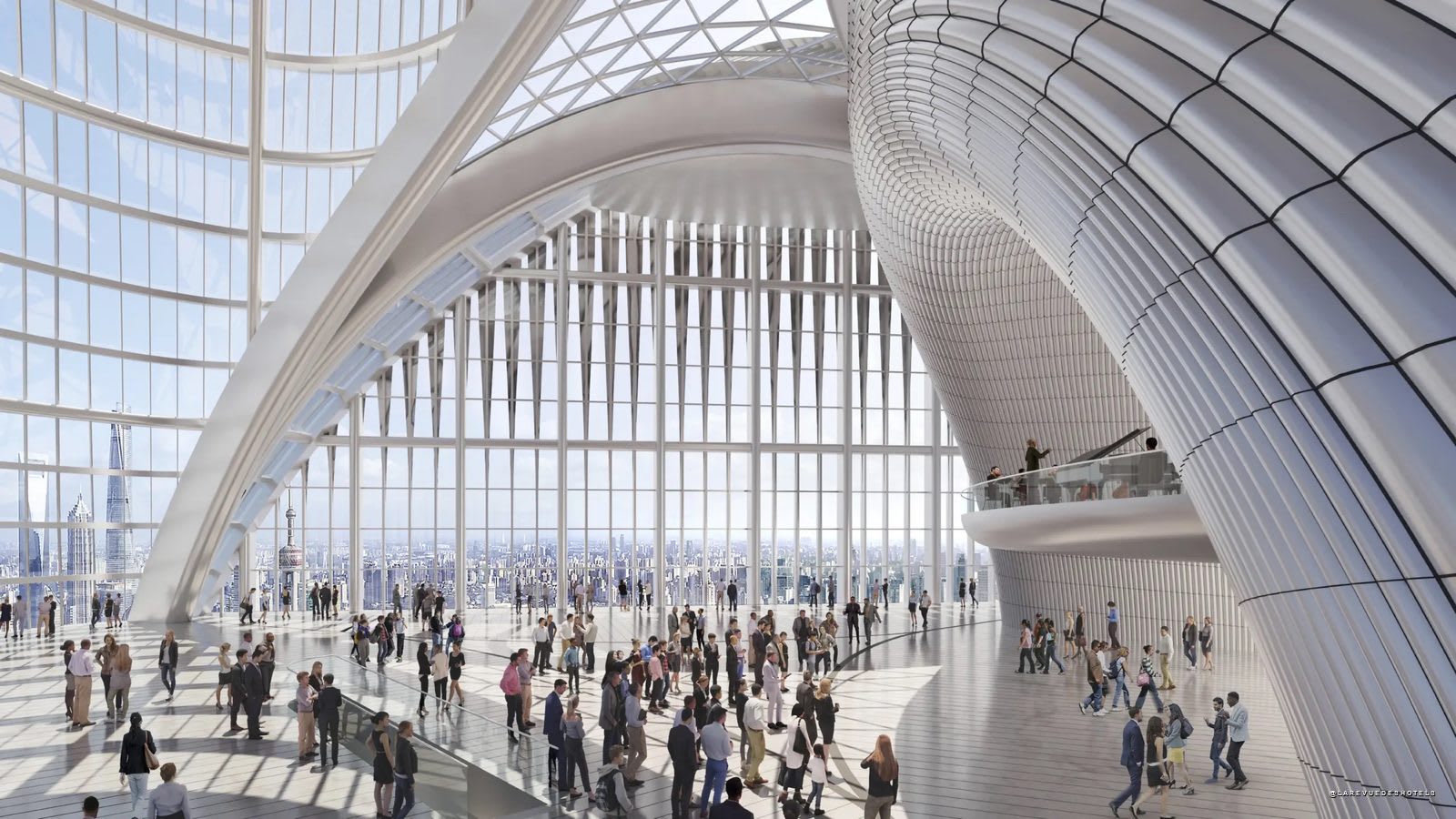
This is what truly sets this project apart from typical hotel towers. The crown is not private: KPF has designed a cathedral-like civic hall, accessible to all, complete with an observation deck. Municipal documents mention cafes, teahouses, restaurants and exhibition spaces in the upper section, along with a public viewing platform at 442 metres.
For a Ritz-Carlton Reserve, whose entire promise relies on escaping the world, coexisting with a public facility overhead is an unusual exercise. Yet, for the brand, it is also a selling point: the hotel’s exclusivity will be measured by the contrast with the crowds heading up to admire the view a few floors above.
A retreat brand moving into the city
The real story of this announcement is not the height, but what it does to the brand. Ritz-Carlton Reserve was built on a promise of remoteness: a small key count, a rare location, a sense of geographical exclusivity that the city cannot replicate. Since the launch of Phulay Bay in Thailand in 2009, the brand has grown with deliberate slowness, with barely a handful of properties in fifteen years.
Transposing this vocabulary to the top of a Chinese skyscraper is a positioning gamble. Exclusivity will no longer come from the location but from the numbers: 110 keys within a 450,000-square-metre development. It remains to be seen whether a traveller who paid for the jungle of Mayakoba will find anything comparable above the Huangpu, or if Reserve simply becomes the next tier up for Ritz-Carlton in urban areas.
The North Bund, Shanghai’s third hub
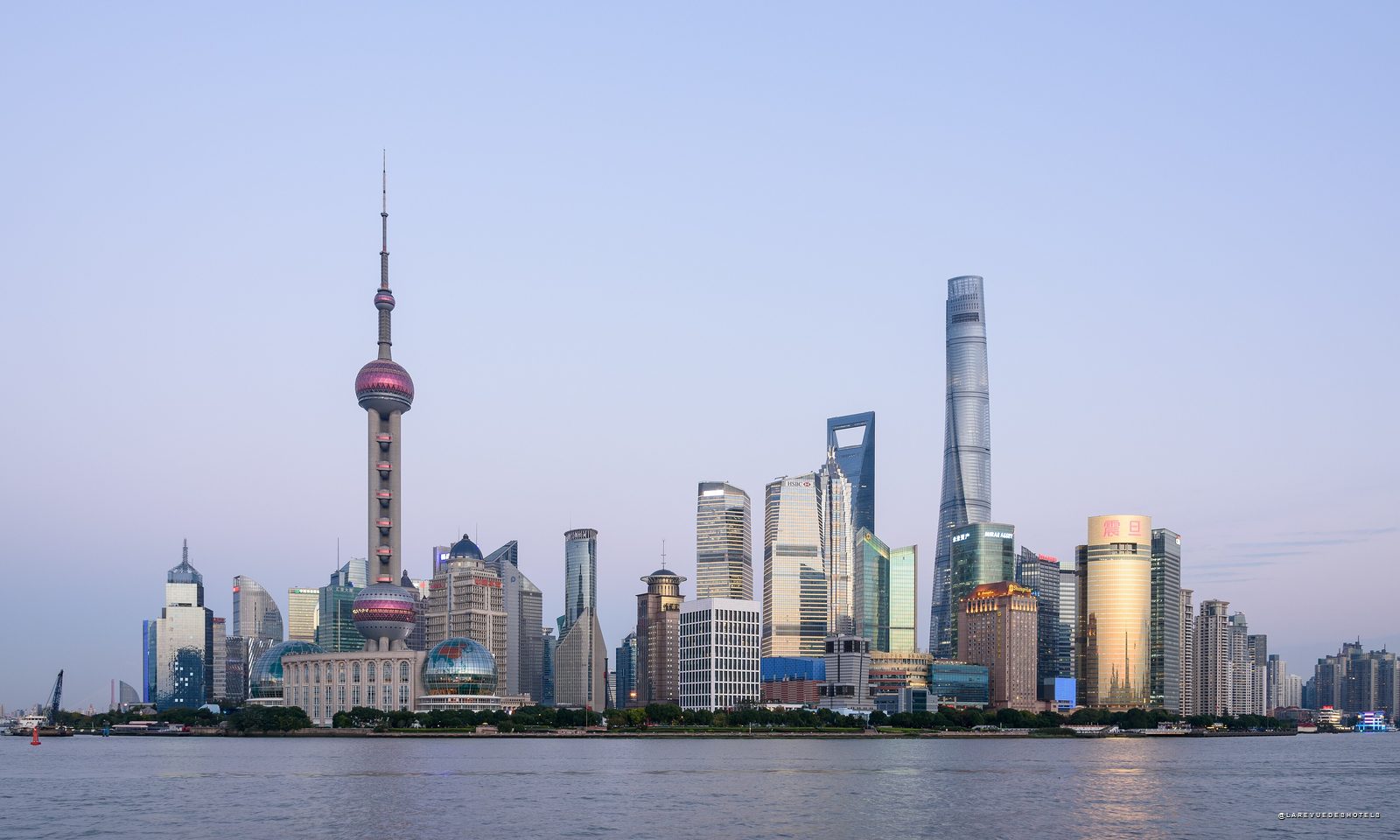
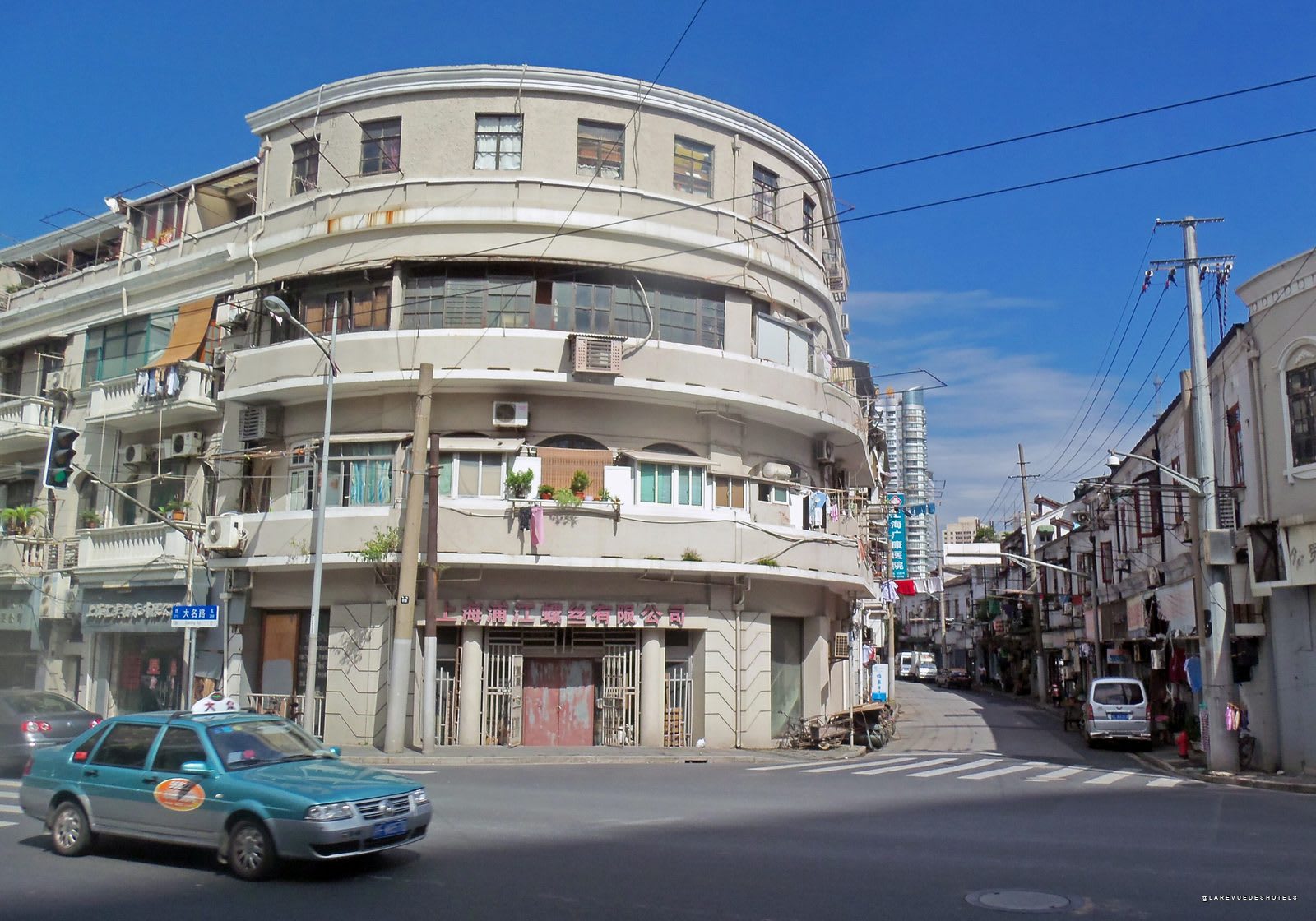
Shanghai has long had two showcases: the Bund and its colonial facades on the west bank, and Lujiazui and its skyscrapers on the east bank. The North Bund is the third act, developed in the Hongkou District, upstream from the historic Bund, on former port and working-class neighbourhoods. For several years, the municipality has been pushing a programme of office towers and financial headquarters here, with the explicit ambition of creating a world-class business hub.
For a hotel, the location has a concrete advantage that the Bund lacks: space. The riverfront is wider, less congested, and the riverside promenade is recent. The trade-off is that we will have to wait until construction is finished to see if the neighbourhood has the density of life that makes a property of this calibre work in the evenings and at weekends.
The grand slam of the eight luxury brands
Marriott slips a sentence into its press release that serves as a strong selling point: upon opening, Shanghai is set to be the only city in the world to gather all eight of the group’s luxury brands. Ritz-Carlton, Ritz-Carlton Reserve, St. Regis, JW Marriott, W Hotels, The Luxury Collection, EDITION and Bulgari. No other metropolis, not New York, London, nor Dubai, currently boasts the complete collection.
The achievement is real, but it also says something about the group’s Chinese strategy: occupying every segment within a single city rather than expanding each brand city by city. It is a market-share logic, not one of exclusivity.
Our take
An opening in 2030 announced in 2026 means that much can still change. Agreements of this type get delayed, renegotiated, and sometimes cancelled. What matters today is the brand decision, not the date. Marriott is willing to dilute the single attribute that truly set Reserve apart from the rest of its portfolio · isolation · betting that the name alone will sustain its positioning.
The gamble will be judged on one specific point: room size and the generosity of the common areas. If the 110 keys truly occupy the volume of several entire floors, offering spaces that the city never normally provides, the promise will hold. If the hotel feels like a slightly more expensive Ritz-Carlton, the brand will have lost what made it interesting. At this stage, the most remarkable element of the project is not the hotel: it is the tower that will house it.
Practical information on Ritz-Carlton Reserve Shanghai
- Address · Shanghai North Bund Center, 785 Dongchangzhi Road, Hongkou District, Shanghai
- Announced opening · 2030
- Capacity · 110 rooms and suites, including a presidential suite
- Tower · 480 metres, 99 storeys above ground and four below ground, 450,000 sq m
- Design · Kohn Pedersen Fox, with the East China Architectural Design & Research Institute
- Developer · Shanghai SIIC North Bund New Landmark Construction and Development