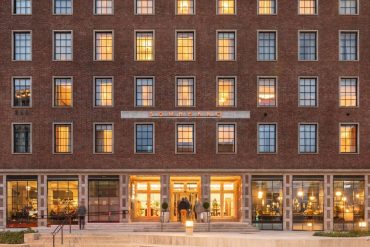

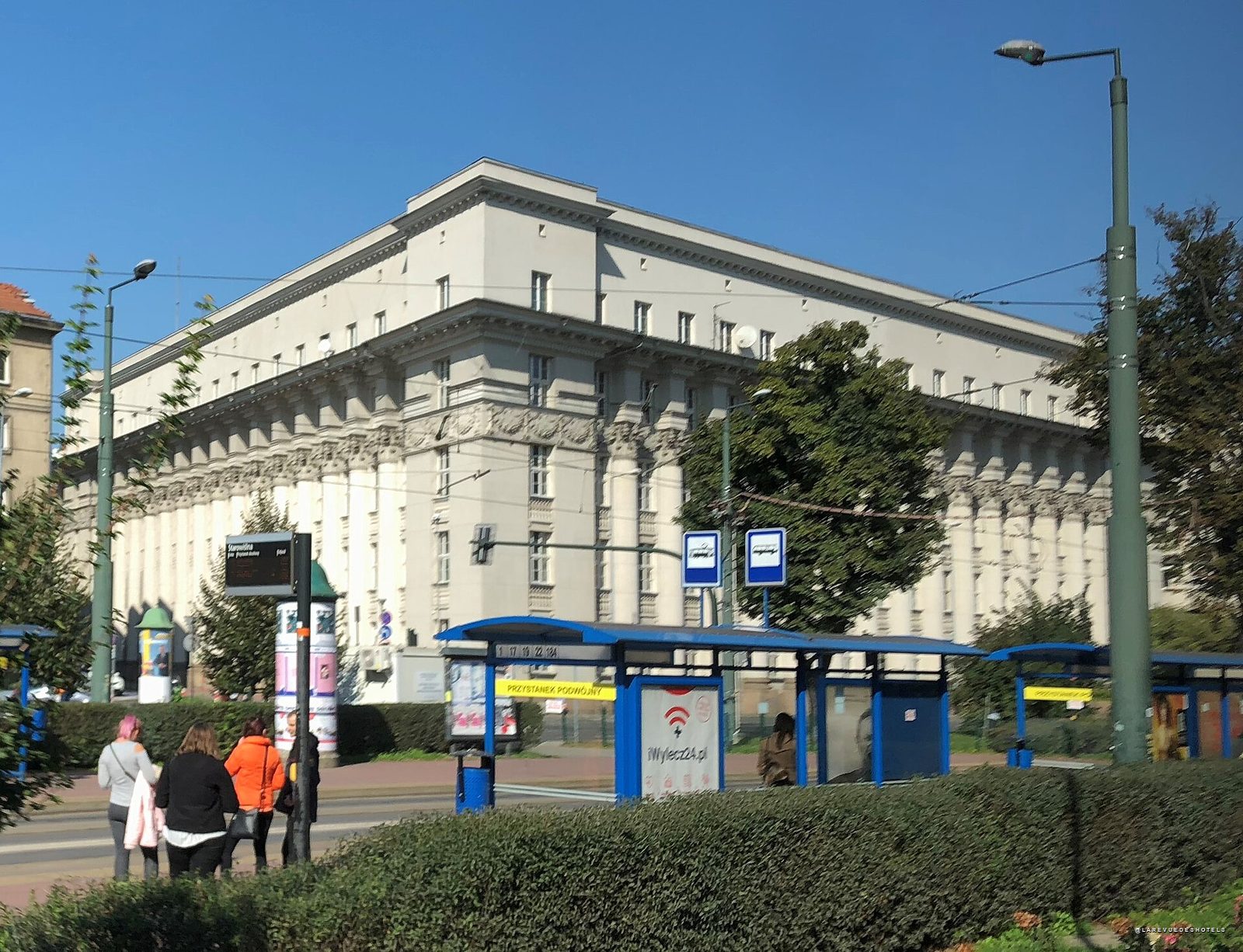

- 🏛️ A 1922 gmach · the former PKO bank headquarters on Wielopole Street, designed by Adolf Szyszko-Bohusz, becomes Krakow’s first JW Marriott.
- 🔨 Works began in late September 2025 · no completion date has been announced, and that is deliberate.
- 🛏️ 126 keys announced · within the volumes of the former offices, featuring exceptional ceiling heights.
- 🦅 The Polish eagle will return · the sculpture destroyed during the Second World War will be reinstalled on the facade.
Some construction projects have their opening dates announced even before the first spade hits the ground. This one does the exact opposite. On Wielopole Street in Krakow, the monumental former headquarters of the PKO bank is being transformed into a JW Marriott, and the investor refuses to commit to a schedule. “It takes time,” the project management sums up. In an industry that thrives on opening dates, that admission is worth noting.
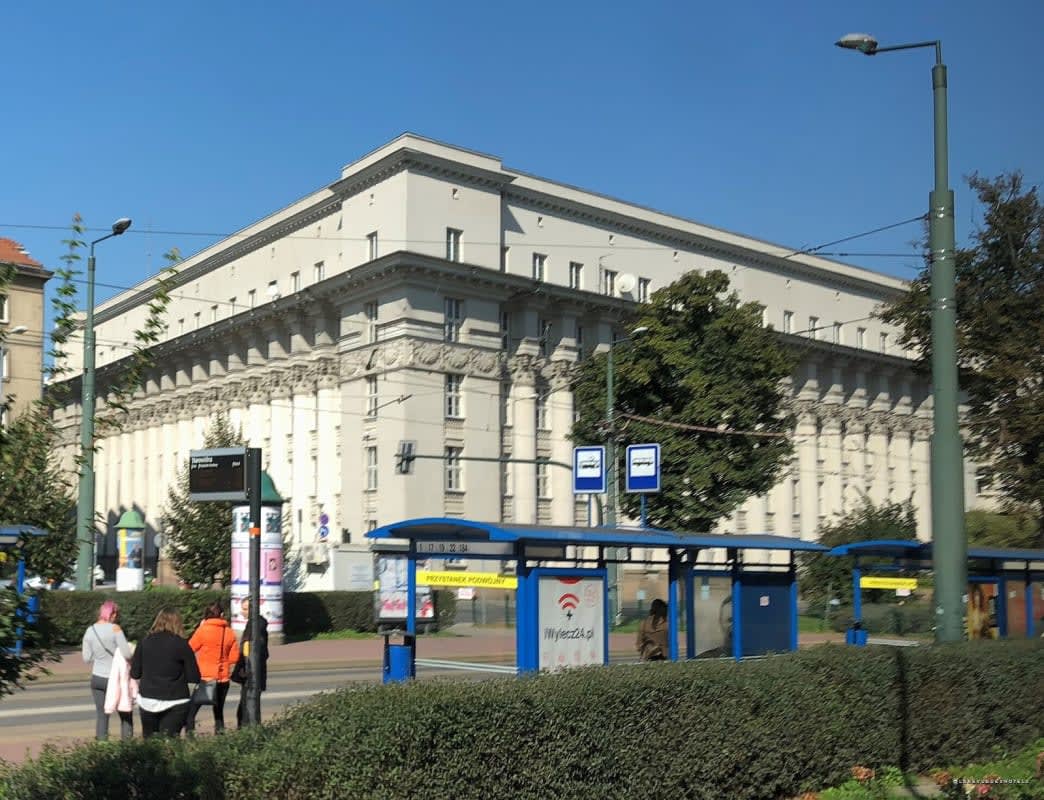
From a financial bastion to a luxury hotel
The building is no ordinary office block. Built between 1922 and 1924 to the plans of Adolf Szyszko-Bohusz, one of interwar Poland’s leading architects, it features a monumental colonnade that makes it a landmark in central Krakow. Adaptation works began in late September 2025.
Before the structural work, a meticulous preservation phase was carried out. Conservation teams catalogued and safely stored the original decorative elements: movable pieces to secure warehouses, while fixed structures, period woodwork, and monumental fireplaces were wrapped in custom-built casing. Adapting an early 20th-century administrative building to five-star standards subsequently requires heavy intervention: new partitions, the excavation of elevator shafts, and completely overhauled technical networks.
The dome, the parquet floors, and the eagle
The signature of the future hotel lies in its state rooms. The banking hall, topped by its dome, will become the heart of the establishment under restored zenithal lighting. The original parquet floors are undergoing specific treatment, and the former executive office, a remarkable piece of cabinet-making, will be preserved.
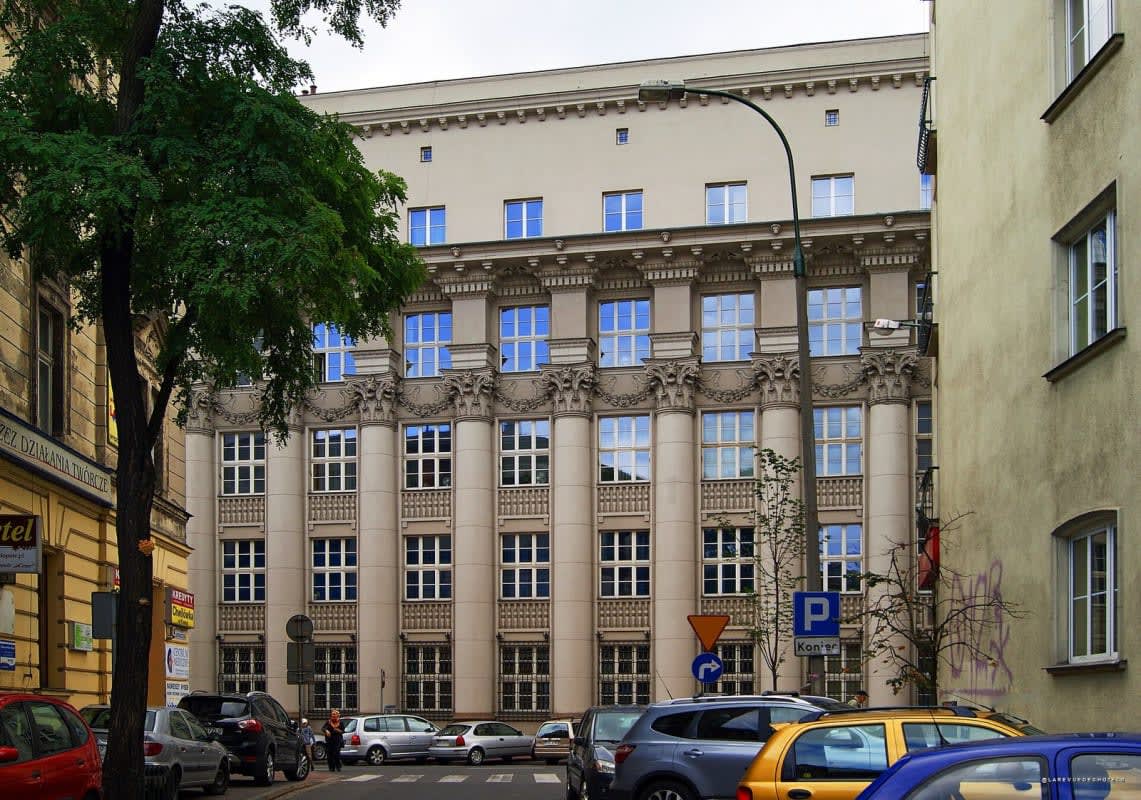
The most symbolic gesture concerns the exterior. The Polish eagle, a sculpture destroyed during the Second World War, will be reinstalled on the monumental facade. The exterior shell will be cleaned to restore its original brightness, and the surrounding areas landscaped.
What the hotel will offer
The address will feature around 120 rooms and suites. The volumes of the former offices lend themselves to exceptional suites, boasting high ceilings and views of the historic centre. The most appealing detail is found in the basement: the spa and its indoor pool will occupy the former vault rooms. A gourmet restaurant, whose concept is yet to be unveiled, and a permanent exhibition dedicated to the building’s history complete the programme.
Who is behind the project: Józef Wojciechowski and J.W. Construction
Behind the JW Marriott brand, the investor is Polish. The Wielopole Street gmach has belonged since 2017 to J.W. Construction Holding, the real estate group owned by Józef Wojciechowski, one of the country’s wealthiest individuals, who acquired it for over 44 million zlotys. Known for its residential programmes in Warsaw, the developer has spent the last fifteen years building a hotel division that now accounts for more than 2,400 beds in Poland, including the Czarny Potok Resort SPA & Conference in Krynica-Zdrój and the Hotel Dana in Szczecin, and is now looking towards the Seychelles.
Krakow will mark its first step into ultra-luxury and the first JW Marriott in Poland: the brand counts around 125 hotels worldwide, including nine in Europe. The programme announced by the group features 126 rooms, a signature dining restaurant, a JW Bar, a pool, a spa in the former vault rooms, and conference rooms. The permit was issued in mid-2025, and construction began in the autumn. See also the former Bank Handlowy in Kalisz, another Polish bank destined for hospitality.

A Krakow market undergoing reorganisation
The operation is not happening in a vacuum. In the summer of 2026, Pekao bank prepared the sale of its own historic downtown building, while conversely, some projects plan to convert existing five-star hotels into apartments. Krakow is currently balancing, asset by asset, between prestige hospitality and high-end residential real estate. In July 2026, the roadway on nearby Dietla Street was also reconfigured to prepare access for the future establishment.
Our view: the absence of a date is the real news
Heritage conversion has become a standard reflex in luxury hospitality, and for good reasons: a listed building tells a story that no new construction can fabricate. Restoring a dome and reinstalling a lost eagle requires a sensitivity that international clientele knows how to appreciate, and Krakow lends itself to this better than most European cities.
Yet the most telling part remains the refusal to announce a date. In an industry where the opening date is a commercial tool, foregoing it amounts to admitting that construction dictates the pace, not the marketing calendar. That is rather a good sign for the quality of the restoration. It also means that one will need to be patient, and treat any deadlines circulating without the investor’s backing with caution.
- →Hotel Warszawa turns its suites into art galleries for the 5th edition of its fair
- →Em Cracóvia, JW Marriott transforma banco de 1922 em hotel de luxo
- →In Krakau verwandelt JW Marriott eine Bank aus dem Jahr 1922 in ein Luxushotel
- →The Luxury Collection launches ten cultural expeditions
- →The finest castle hotels in France · our 2026 selection