

◉ First GlanceOur report on opening day
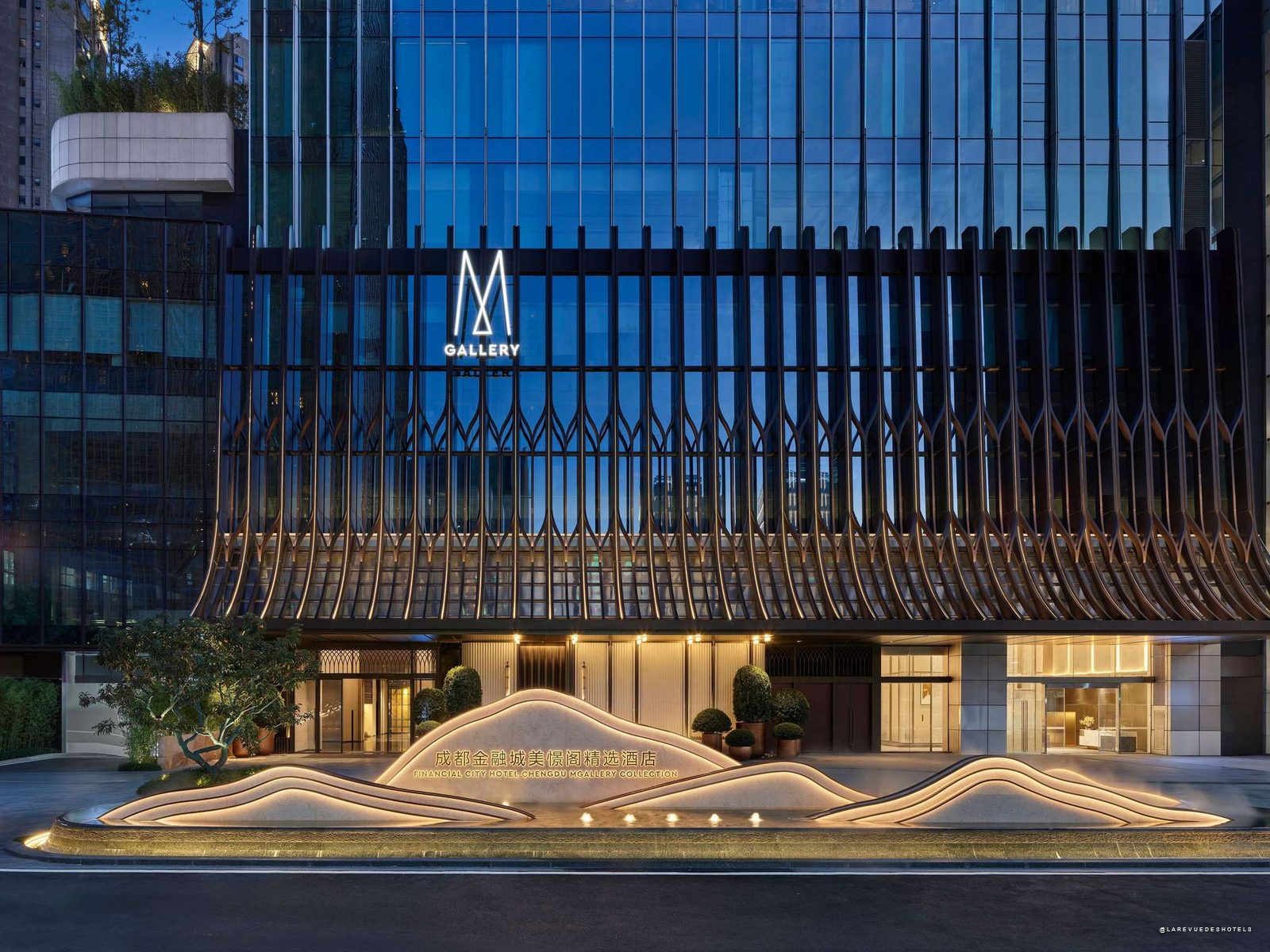
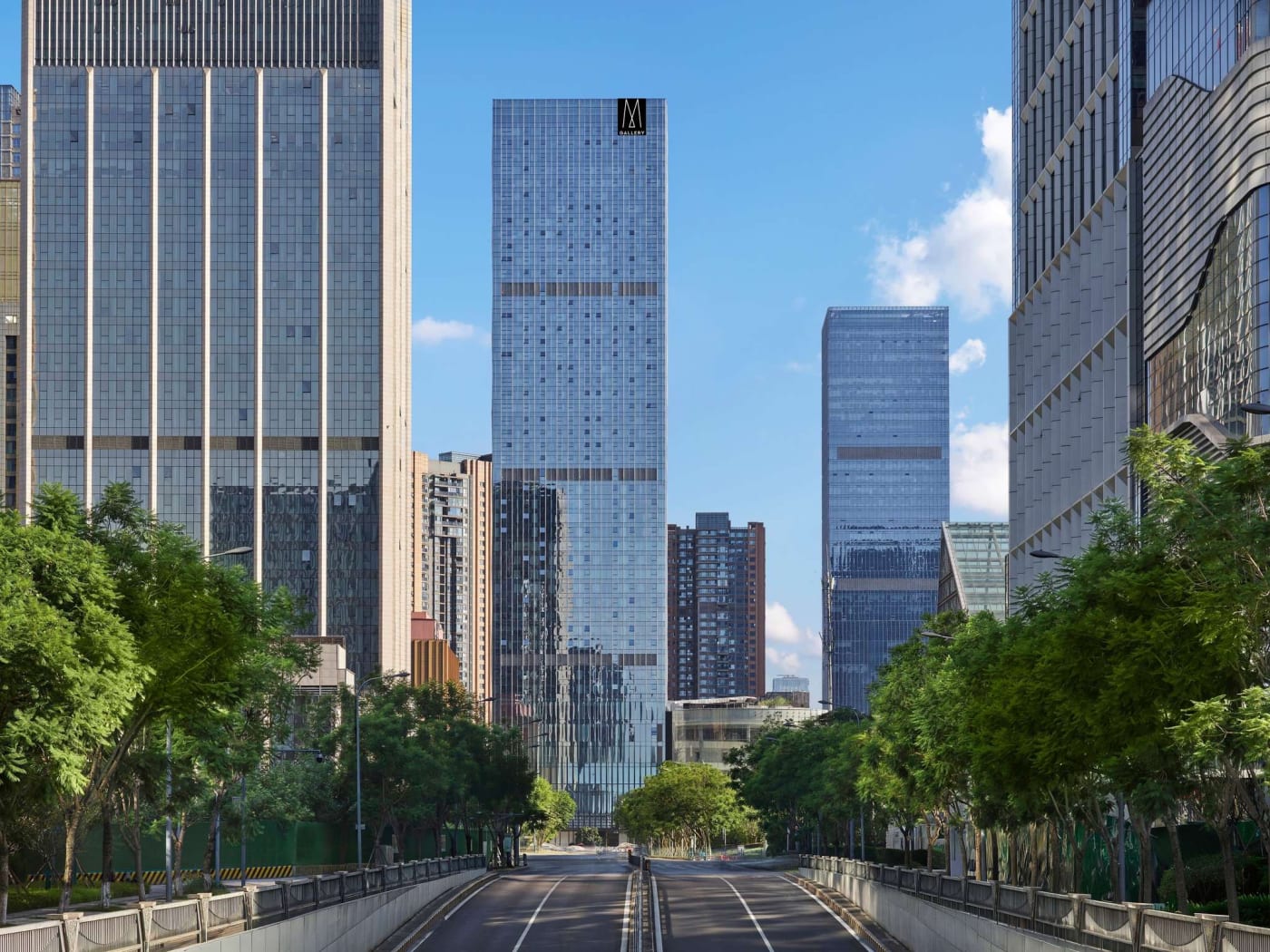
- The Opening · The Financial City Hotel Chengdu · MGallery Collection welcomes its first guests in the financial district of Chengdu, China.
- The Capacity · 155 rooms and suites designed by Australian agency Stack Studio, along the Jinjiang River.
- The Vision · A recreated lychee orchard in the middle of the city, inspired by a Tang dynasty poem, featuring a Sky Garden on the seventh floor.
- The Context · The third MGallery address in the Chengdu metropolitan area, in a province where Accor is accelerating its development.
A lychee orchard at the foot of office towers
Chengdu is not an obvious luxury stopover. As the capital of Sichuan, this city of over twenty million inhabitants is primarily a business hub, with its Tianfu financial district serving as its vertical heart. It is precisely here, at 1777 North Tianfu Avenue in the Wu Hou district, that the MGallery collection has chosen to set up its new address.
Australian agency Stack Studio’s challenge was to provide a green counterpoint to this mineral environment. The guiding thread of the project is a poem by Zhang Ji, the “Ballad of Chengdu”, written during the Tang dynasty, which describes a peaceful countryside on the outskirts of the city. Century-old lychees have been planted on the ground floor and the seventh-floor terrace, transforming the lobby into a clearing and the roof into a hanging orchard.

One hundred and fifty-five rooms designed as residences
The 155 rooms and suites abandon the codes of standard business hotels in favour of a residential atmosphere. The interiors play with muted tones and soft textures that evoke the mists of the Sichuan basin and the low-angle light of late afternoons. The best-oriented volumes frame the Jinjiang River, which crosses the district and softens the geometry of the neighbouring towers.
The Sky Garden on the seventh floor serves as an open-air common room. Afternoon tea is served here and the house hosts its receptions against the backdrop of the Chengdu skyline. A flexible event space of approximately 480 square metres completes the offering for seminars, aligning with its location amid corporate headquarters.
En images

Faites glisser pour parcourir · cliquez pour agrandir
Lychee, from decor to plate
The motif continues at the table. The Lychee restaurant serves breakfast, lunch and an à la carte menu that blends international repertoire with Sichuan pepper · a delicate balancing act in a region where cuisine does not compromise on intensity. The M Bar, an MGallery collection signature, completes the offering with house cocktails, speciality coffees and an afternoon tea service that revisits the Chinese tea ritual.
On the wellness side, the fitness centre benefits from generous natural light and opens onto an outdoor terrace, a rare configuration in a business centre hotel.


A technical envelope for energy efficiency
The establishment highlights a set of technical choices that relate as much to environmental commitment as to operations. Low-emissivity glazing limits heat loss and solar gain, while magnetic levitation chillers · a technology that eliminates mechanical bearings and therefore part of frictional losses · provide cooling. For a building air-conditioned year-round in a humid basin like Sichuan, this factor weighs heavily on the balance sheet. The elimination of single-use plastics completes the initiative, in line with Accor group commitments.
| Address | 1777 North Tianfu Avenue, Wu Hou District, Chengdu, China |
|---|---|
| Capacity | 155 rooms and suites |
| Interior Design | Stack Studio (Australia) |
| Dining | Lychee Restaurant · M Bar · Sky Garden |
| Events | ≈ 480 sqm of flexible space |
| Position | 3rd MGallery in the Chengdu metropolitan area |
What Chengdu’s choice reveals
This address becomes the third in the MGallery collection within the metropolitan area, alongside the Ocean Spring Resort and the Chengdu Expo Waterfall Hotel. This density in a single inland metropolis speaks volumes about the shift in the centre of gravity of Chinese luxury hospitality, long concentrated on the coast and capital cities.
MGallery’s positioning lends itself to this: the collection brings together houses with distinct characters rather than a reproducible standard, allowing for a project as literary as a recreated orchard at the foot of towers. The remaining question that only the coming months will decide is whether a business clientele, whose average stay consists of single nights, will take the time to go up to the seventh floor.