
- LVMH chairman Bernard Arnault officially confirmed on 30 January 2026 that there will be no Louis Vuitton hotel.
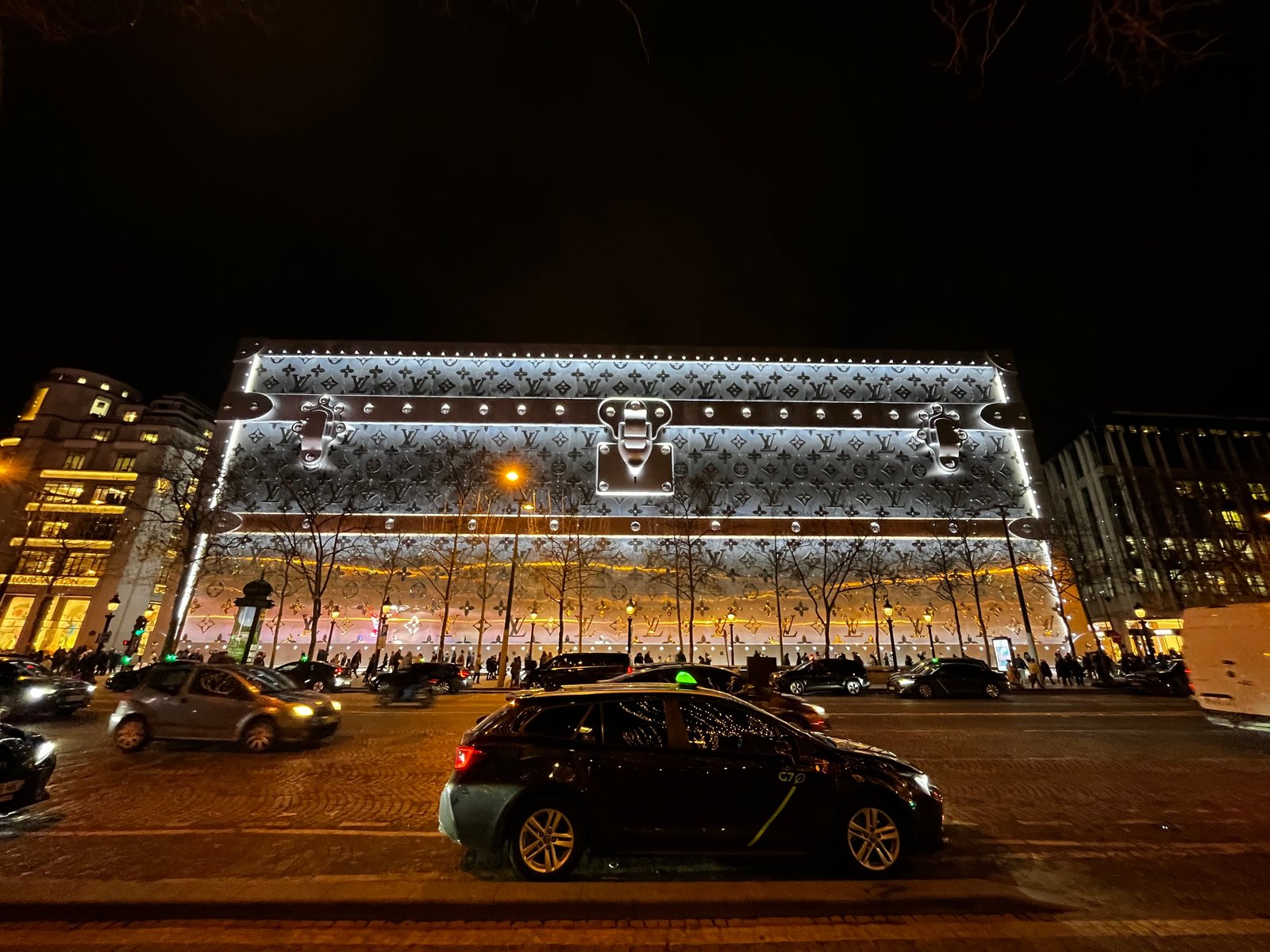
- The project located at 103-111 avenue des Champs-Élysées will not proceed as the group chooses to focus on its core leathergoods business.
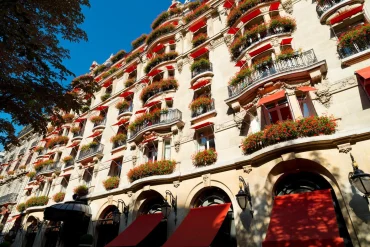
- The site features a 1899 Belle Époque structure that originally housed the legendary Élysée Palace.
- Despite widespread speculation, the term hotel was never officially used in any communication validated by the house of Louis Vuitton.
Since 2024, we have been closely following the most talked-about project in Parisian luxury: the very first Louis Vuitton hotel, announced at 103-111 avenue des Champs-Élysées. Two years of rumours, leaked renderings and worldwide anticipation. The verdict is now in, delivered with the bluntness of a decision taken by Bernard Arnault himself: there will be no Louis Vuitton hotel.
Contents
- Bernard Arnault has decided: “Vuitton will not make a hotel”
- What had leaked about the 103-111 Champs-Élysées project
- Two years of a story: the timeline from scoop to denial
- So what is the 103-111 Champs-Élysées really becoming?
- Luxury reserved for the happy few: the missed opportunity
- La Revue des Hôtels’ perspective
Bernard Arnault has decided: “Vuitton will not make a hotel”
On 30 January 2026, during the presentation of LVMH’s annual results, the group’s chairman put an end to months of speculation. Asked about the possibility of a Vuitton hotel on the Champs-Élysées, his answer left no room for doubt:
“Vuitton will not make a hotel. Vuitton concentrates rather than diversifies.”Bernard Arnault · 30 January 2026
For Bernard Arnault, the house of the trunk is not a fashion label to be stretched to infinity, but above all an exceptional leathergoods maker whose strength lies precisely in its focus on its core business. The statement closes a chapter that Louis Vuitton, in truth, had never officially opened: the word “hotel” never appeared in any communication validated by the house.
What had leaked about the 103-111 Champs-Élysées project
If the idea of a hotel had circulated so widely, it is because the construction project itself is very real and spectacular. Here is what was known of the plans, as they had been described before the denial:
- Address: 103-111 avenue des Champs-Élysées, Paris 8th arrondissement, steps from the house’s historic flagship.
- The building: a Belle Époque structure inaugurated in 1899, which originally housed the legendary Élysée Palace, one of the grandest Parisian hotels of its era, before becoming a bank headquarters and later being acquired by Louis Vuitton in 2018.
- Surface area: over 6,000 sq m blending boutiques, exhibition salons and experiential spaces.
- The supposed “hotel” component: around ten high-end suites, including duplex and triplex units with panoramic views, a restaurant across the 5th and 6th floors extending onto a garden terrace, a private entrance from rue de Bassano, and a 1,500 sq m basement spa with a swimming lane.
These visuals, two perspective renderings and a cross-section, also prompted a takedown request from the lead architecture firm, citing project confidentiality. We were at the front row of that reversal, twenty-four hours before Arnault spoke publicly.
Two years of a story: the timeline from scoop to denial
The scoop
Exclusively, we publish the first details of what promises to be the largest Louis Vuitton Maison in the world.
The announced opening
We detail the scenario of a 2026 opening: around ten suites, a panoramic restaurant and a 1,500 sq m spa.
The email
Twenty-four hours before Arnault’s statement, we receive a takedown request for the visuals, citing project confidentiality.
The denial
At the LVMH annual results, Bernard Arnault rules: “Vuitton will not make a hotel.” The speculation is over.
The metamorphosis
The 103-111 becomes a Louis Vuitton showcase, conceived as a brand destination: retail, dining, exhibition. But guests will not sleep there, or only very few will.
Between the worldwide media frenzy and the words of the LVMH chairman, it is of course the latter that settles the matter.
So what is the 103-111 Champs-Élysées really becoming?
The construction work is not stopping. The 103-111 will indeed become an exceptional Louis Vuitton showcase, but conceived as a brand destination: spectacular retail, dining, a café, exhibition and experiential spaces, rather than a reservation-based establishment. The distinction matters: the house is transforming the avenue into a total window onto its universe, without entering the hospitality trade.
This stance is entirely consistent with the group’s strategy. Within LVMH, luxury hospitality does exist, but it is carried by other houses: Cheval Blanc, Belmond and Bulgari Hotels. Louis Vuitton stays true to the trunk rather than the room key.
Luxury reserved for the happy few: the missed opportunity
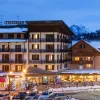
A grey area remains. While there will be no hotel open to reservations, several circulating reports mention the possibility of a handful of ultra-private suites at the top of the building: up to ten at most, costing as much as €10,000 per night by some estimates, accessible not online but by invitation only, reserved for the house’s most loyal and most affluent clients. Discreet entry via rue de Bassano, away from prying eyes: this would be far closer to a private apartment than a palace open to all.
And this may be where the shoe pinches. By reserving this new showcase for an elite happy few, LVMH misses a fine opportunity to improve its image with the wider public. The 103-111 could have become proof that French luxury also knows how to open its doors, welcome guests and inspire dreams beyond the circle of billionaires. By choosing confidentiality over hospitality, the house reinforces the image of a caste luxury, designed for a privileged few, when it could have, through one mythical address, belonged a little to everyone.
La Revue des Hôtels’ perspective
The irony is delicious: the 103 Champs-Élysées was, more than a century ago, one of Paris’s grand palaces. Yet it will not return to its original calling. By renouncing the hotel, Louis Vuitton chooses the theatre of selling over the art of welcoming, and assumes a brand discipline that many competitors envy. For those who dreamed of a branded palace on the most beautiful avenue in the world, that dream must be sought elsewhere: among the finest palaces in Paris, or among the new addresses expected in the capital. The 103-111 Champs-Élysées will be a cathedral of luxury, but no one will sleep there.