

- 🌒 A partial eclipse, not a total one · approximately 73% of the solar disc obscured in Tenerife and 69.7% in Las Palmas, around 19:53 local time
- 🇪🇸 Totality passes elsewhere · the path of totality crosses northern mainland Spain and ends at sunset over the Balearic Islands
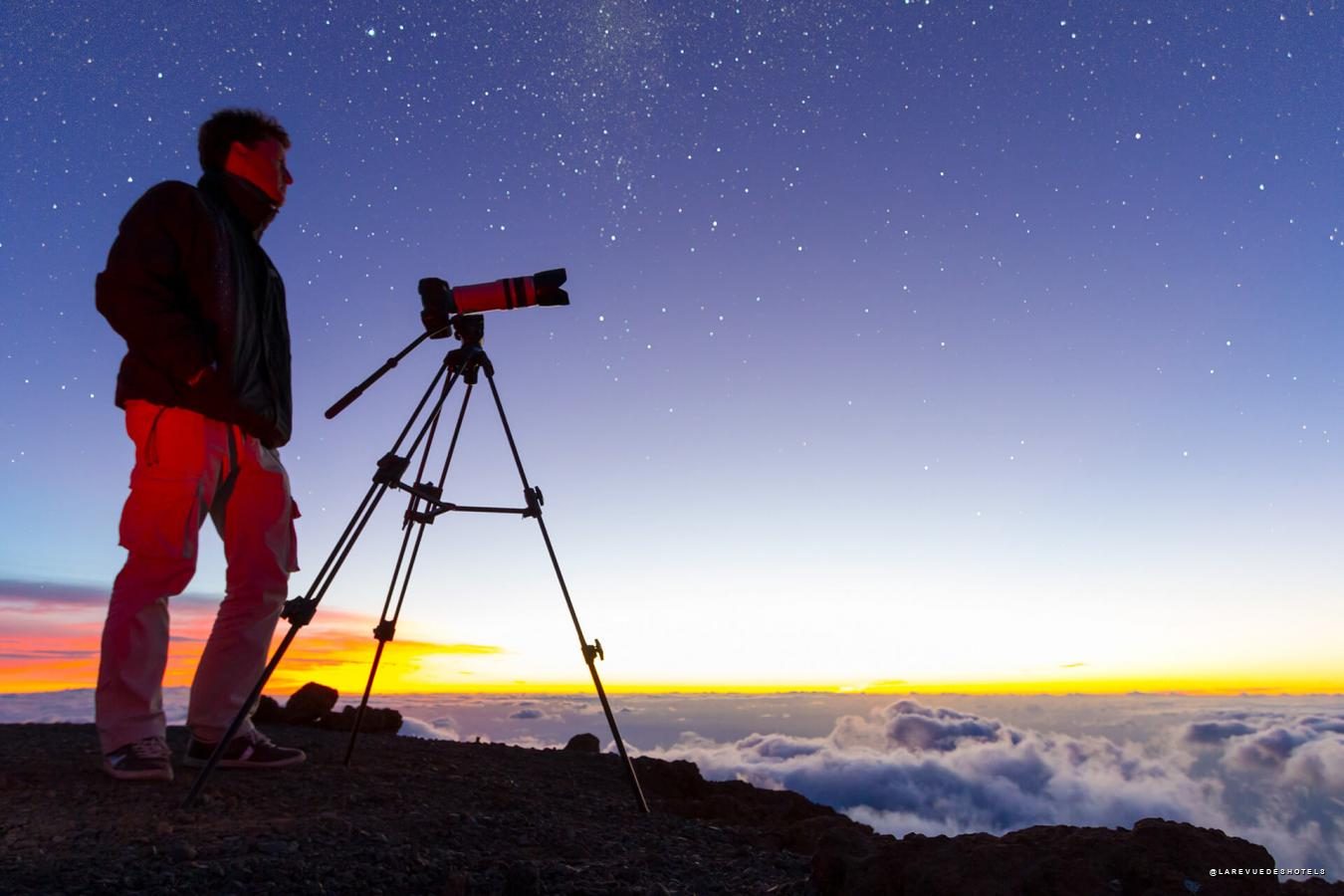
- 🔭 Two world-class observatories · the Teide Observatory in Tenerife and the Roque de los Muchachos in La Palma, perched at 2,426 metres
- ⭐ A sky protected by law · the “Ley del Cielo” regulates light pollution across the archipelago, with several territories certified by the Starlight Foundation
- 🏨 The hospitality challenge · moving away from the “sun and sand” image to sell room nights year-round, rather than just during the peak seaside season
The solar eclipse of 12 August 2026 is one of the year’s most highly anticipated astronomical events in Europe. The Canary Islands are seizing the opportunity to play a card they have held for years: astrotourism. However, it is essential to understand what the archipelago will actually see tonight, as the promise deserves clarification.
Contents
What the Canaries will really see tonight
The Canary Islands do not lie on the path of totality. The phenomenon there will be partial: the Moon will obscure approximately 73% of the solar disc in Tenerife, 72% in Fuerteventura, and 69.7% in Las Palmas de Gran Canaria, at around 19:53 local time. It is spectacular, but it is not total darkness.
The path of totality itself crosses the North Atlantic before reaching northern mainland Spain in the evening, and then ending at sunset over the Balearics. A traveller visiting the Canaries hoping to experience totality will leave disappointed. A traveller coming for clear skies, at high altitude and above the sea of clouds, will have made the right choice. This distinction is worth explaining to guests before arrival rather than at reception on the night itself.
Why the archipelago has become a benchmark for stargazing
The geographical position of the Canaries, their altitude, and atmospheric conditions offer rare stargazing environment in Europe. A large proportion of the observation sites are located above the inversion layer, and therefore above the clouds, far from sources of artificial light.
Crucially, the archipelago possesses a legal framework that few other destinations can boast. The Spanish regulations specific to the Canaries, known as the “Ley del Cielo” (Law of the Sky), control light pollution and protect observation conditions. Several territories and sites are also recognised by the Starlight Foundation, which distinguishes destinations committed to preserving their night skies.
Four islands, four ways to observe
In Tenerife, Teide National Park remains the most accessible site. At over 2,000 metres in altitude, its volcanic landscapes offer a setting that can be explored during the day. The Teide Observatory, managed by the Canary Islands Institute of Astrophysics, is one of the archipelago’s main astronomical centres.
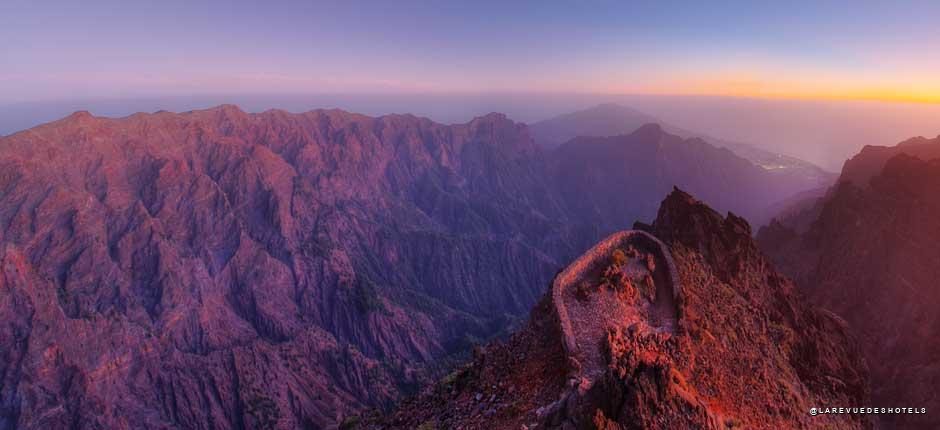
In La Palma, the Roque de los Muchachos, at 2,426 metres, houses one of the world’s most significant telescope arrays. The site hosts the Large-Sized Telescopes of the Cherenkov Telescope Array Observatory, an international project involving France, Spain, Germany, and Japan. This is the destination’s strongest scientific selling point.
In Fuerteventura, the approach is simpler. The Sicasumbre and Tefía sites allow for observation in a natural, sparsely urbanised environment without heavy infrastructure. Sicasumbre is specifically equipped for astronomical observation and serves as an excellent entry point for beginners.
Finally, in El Hierro, the Malpaso stellar viewpoint offers a more intimate experience, in keeping with an island that focuses on its natural spaces. The municipality of La Frontera also enjoys Starlight recognition.
What astrotourism changes for the hospitality industry
The appeal of this positioning for hoteliers does not lie in the eclipse itself, which only lasts a few hours. It lies in the ability of stargazing to fill rooms outside the peak seaside season. A trip structured around the night sky is just as viable in October, February, or May as it is in August.
The model proposed by the destination is easy to integrate into a hotel offering: hiking or outdoor activities during the day, local dining at sunset, and an excursion to an observation site after nightfall. No prior astronomical knowledge is required, which significantly broadens the target market. This activity also aligns with a structural demand for slower, screen-free getaways.
The view of La Revue des Hôtels
The eclipse is a pretext, and the destination openly acknowledges this. The real issue is the Canaries’ attempt to shed their image as a mass beach holiday destination, focusing on a segment where they possess objective and hard-to-replicate advantages: altitude, latitude, two international observatories, and a law protecting their sky. Few European destinations can boast as much.
One point of vigilance remains for the archipelago’s hoteliers tonight: managing expectations. A 73% partial eclipse is impressive, but a guest expecting total daytime darkness will not find it in the Canaries. Explaining this clearly beforehand is far better than dealing with disappointment at 8:00 pm.
- →Hôtel Estimar Benicàssim to resume construction on the Spanish coast in September
- →ZEST resort to open in Ibiza in April 2027, with Tomorrowland in residence
- →BLESS Hotel Barcelona opens on Plaza de Catalunya: 119 rooms and a rooftop pool
- →Urbanix: a luxury resort and 300 modular residences in the heart of Baix Maestrat