

- 🌒 Partial rather than total eclipse · around 73% of the solar disc will be covered in Tenerife and 69.7% in Las Palmas, around 19:53 local time
- 🇪🇸 Totality passes elsewhere · the path of totality will cross northern mainland Spain and finish at sunset over the Balearic Islands
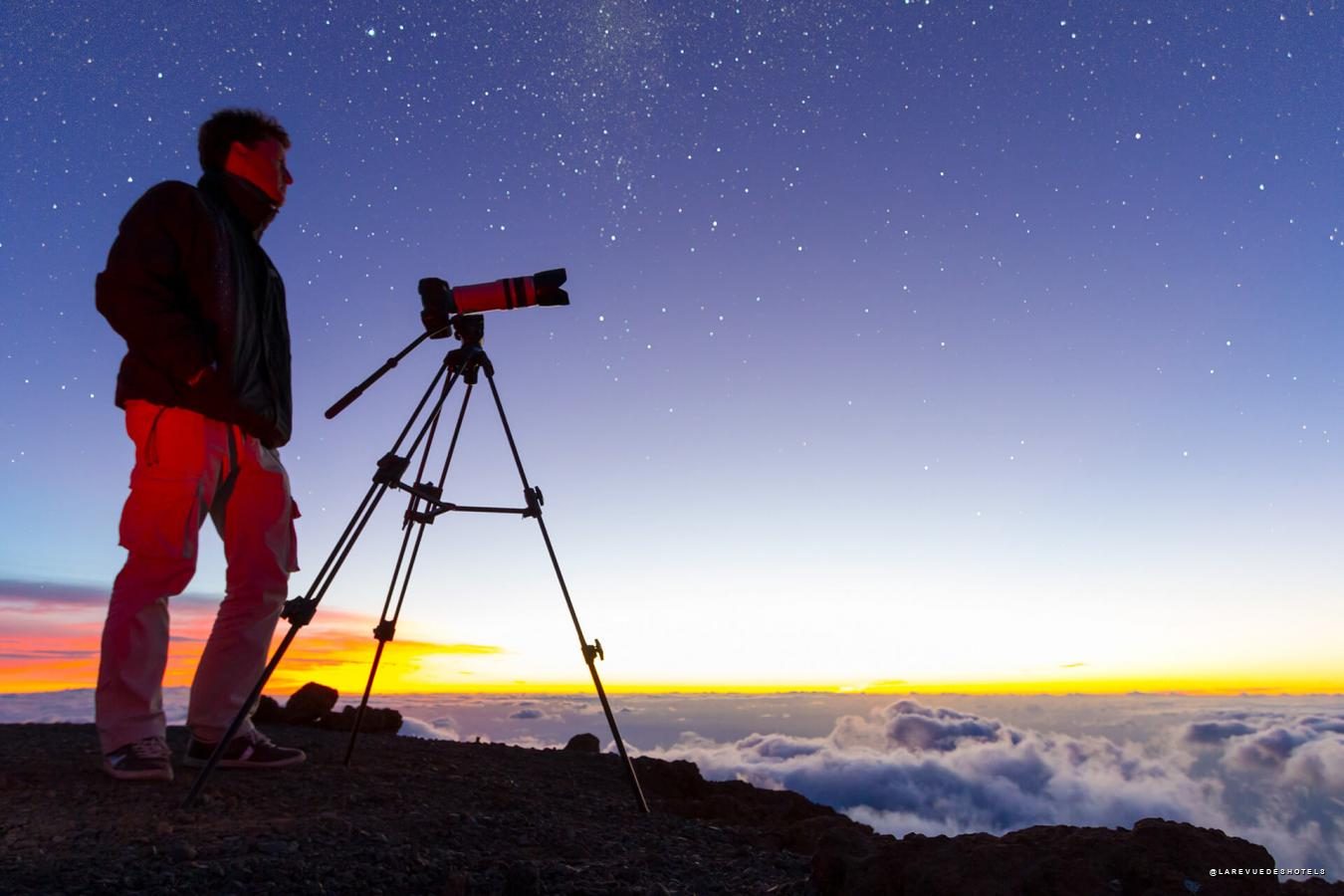
- 🔭 Two world-renowned observatories · Teide Observatory in Tenerife and Roque de los Muchachos in La Palma, at an altitude of 2,426 metres
- ⭐ Legally protected night skies · the “Ley del Cielo” regulates light pollution across the archipelago, with several regions Starlight-certified
- 🏨 The hospitality opportunity · moving beyond traditional beach holidays to generate year-round overnight stays, not just in peak season
The solar eclipse on 12 August 2026 is one of the most anticipated astronomical events of the year in Europe. The Canary Islands are taking the opportunity to play a card they have been cultivating for years: astrotourism. However, it is essential to understand what the archipelago will actually see that evening, as expectations need to be managed carefully.
Contents
What the Canary Islands will actually see that evening
The Canary Islands are not in the path of totality. The phenomenon will be partial: the Moon will cover around 73% of the solar disc in Tenerife, 72% in Fuerteventura and 69.7% in Las Palmas de Gran Canaria, at around 19:53 local time. While spectacular, it will not bring complete darkness.
The path of totality crosses the North Atlantic before reaching northern mainland Spain in the evening, finally ending at sunset over the Balearic Islands. A traveller heading to the Canaries in the hope of experiencing totality will leave disappointed. However, those visiting for clear high-altitude skies above the sea of clouds are making the right choice. This distinction is far better communicated to guests prior to arrival than at reception on the evening itself.
Why the archipelago has become a benchmark for stargazing
The geographical location, high altitude and atmospheric conditions of the Canaries offer conditions rarely found in Europe. A large proportion of stargazing sites sit above the thermal inversion layer, high above the clouds and far removed from artificial light pollution.
Above all, the archipelago benefits from a legal framework that few destinations can match. Specific Spanish legislation for the Canaries, known as the “Ley del Cielo”, regulates light pollution and protects stargazing conditions. Several regions and locations are also recognised by the Starlight Foundation, which certifies destinations committed to protecting their night sky.
Four islands, four ways to observe
In Tenerife, Teide National Park remains the most accessible location. At over 2,000 metres above sea level, its volcanic landscapes provide a striking setting that can be explored during the day. The Teide Observatory, operated by the Instituto de Astrofísica de Canarias, is one of the principal astronomical centres in the archipelago.
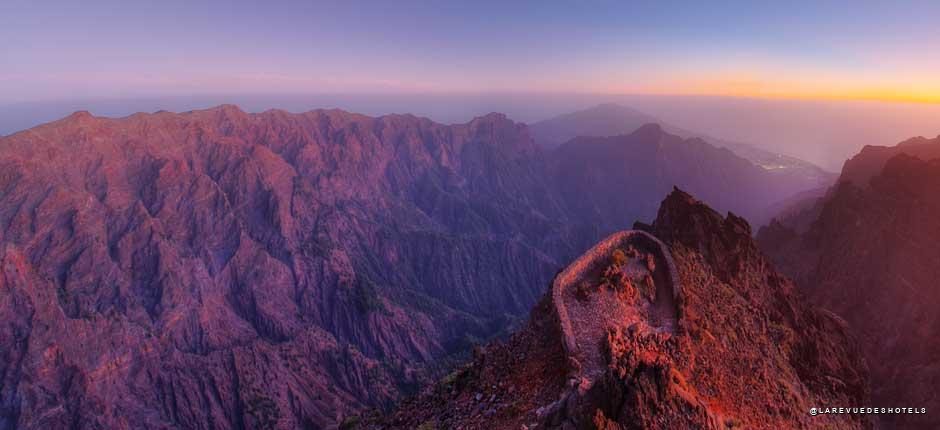
In La Palma, the Roque de los Muchachos at 2,426 metres altitude houses one of the world’s largest concentrations of telescopes. The site features the Large-Sized Telescopes of the Cherenkov Telescope Array Observatory, an international project involving France, Spain, Germany and Japan. This represents the destination’s strongest scientific credential.
In Fuerteventura, the approach is more straightforward. The Sicasumbre and Tefía vantage points allow stargazing in a natural, sparsely urbanised environment without heavy infrastructure. Equipped for astronomical observation, Sicasumbre provides an excellent entry point for the general public.
Finally, in El Hierro, the Malpaso astronomical viewpoint offers a more exclusive experience, in keeping with an island that focuses on its natural spaces. The municipality of La Frontera also enjoys Starlight certification.
How astrotourism is transforming the hotel industry
The value of this positioning for hoteliers does not lie in the eclipse itself, which lasts just a few hours. It lies in stargazing’s ability to drive overnight stays outside the peak summer season. A night-sky experience can be enjoyed just as easily in October, February or May as in August.
The experience offered by the destination easily integrates into a hotel’s guest packages: daytime hiking or outdoor activities, local cuisine at sunset, and an excursion to a viewing point at nightfall. No prior astronomical knowledge is required, significantly widening the target audience. Furthermore, this activity caters to a growing structural demand for slow-travel experiences away from screens.
The opinion of La Revue des Hôtels
The eclipse is a catalyst, and the destination makes no secret of it. The real story is the Canary Islands’ effort to move away from the mass beach tourism image and position themselves in a segment where they possess genuine, hard-to-replicate assets: high altitude, latitude, two international observatories and legislation protecting their sky. Very few European destinations can make such a claim.
One key area of vigilance for hoteliers in the archipelago that evening remains managing expectations. A 73% partial eclipse is impressive, but guests hoping to see day turn into night will not experience that in the Canaries. Setting clear expectations beforehand is far better than dealing with disappointment at 8 pm.