
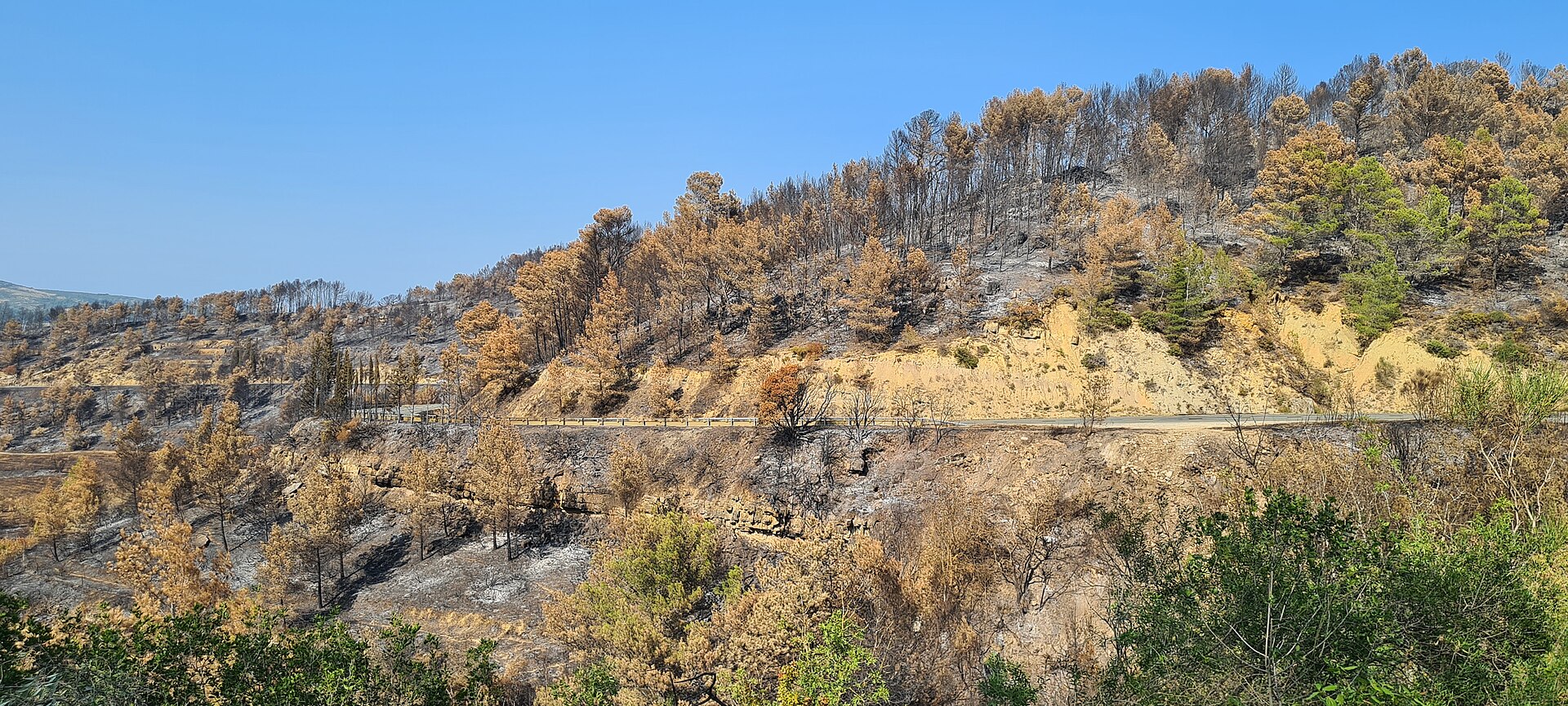

- Almost 44,000 hectares have been destroyed by wildfires in France since the start of 2026.
- Restaurateurs in Argelès-sur-Mer are suffering an estimated 25 to 35% drop in business.
- The Saumos wildfire in Gironde led to the evacuation of approximately 20,000 residents and holidaymakers.
- The succession of fires and heatwaves is accelerating the appeal of the coolcation trend.
A Particularly Heavy Environmental and Tourism Toll
The summer of 2026 has proved to be a period of unprecedented severity for the tourism economy in Southern France. Since the start of the year, more than 12,500 fire outbreaks have devastated almost 44,000 hectares across the nation. The concurrence of these major wildfires and persistent heatwaves is severely disrupting the peak summer season in coastal regions.
Summer 2026 · impact of wildfires
A Tourist Coastline Under Pressure
Area burnt by selected major fires during summer 2026, in hectares
Sources: public data from emergency services and tourism professionals · summer 2026. Note: the Trévillach fire in Pyrénées-Orientales burnt nearly 5,000 hectares.
Direct Financial Repercussions for Operators
The economic impact affects the entire hospitality chain, from accommodation providers to dining establishments. In French Catalonia, restaurant owners in Argelès-sur-Mer are reporting a collapse in activity estimated at between 25 and 35%. At the same time, cancellations and a slowdown in bookings are weakening hoteliers’ financial performance at the height of the summer season.

Mass Evacuations and Damaged Brand Image
Emergency operations and the hasty departure of holidaymakers have left a lasting impression. Triggered on 22 July in Gironde, the Saumos blaze forced the evacuation of almost 20,000 residents and tourists. These events, combined with precautionary evacuations in the Var region, threaten to undermine the appeal of southern destinations for the remainder of the season.
Towards Strategic Repositioning in Response to Climate Risk
These recurring crises are forcing hospitality players to re-evaluate their operating models. The increased frequency of heatwave events is prompting Mediterranean hoteliers to adapt their infrastructure and commercial calendar. This context is gradually strengthening travellers’ interest in coolcations, driving demand for stays in regions with milder temperatures.