
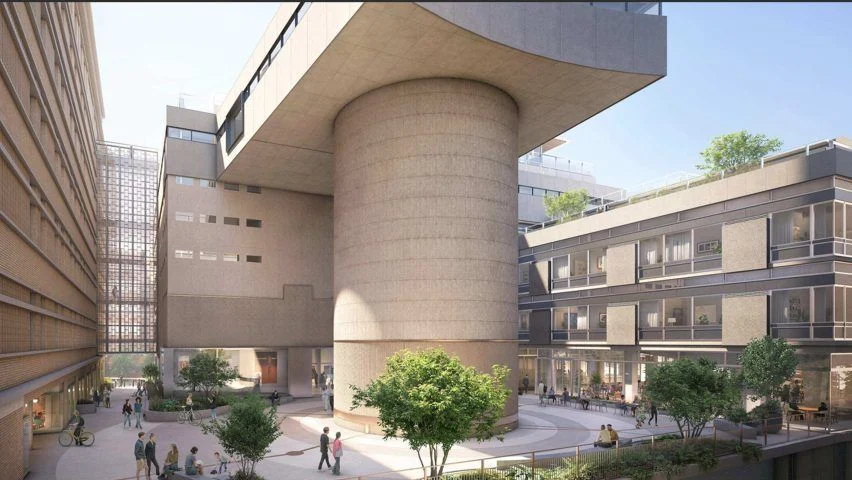

- In brief : in Fitzrovia, the heart of London, spanning an entire block bordered by Cleveland Street, Maple Street, Cleveland Mews and Howland Street.
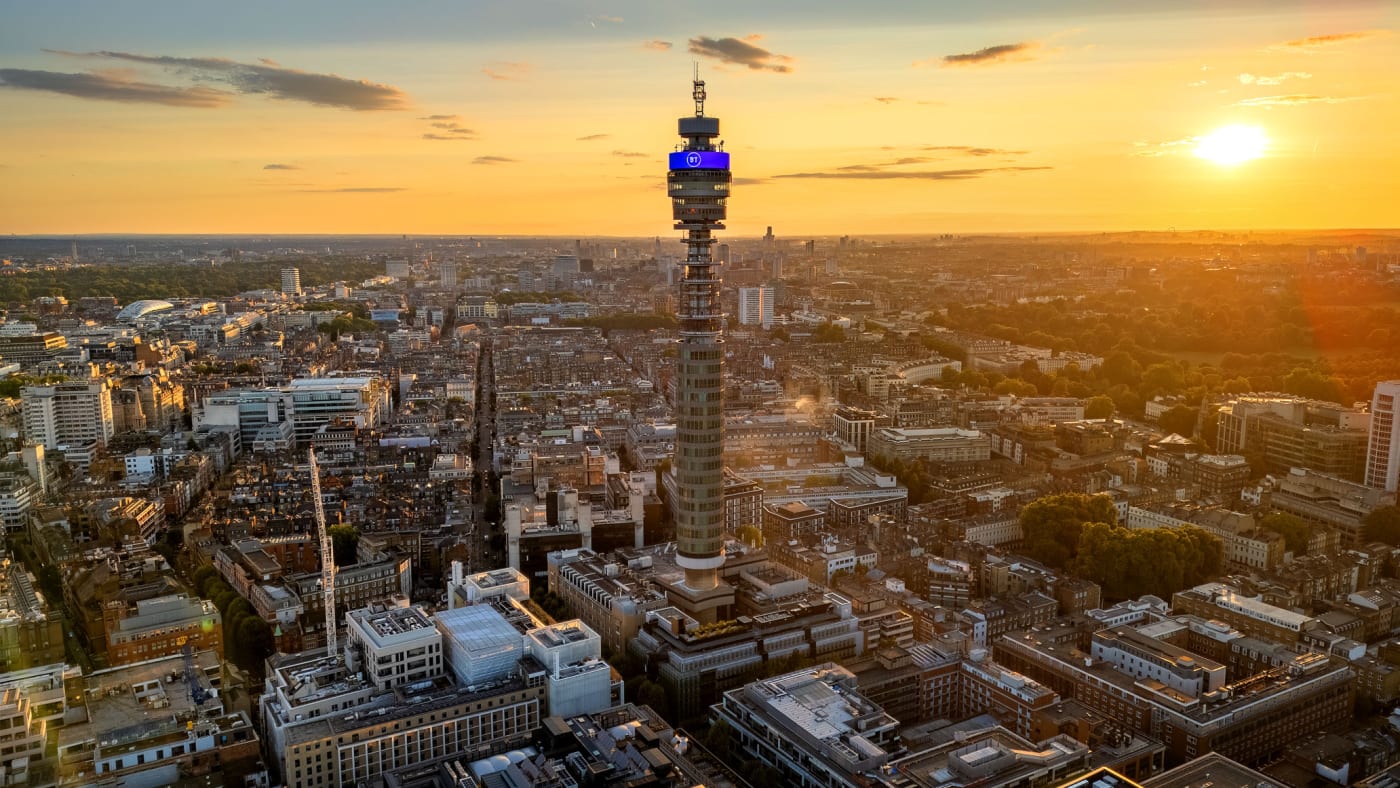
- The building : the BT Tower, a 177-metre structure rising to 189 metres with its antennas, a Grade II listed building.
- The project : a hotel conversion led by American group MCR, featuring a pool on the podium roof.
- The architect : London-based practice Orms, whose planning application was submitted to Camden on 10 September 2026.
- Announced timeline : works to begin from 2029, with a target opening in 2033.
London is poised to return a silhouette to the public that it has gazed upon for sixty years without ever being able to ascend. The BT Tower, closed to visitors since 1971, is set to become a hotel, and the application submitted to the London Borough of Camden on 10 September 2026 by practice Orms finally outlines its design.
 All openings · United Kingdom →
A tower London has not visited since 1971
Completed in 1964 and inaugurated the following year as the Post Office Tower, the structure was initially utilitarian rather than monumental. Conceived by the Ministry of Works under the direction of Eric Bedford and G. R. Yeats, it supported the microwave antennas of the national network. Yet for seven years it was one of London’s most sought-after attractions, featuring a revolving restaurant at its summit, before closing its doors to the public in 1971.
The remainder of its history unfolded without spectators. It remained the city’s tallest structure until 1980, operated by BT Group from 1984, with its antennas finally removed in 2011. Only its glowing light band, the infoband, continued to broadcast messages to the city.
A pool at the foot of the tower
The element everyone will remember from the application is a pool created on the podium roof, at the base of the tower. The perspective is the reverse of what one expects from a hotel pool · you do not look out at the city, you look up at the tower. The project is not confined to the tower alone · it encompasses the restoration of the listed monument, the refurbishment of the podium and that of the Howland Building, a 1930s structure.
On the ground floor, the scheme proposes retail spaces, bars and restaurants. This is the most significant part of the programme, and the least theatrical · it transforms a closed technical block into an accessible piece of the neighbourhood.
MCR, specialists in 20th-century icons
The owner is no stranger to this type of venture. MCR acquired the freehold of the tower and its podium from BT Group, encompassing an entire London block. The American group made its name by transforming Eero Saarinen’s abandoned masterpiece, the former TWA Flight Center at JFK Airport, into a functioning hotel. This is precisely the expertise London is buying · the ability to breathe life into a building whose form makes it impractical.
What remains to be overcome before 2033
The announced timeline speaks volumes about the challenge · works from 2029, target opening in 2033, nearly nine years after the acquisition agreement. BT Group must first vacate the premises, a lengthy operation given the complexity of moving technical equipment. Then comes the most uncertain obstacle · a Grade II listed tower is poorly suited to the requirements of a hotel, regarding evacuation, lifts and the layout of guest rooms within a narrow circular shaft.
Camden has not yet made its decision. The submitted application is merely a proposal, and a refusal or stringent conditions could reshape the project. What is certain, however, is the direction · the tower will not revert to a technical facility.
The 2024 concept that reimagined the tower
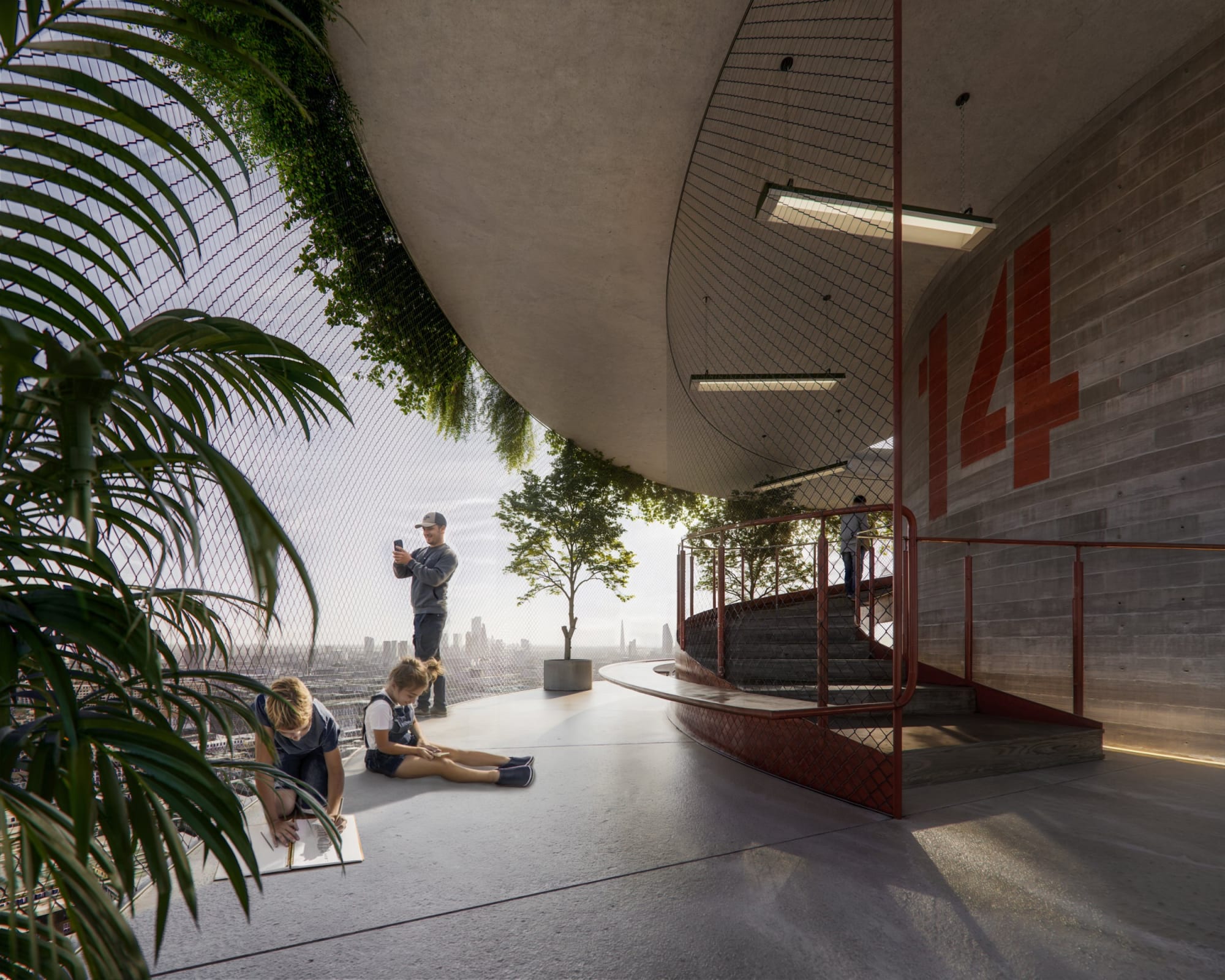
Two years before the Orms application, another practice made its own vision of the tower public. In February 2024, Able Partners, working with engineers WSP and the agency Somewhere., released a speculative study: replacing the advertising band with an observation ring, opening viewing galleries along the shaft, planting the podium and making it walkable. These images do not depict the hotel project submitted in 2026, they show what the silhouette has been inspiring in architects for years.



Practical information
BT Tower · Fitzrovia, London. 177-metre structure, 189 metres with antennas. Grade II listed building. Hotel project led by MCR, designed by Orms, planning application submitted to Camden on 10 September 2026.