

- Where: at 155 boulevard du Montparnasse, in the 6th arrondissement of Paris, a few minutes’ walk from the Jardin du Luxembourg.
- Format: a four-star boutique hotel with 27 rooms, designed by Vanessa Scoffier.
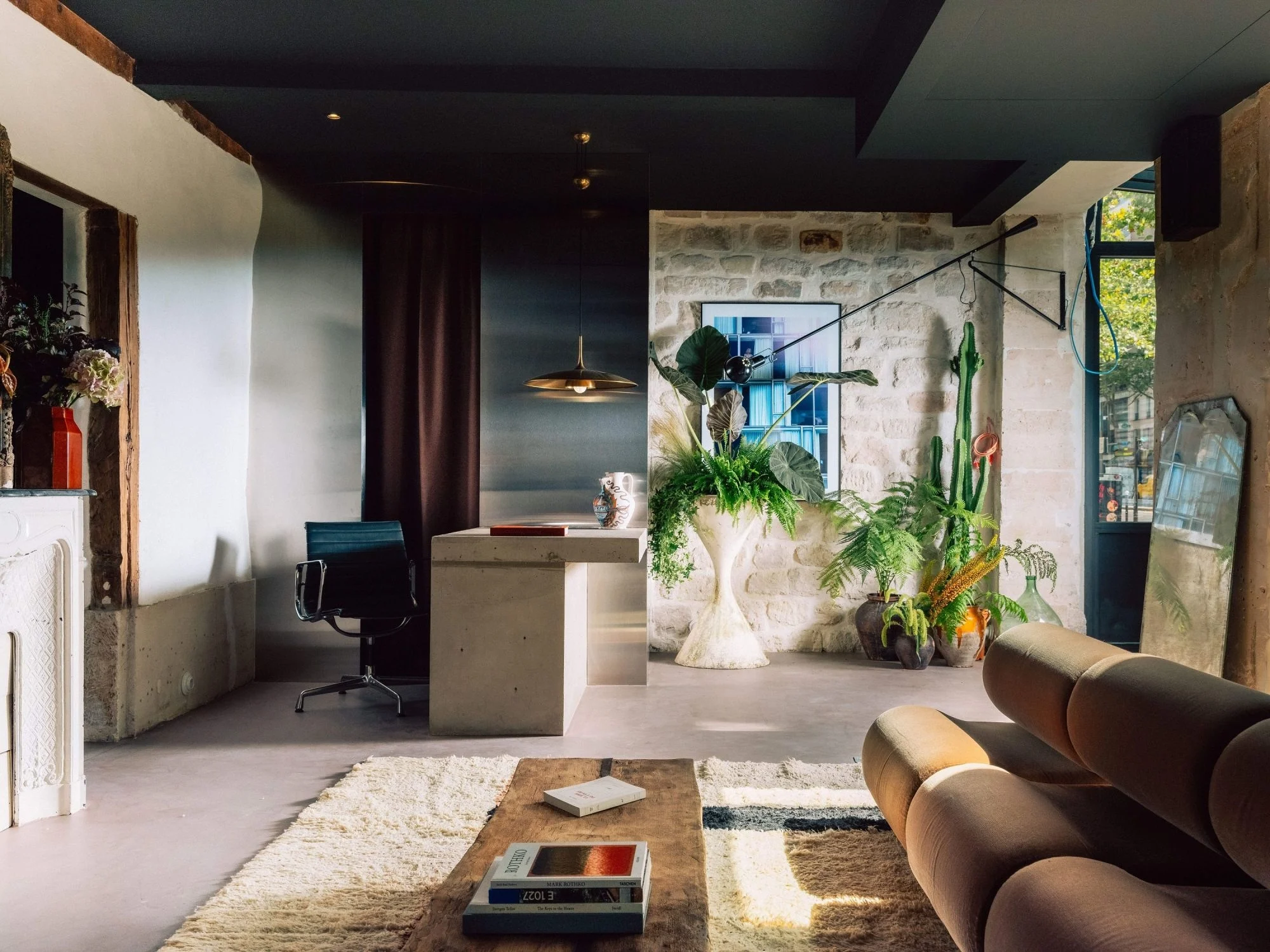
- Approach: raw concrete, brushed stainless steel and clean lines, which the house claims as a modernist aesthetic.
- Furniture: pieces designed by Verner Panton, Tommaso Barbi, Florian Schulz or Curtis Jere, mixed with vintage finds.
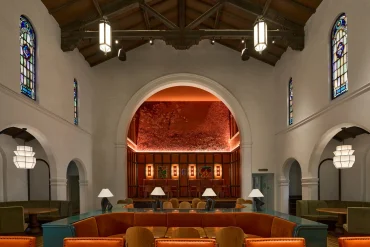
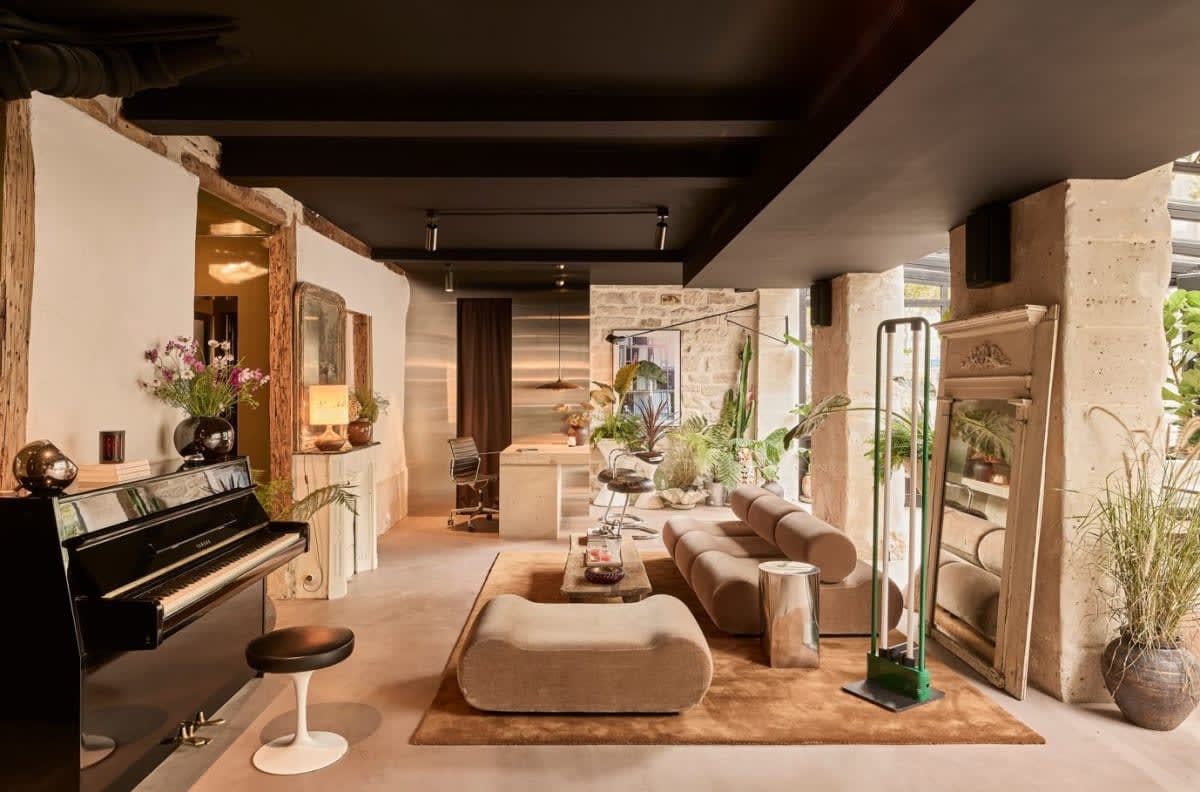
- Living spaces: a coffee shop open to the neighbourhood, a winter garden under a glass roof and a piano bar in the evening.
The sixth arrondissement has not seen many addresses arrive capable of surprising. Hôtel Lulu settles at 155 boulevard du Montparnasse with 27 rooms, a coffee shop open to the street and a stance that few Parisian houses embrace: that of material left bare. The concrete remains raw, the stainless steel remains brushed, and nothing softens the whole except the light and the objects.
Contents
Lulu, the nickname given to the Luxembourg
The name is not that of an owner or an ancestor. It comes from the garden. « LULU is the new diminutive we imagined for the Jardin du Luxembourg », explains the house, which sees in it a tone that is both Parisian and artistic. The address stands a few minutes’ walk from the park, Saint-Germain-des-Prés and the Latin Quarter, in an area where galleries, bookshops and historic cafés have made up one of the city’s most written landscapes for a century.
This choice says something about the project. Rather than invoking a tutelary figure or a founder’s patronymic, the hotel places itself under the sign of a public, open space that Parisians cross every day.
Raw concrete and stainless steel, a soft austerity
The house does not speak of brutalism but of modernism, and the nuance matters: it is not about replaying the concrete fortresses of the 1960s, but about letting each material say what it is. Raw concrete, brushed stainless steel, clean lines, soft lights. The material expresses itself without artifice, and it is the furniture that takes charge of warming up the whole.
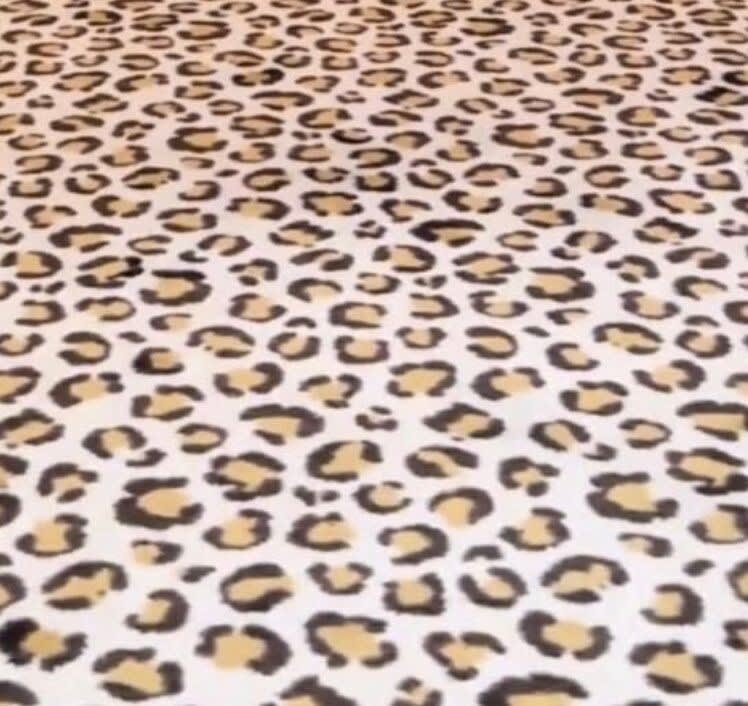
The casting is precise. Creations by Verner Panton, Tommaso Barbi, Florian Schulz, Curtis Jere, Boccato Gigante Zambusi, as well as Noomi Backhausen and Paul Brandborg for the Danish manufacture Søholm, dialogue with vintage objects, photographs and family books. A photograph of Manolo Campion taken for Vogue, old château doors and a library of French literature serve as decor. In the corridors, a leopard-print carpet breaks the rigour with an assumed touch of humour.
Rooms open to the rooftops
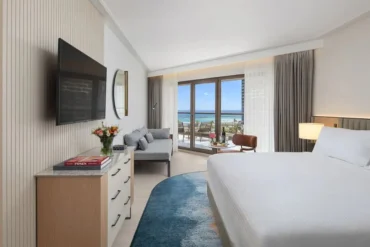
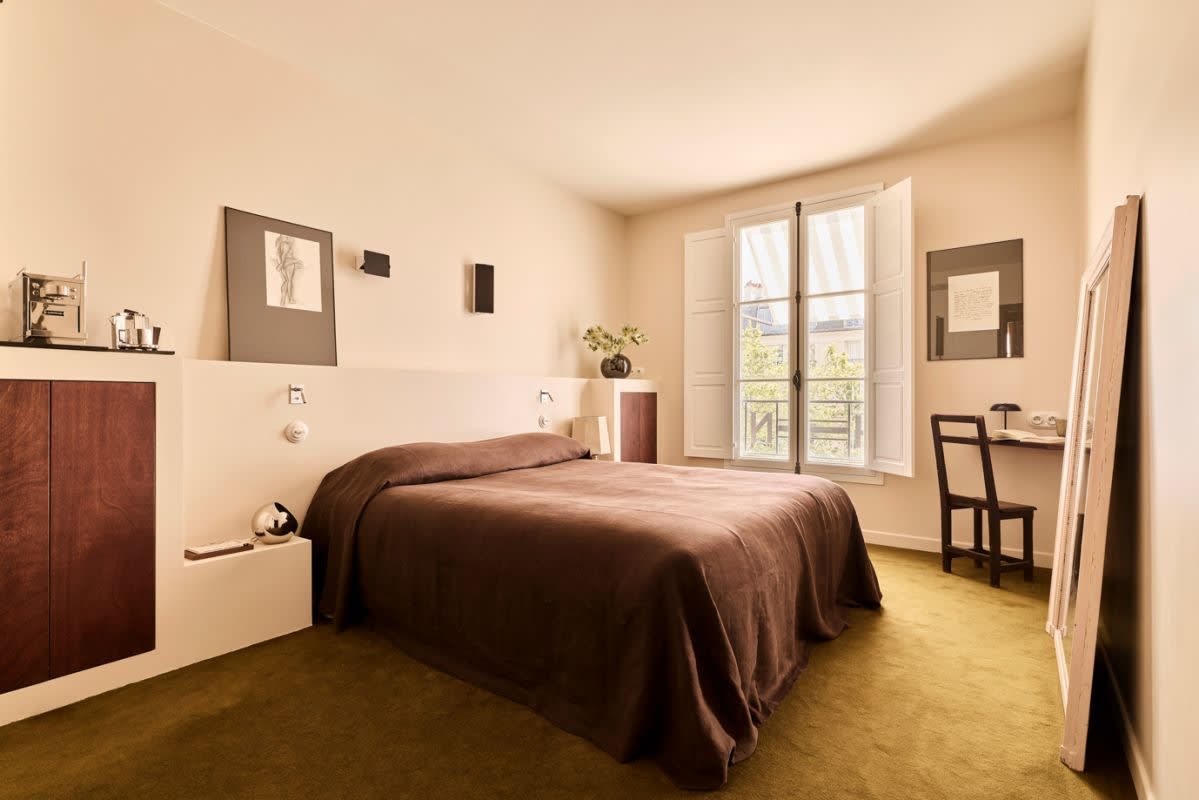
The 27 rooms take the exact opposite view of the communal areas. Thick carpets, off-white walls, linen sheer curtains, natural materials: the austerity of the ground floor gives way to an almost domestic softness, turned towards the light and the rooftops of Paris. The format remains that of a boutique hotel, with what that implies in terms of varied volumes and layouts that do not repeat from one floor to another.
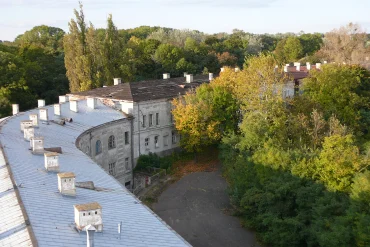
One detail tells the story of the building better than a brochure: in the attic, an old sign resurfaced during the works, that of an Hôtel de Nice. The house leaves it there, without comment, like another layer in a building that already has several.
Bathrooms head towards the Mediterranean
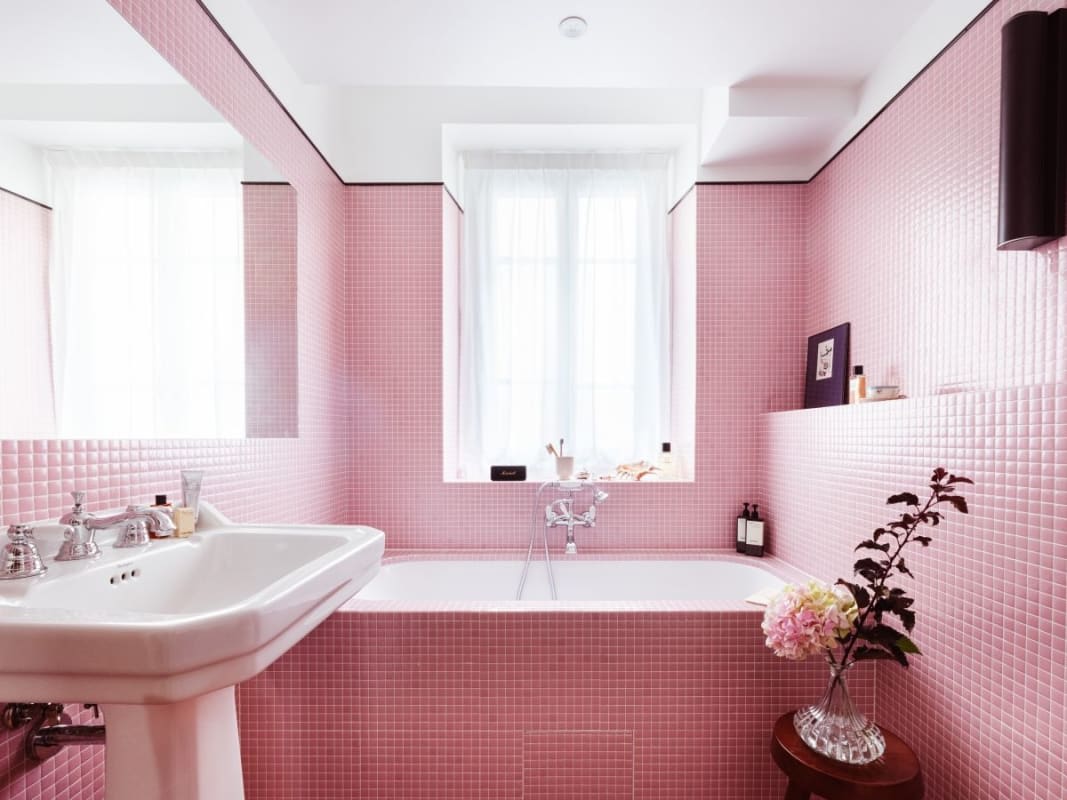
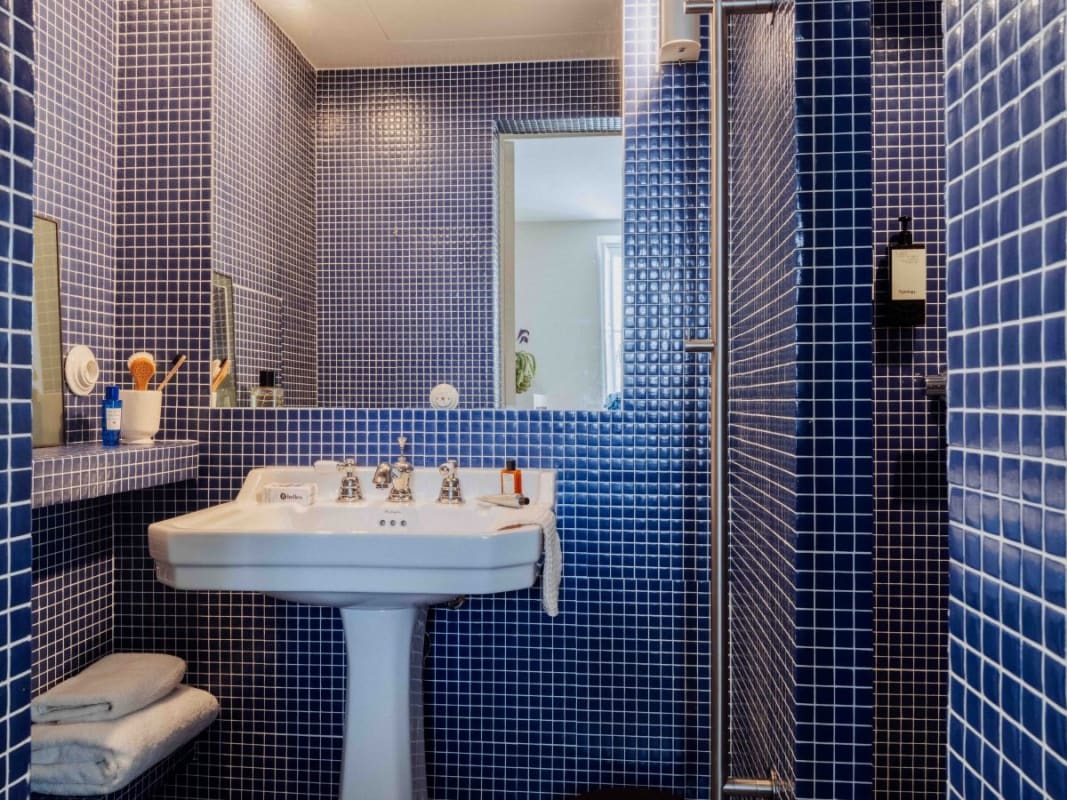
This is where the project allows itself its greatest freedom. The bathrooms draw their inspiration from the world of Mediterranean swimming pools: pink, green or blue mosaics, laid from floor to ceiling, which transform a utilitarian room into a decor in its own right. The gap with the concrete of the common areas is frontal, and completely deliberate.
A coffee shop by day, a piano by night
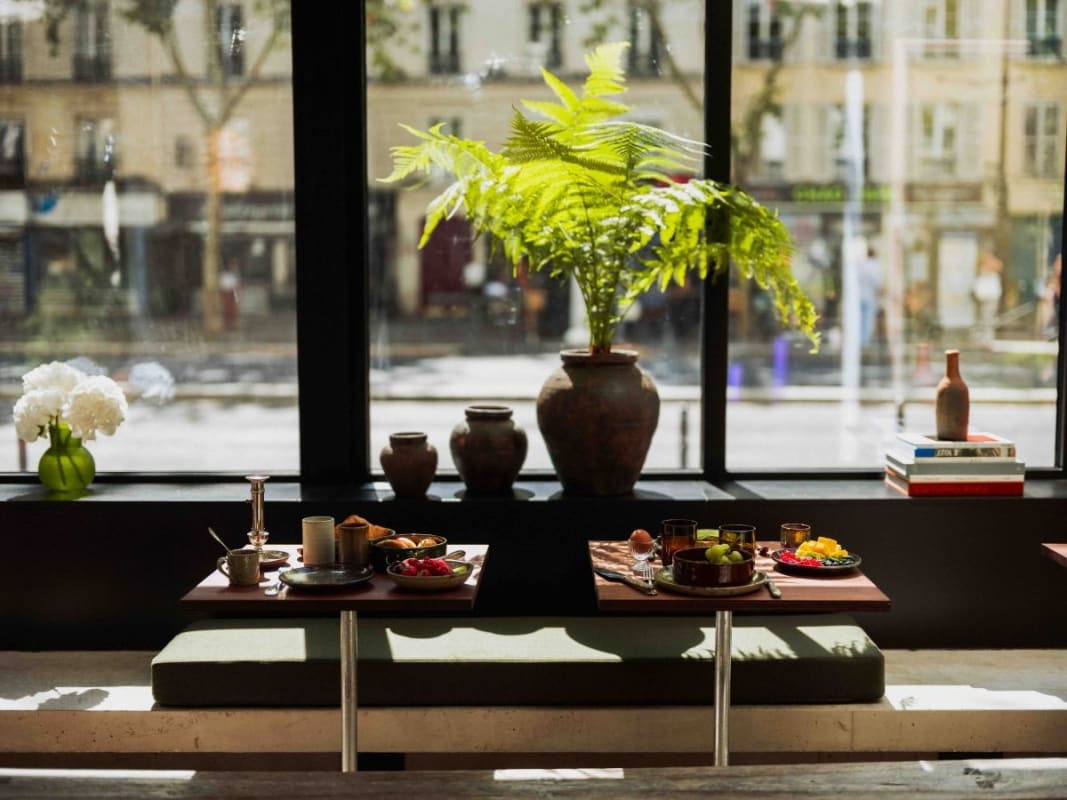
The ground floor does not function as a lobby but as a place that changes its purpose throughout the day. Breakfast in the morning, coffee shop in the afternoon, piano bar in the evening. Under a glass roof transformed into a winter garden, the light circulates and uses shift. The hotel seeks less to retain its guests than to bring the neighbourhood in.

It is a measurable gamble, and the most risky of the project: a hotel coffee shop only survives if locals take ownership of it. A fireplace, a piano, open volumes and books left at disposal are there to help.
What this address says about the Paris of 2026
Hôtel Lulu belongs to a generation of Parisian addresses driven by personalities from design or fashion rather than hotel groups, much like the project that Morgane Sézalory is developing rue des Blancs-Manteaux. The common point is not the style, it is the method: a unique perspective serves as a specifications sheet, and consistency replaces standards.
The gamble on boulevard du Montparnasse is more exposed than it seems. The axis has lost its tourist centrality to the benefit of Saint-Germain, and a 27-key address does not have the surface area of a palace to absorb a low season. This is precisely what makes the project interesting to follow: it relies on the loyalty of a neighbourhood rather than on footfall.
Practical information
Hôtel Lulu · 155 boulevard du Montparnasse, 75006 Paris. Four-star boutique hotel with 27 rooms. Coffee shop, winter garden under a glass roof and piano bar open to guests as well as external visitors.