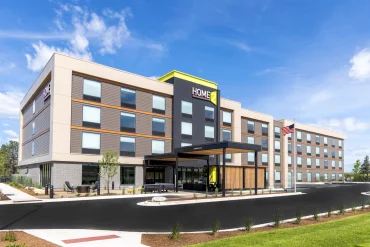

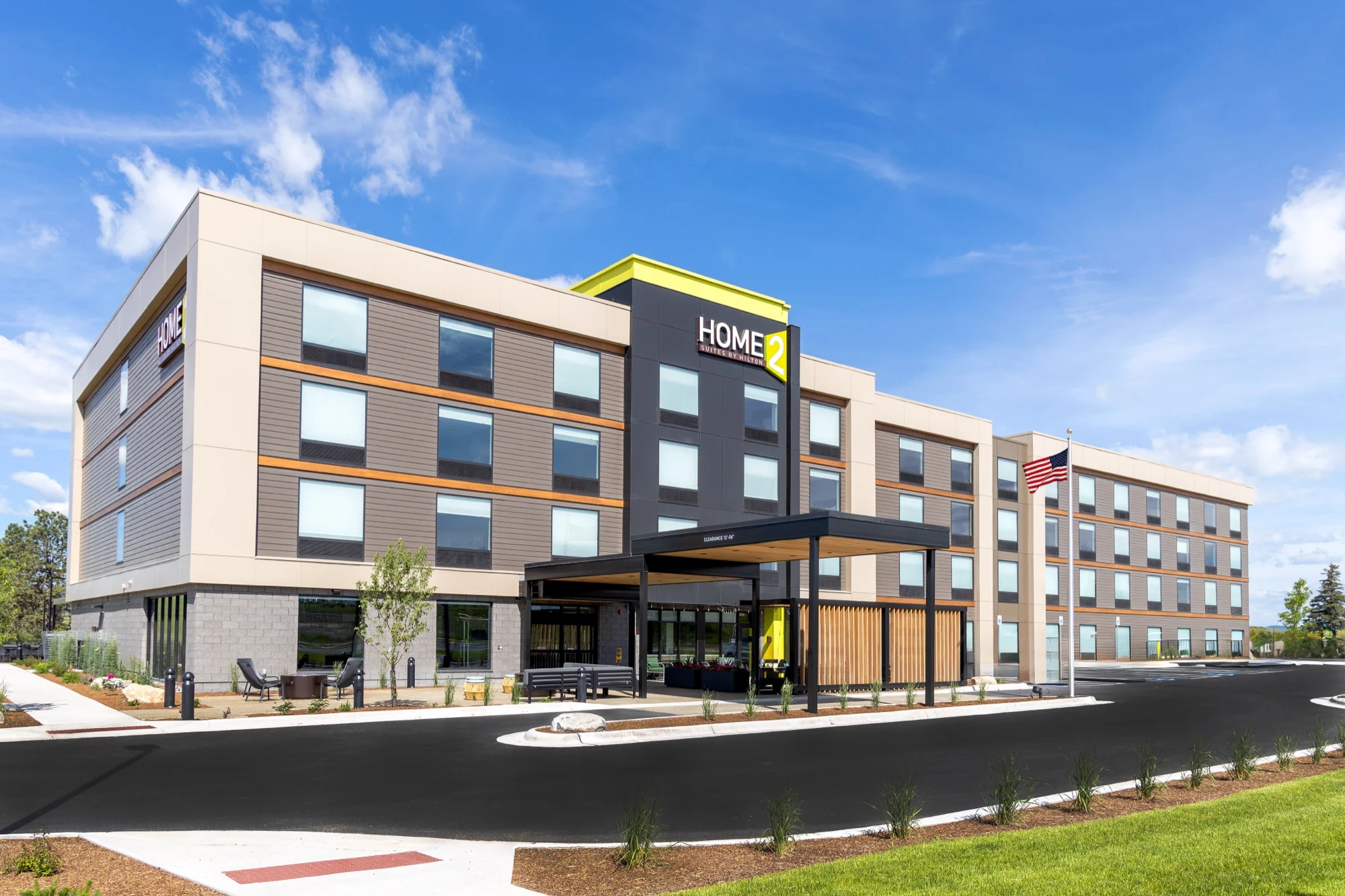

- ⚡ A gas-free hotel · the Home2 Suites Clean Energy prototype is all-electric, featuring rooftop solar panels and externally purchased renewable electricity
- 💶 18 to 40% lower energy bills · and approximately 30% higher energy efficiency compared to the standard Home2 Suites model
- 🌍 440 tonnes of CO2 avoided per hotel · on operational emissions, according to modelling conducted across 13 US cities
- 🇺🇸 Reserved for new builds in the United States · optional, available since the announcement on 22 September 2026
- 🏨 A 900-hotel brand · Home2 Suites boasts nearly 750 projects, the largest development pipeline in the country
Gas heating is disappearing from the specifications. Hilton is now offering US owners a fully electric Home2 Suites hotel model, designed to produce zero operational emissions. Named the Home2 Suites by Hilton Clean Energy Prototype and announced on 22 September 2026 in New York, it is the first prototype of its kind made available by the group to all its developers. It remains optional and primarily targets portfolio concerns: according to the American Hotel & Lodging Association, cited by Hilton, US hotel energy bills have surged by 28% over five years.
Contents
A gas-free hotel, powered by solar energy
The concept relies on three pillars. All equipment runs on electricity, part of the energy is generated on-site by solar panels, the rest is purchased from renewable sources, and the building envelope is reinforced to limit losses. Hilton adds the standards already established by the brand: energy-efficient roofs and materials, electric vehicle charging stations, Energy Star certified appliances, LED lighting, a saltwater pool, water-efficient gardens and reusable tableware. The group presents the package as its most sustainable prototype to date, aligned with the World Green Building Council’s “net zero operational carbon” requirements.

What the group’s modelling promises
The figures put forward stem from an energy modelling exercise conducted across 13 US cities, compared against the standard gas and grid-electric Home2 Suites model. Hilton highlights four key promises: 30% greater energy efficiency, an annual energy bill reduced by 18 to 40%, 440 tonnes of operational CO2 avoided per hotel, and enhanced resale value. The group detailed three case studies on a map published with the announcement.
| Hilton Estimation | San Jose | Atlanta | Boston |
|---|---|---|---|
| Annual energy bill | −32% | −24% | −16% |
| Potential utility incentives | $50,000 | $51,000 | $280,000 |
| Potential asset value increase | +$670,000 | +$320,000 | +$360,000 |
| Net construction cost* | −0.6% | +1.1% | −0.2% |
Above all, the table demonstrates that gains depend on local energy prices and incentives. San Jose, California, delivers the best results. Boston offsets a more modest drop in bills with $280,000 in incentives. In Atlanta, the construction cost premium is not fully covered by the increase in hotel value, leaving the net cost 1.1% higher.
Why Home2 Suites serves as a laboratory
The choice of brand is no accident. Home2 Suites, Hilton’s midscale extended-stay brand, has over 900 open hotels and nearly 750 in the pipeline, representing the largest development portfolio of any hotel brand in the United States. Its buildings look alike from one city to the next, making it easy to replicate the same design on a large scale. The brand is also expanding into Europe, notably with 215 extended-stay suites near Retiro Park in Madrid, but the prototype currently applies only to new builds in the United States.

“Our owners, many of whom run small businesses, are facing rising energy costs and looking for a turnkey solution to lower their expenses,” explains Jean Garris Hand, Vice President of Global ESG at Hilton. Talene Staab, head of the Home2 Suites brand, sees this optional prototype as “the natural next step” for an enseigne built on efficient design.
A lever for energy procurement too
The prototype builds on an existing tool. Hilton Supply Management, the group’s purchasing organisation, manages an energy procurement programme that helps hotels stabilise their budgets and choose renewable or lower-carbon sources where available. In 2025, it enabled participating owners to save approximately 17% on their energy expenditure and avoid more than 102,130 tonnes of CO2. Hilton states that it is exploring the application of these solutions to other markets and hotel types.


What this means for the hotel industry
The announcement has implications that go beyond a midscale brand. Hilton, which has over 9,400 hotels across 144 countries and territories, is turning energy sobriety into a financial argument rather than a constraint: lower overheads, higher asset value and a building prepared for stricter regulations. Luxury properties are following the same trajectory at their own scale, such as Hotel Martinez in Cannes, which transitioned to 74% renewable energy, and green financing is gaining ground across the sector, such as the green loan secured to renovate the Hilton Tokyo Odaiba. One limitation remains: the figures are still estimates, and the model is not mandatory for owners. Hilton ranks fourth in our ranking of the world’s largest hotel groups.
- 🏷️ Name · Home2 Suites by Hilton Clean Energy Prototype
- 📅 Announcement · 22 September 2026, New York
- 📍 Target audience · owners and developers of new Home2 Suites in the US
- ⚙️ Concept · all-electric, on-site solar, renewable electricity, reinforced envelope
- 📉 Estimated savings · −18 to −40% on bills, +30% efficiency, 440 t of CO2 avoided per hotel
- 🔗 Official source · stories.hilton.com
Visuals: © Hilton.