This absence of hotels in the Musk empire is not an oversight, it’s a choice. For old-world billionaires, owning a grand hotel remains the ultimate symbol of prestige and rootedness, as illustrated by the saga of the Louis Vuitton hotel on the Champs-Élysées. For the Tesla boss, hospitality simply holds no strategic interest. As long as Musk thinks of the experience in charging minutes rather than overnight stays, luxury hospitality will remain the playground of the Arnaults and Saadés. One question remains open: should Tesla ever wish to retain its customers for longer, the idea of a ‘Tesla Hotel’ might seem less improbable than a palace on Mars.
The contrast is striking. While Europe’s great fortunes acquire historic palaces, Musk, for his part, invests in charging, screens, and gadgets. Where Arnault and Saadé buy heritage and legend, Musk sells charging time and entertainment. His vision of hospitality is not one of overnight stays and discreet service, but rather a brand experience serving the car: one stops at the Tesla Diner to recharge and be entertained, not to rest there. Two schools clash: on one side, heritage luxury, which banks on location, the room, and the art of hospitality; on the other, technological luxury, which banks on speed, novelty, and spectacle.
Our Perspective
This absence of hotels in the Musk empire is not an oversight, it’s a choice. For old-world billionaires, owning a grand hotel remains the ultimate symbol of prestige and rootedness, as illustrated by the saga of the Louis Vuitton hotel on the Champs-Élysées. For the Tesla boss, hospitality simply holds no strategic interest. As long as Musk thinks of the experience in charging minutes rather than overnight stays, luxury hospitality will remain the playground of the Arnaults and Saadés. One question remains open: should Tesla ever wish to retain its customers for longer, the idea of a ‘Tesla Hotel’ might seem less improbable than a palace on Mars.
The contrast is striking. While Europe’s great fortunes acquire historic palaces, Musk, for his part, invests in charging, screens, and gadgets. Where Arnault and Saadé buy heritage and legend, Musk sells charging time and entertainment. His vision of hospitality is not one of overnight stays and discreet service, but rather a brand experience serving the car: one stops at the Tesla Diner to recharge and be entertained, not to rest there. Two schools clash: on one side, heritage luxury, which banks on location, the room, and the art of hospitality; on the other, technological luxury, which banks on speed, novelty, and spectacle.
Our Perspective
This absence of hotels in the Musk empire is not an oversight, it’s a choice. For old-world billionaires, owning a grand hotel remains the ultimate symbol of prestige and rootedness, as illustrated by the saga of the Louis Vuitton hotel on the Champs-Élysées. For the Tesla boss, hospitality simply holds no strategic interest. As long as Musk thinks of the experience in charging minutes rather than overnight stays, luxury hospitality will remain the playground of the Arnaults and Saadés. One question remains open: should Tesla ever wish to retain its customers for longer, the idea of a ‘Tesla Hotel’ might seem less improbable than a palace on Mars.
Musk is not entirely a stranger to public hospitality, however. On 21 July 2025, Tesla opened its very first Tesla Diner in Hollywood, on Santa Monica Boulevard: a retro-futuristic restaurant inspired by 1950s American drive-ins, which he had been teasing since 2018. But you can’t sleep there: it’s an entertainment restaurant, not a hotel. The two-level venue, initially open 24 hours a day before night service was restricted to charging customers, boasts 250 seats, a rooftop terrace with a bar, two giant 20-metre screens for a true drive-in experience, and, most importantly, 80 V4 charging stations, the largest urban Supercharger in the world. At its opening, Californian chef Eric Greenspan had designed a menu of burgers and chips served in Cybertruck-shaped boxes, sometimes delivered by robots; he has since left the venture. Musk warned: if the concept works, he will export it to major cities worldwide and along main road networks.
Why Musk Snubs Hospitality While Other Billionaires Flock To It
The contrast is striking. While Europe’s great fortunes acquire historic palaces, Musk, for his part, invests in charging, screens, and gadgets. Where Arnault and Saadé buy heritage and legend, Musk sells charging time and entertainment. His vision of hospitality is not one of overnight stays and discreet service, but rather a brand experience serving the car: one stops at the Tesla Diner to recharge and be entertained, not to rest there. Two schools clash: on one side, heritage luxury, which banks on location, the room, and the art of hospitality; on the other, technological luxury, which banks on speed, novelty, and spectacle.
Our Perspective
This absence of hotels in the Musk empire is not an oversight, it’s a choice. For old-world billionaires, owning a grand hotel remains the ultimate symbol of prestige and rootedness, as illustrated by the saga of the Louis Vuitton hotel on the Champs-Élysées. For the Tesla boss, hospitality simply holds no strategic interest. As long as Musk thinks of the experience in charging minutes rather than overnight stays, luxury hospitality will remain the playground of the Arnaults and Saadés. One question remains open: should Tesla ever wish to retain its customers for longer, the idea of a ‘Tesla Hotel’ might seem less improbable than a palace on Mars.
Musk is not entirely a stranger to public hospitality, however. On 21 July 2025, Tesla opened its very first Tesla Diner in Hollywood, on Santa Monica Boulevard: a retro-futuristic restaurant inspired by 1950s American drive-ins, which he had been teasing since 2018. But you can’t sleep there: it’s an entertainment restaurant, not a hotel. The two-level venue, initially open 24 hours a day before night service was restricted to charging customers, boasts 250 seats, a rooftop terrace with a bar, two giant 20-metre screens for a true drive-in experience, and, most importantly, 80 V4 charging stations, the largest urban Supercharger in the world. At its opening, Californian chef Eric Greenspan had designed a menu of burgers and chips served in Cybertruck-shaped boxes, sometimes delivered by robots; he has since left the venture. Musk warned: if the concept works, he will export it to major cities worldwide and along main road networks.
Why Musk Snubs Hospitality While Other Billionaires Flock To It
The contrast is striking. While Europe’s great fortunes acquire historic palaces, Musk, for his part, invests in charging, screens, and gadgets. Where Arnault and Saadé buy heritage and legend, Musk sells charging time and entertainment. His vision of hospitality is not one of overnight stays and discreet service, but rather a brand experience serving the car: one stops at the Tesla Diner to recharge and be entertained, not to rest there. Two schools clash: on one side, heritage luxury, which banks on location, the room, and the art of hospitality; on the other, technological luxury, which banks on speed, novelty, and spectacle.
Our Perspective
This absence of hotels in the Musk empire is not an oversight, it’s a choice. For old-world billionaires, owning a grand hotel remains the ultimate symbol of prestige and rootedness, as illustrated by the saga of the Louis Vuitton hotel on the Champs-Élysées. For the Tesla boss, hospitality simply holds no strategic interest. As long as Musk thinks of the experience in charging minutes rather than overnight stays, luxury hospitality will remain the playground of the Arnaults and Saadés. One question remains open: should Tesla ever wish to retain its customers for longer, the idea of a ‘Tesla Hotel’ might seem less improbable than a palace on Mars.
- No, Elon Musk owns no hotels: his empire covers Tesla, SpaceX, X, xAI, Neuralink, and The Boring Company, but never hospitality real estate.
- The famous $5 million-a-night luxury hotel on Mars is a hoax: artificial intelligence-generated images, with no real project or funding whatsoever.
- His only foray into public hospitality is the Tesla Diner, a retro-futuristic restaurant opened on 21 July 2025 in Hollywood, not a hotel · you can’t sleep there.
- Musk focuses on technological luxury (charging, screens, entertainment) where Bernard Arnault and Rodolphe Saadé acquire heritage properties and prestigious palaces.

An image is circulating widely on social media: a futuristic palace set on the red Martian soil, attributed to Elon Musk, priced at $5 million a night. This re-ignites a question many are asking as other billionaires acquire grand hotels: does the world’s richest man also own a hotel empire? The answer is clear, and it speaks volumes about what separates him from the Arnaults and Saadés.
No, Elon Musk Owns No Hotels
Let’s start with the simplest point. Elon Musk’s empire is built on electric cars (Tesla), space (SpaceX), social media (X), artificial intelligence (xAI), brain implants (Neuralink), and tunnels (The Boring Company). Nowhere in this galaxy is there a single hotel. Unlike Bernard Arnault, whose LVMH hotel empire we have mapped, or Rodolphe Saadé, who recently acquired Le Yaca in Saint-Tropez, Musk has never invested a dollar in hospitality real estate. No holding company, no brand, no address.
The Myth of the ‘Mars Hotel’ at $5 Million a Night
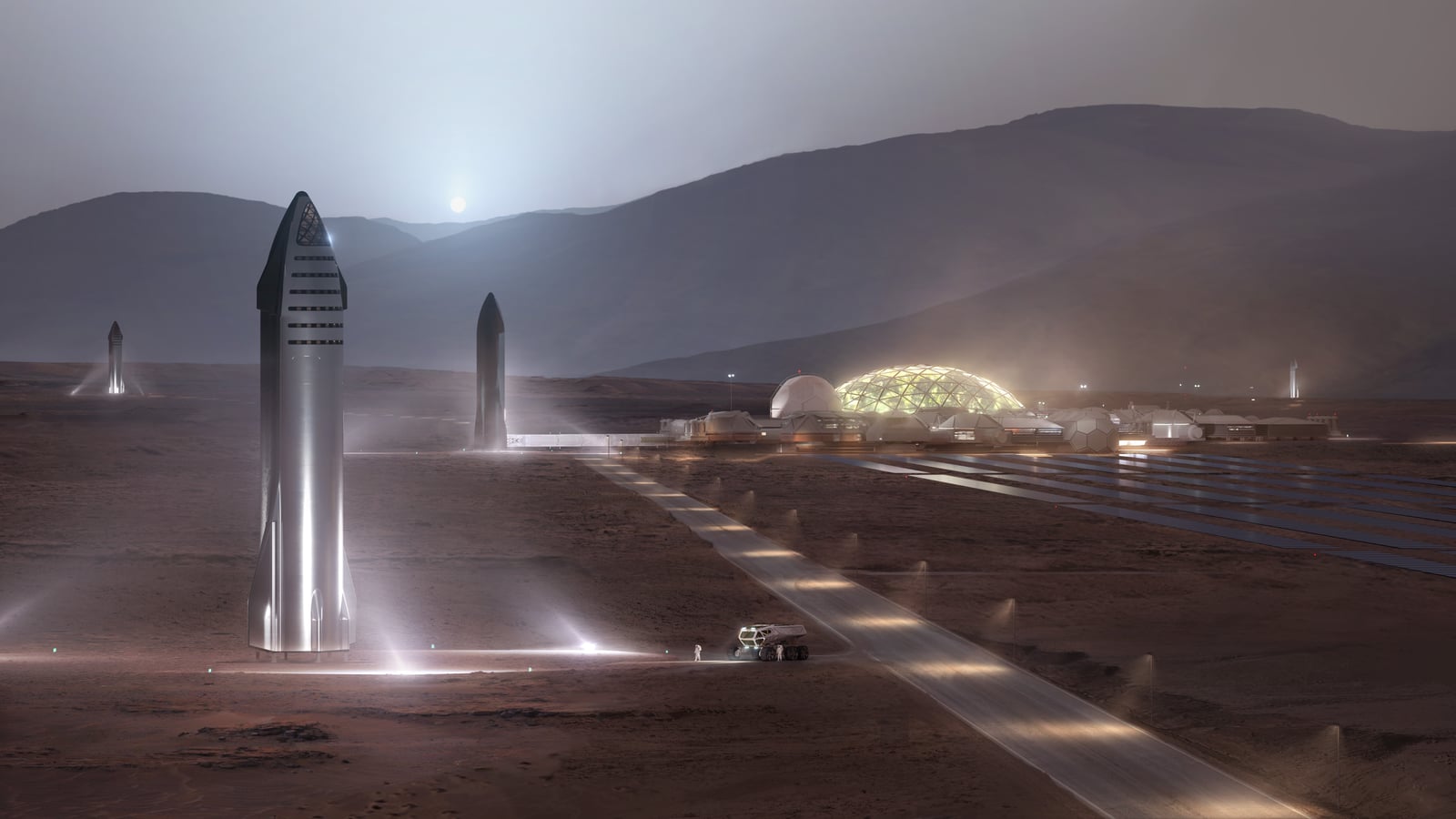
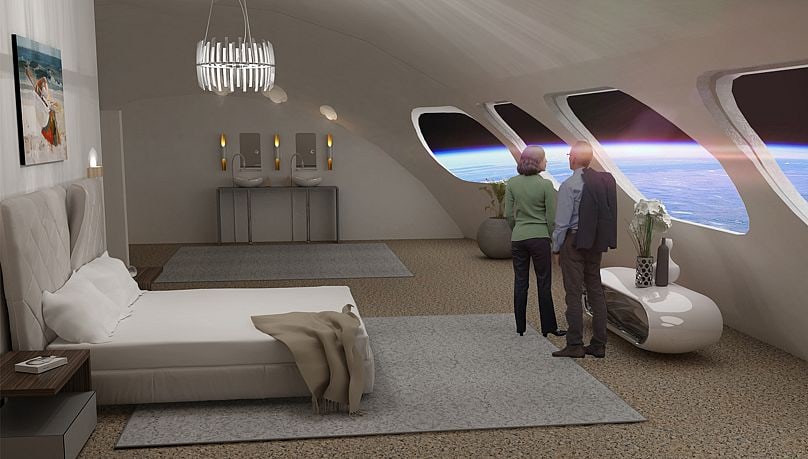
So where did this story of a Martian palace come from? From a simple viral frenzy. Images of a luxury hotel planted on Mars, attributed to Musk and billed at several million a night, have been shared millions of times. Upon verification, these spectacular visuals are artificial intelligence-generated composites · no Martian hotel exists, is funded, or is even planned. SpaceX is indeed working to send humans to the Red Planet, but the objective is survival, not offering room service. Several fact-checks have debunked the hoax, which nonetheless continues to circulate, proving the fascination the personality commands.
The Tesla Diner, His Only True Foray into Hospitality
Musk is not entirely a stranger to public hospitality, however. On 21 July 2025, Tesla opened its very first Tesla Diner in Hollywood, on Santa Monica Boulevard: a retro-futuristic restaurant inspired by 1950s American drive-ins, which he had been teasing since 2018. But you can’t sleep there: it’s an entertainment restaurant, not a hotel. The two-level venue, initially open 24 hours a day before night service was restricted to charging customers, boasts 250 seats, a rooftop terrace with a bar, two giant 20-metre screens for a true drive-in experience, and, most importantly, 80 V4 charging stations, the largest urban Supercharger in the world. At its opening, Californian chef Eric Greenspan had designed a menu of burgers and chips served in Cybertruck-shaped boxes, sometimes delivered by robots; he has since left the venture. Musk warned: if the concept works, he will export it to major cities worldwide and along main road networks.
Why Musk Snubs Hospitality While Other Billionaires Flock To It
The contrast is striking. While Europe’s great fortunes acquire historic palaces, Musk, for his part, invests in charging, screens, and gadgets. Where Arnault and Saadé buy heritage and legend, Musk sells charging time and entertainment. His vision of hospitality is not one of overnight stays and discreet service, but rather a brand experience serving the car: one stops at the Tesla Diner to recharge and be entertained, not to rest there. Two schools clash: on one side, heritage luxury, which banks on location, the room, and the art of hospitality; on the other, technological luxury, which banks on speed, novelty, and spectacle.
Our Perspective
This absence of hotels in the Musk empire is not an oversight, it’s a choice. For old-world billionaires, owning a grand hotel remains the ultimate symbol of prestige and rootedness, as illustrated by the saga of the Louis Vuitton hotel on the Champs-Élysées. For the Tesla boss, hospitality simply holds no strategic interest. As long as Musk thinks of the experience in charging minutes rather than overnight stays, luxury hospitality will remain the playground of the Arnaults and Saadés. One question remains open: should Tesla ever wish to retain its customers for longer, the idea of a ‘Tesla Hotel’ might seem less improbable than a palace on Mars.