

In brief
- In Sambuca di Sicilia, an early 20th-century ruin bought for a symbolic one euro has been made habitable by Palermo-based studio Didea, with the support of Airbnb.
- One hundred and thirty-five square metres over three levels, built against the village’s historic ramparts.
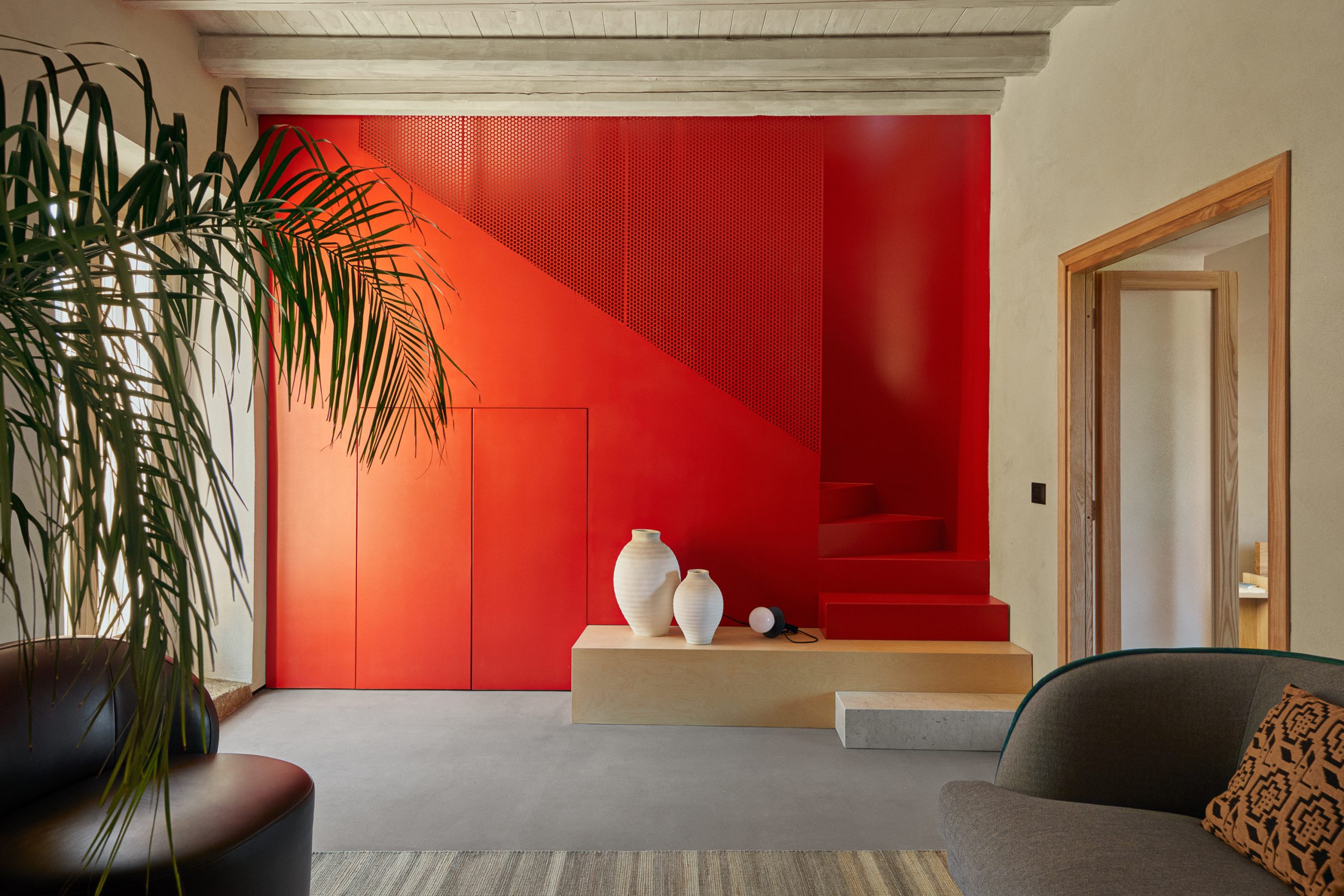
- Two perforated steel staircases, one red, the other green, run through the house from the street to the top floor, serving as its backbone.
- Lime plaster and raw earth, chosen for thermal comfort without resorting to air conditioning.
- The project was completed in 2022. What makes it news today is the free residency programme offered by the platform since then.
One-euro houses have made headlines around the world as a curiosity, sometimes even as a suspected scam. Yet the scheme is serious: Italian municipalities emptied by depopulation sell ruined buildings for a symbolic sum in exchange for a contractual commitment to restore them within a set timeframe. The euro is not the price of the house; it is the entry price for a renovation project.
En images
Faites glisser pour parcourir · cliquez pour agrandir
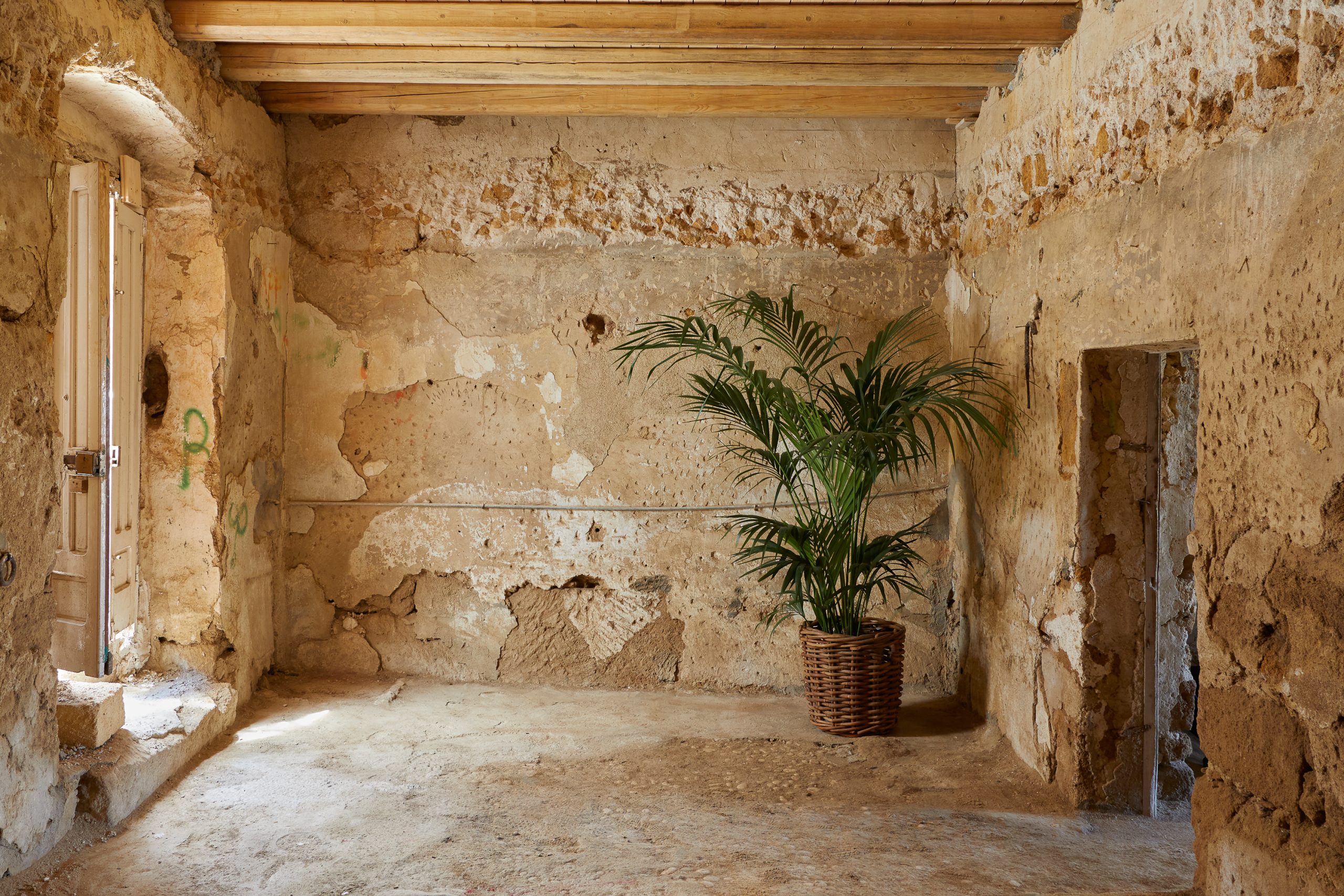
What was there before
In Sambuca di Sicilia, a small town in the province of Agrigento, the selected building dated from the early 20th century and was barely standing. The floors had collapsed, there were no utilities, and damp had spread throughout the structure. It is partially built against the village’s historic ramparts, which prevented rebuilding the walls as one might have done elsewhere.
It was this building that Airbnb chose for its initiative, commissioning the project to the Palermo-based studio Didea. The work first involved stabilising the shell, then reconstructing the missing floors.
Two staircases to hold the house together
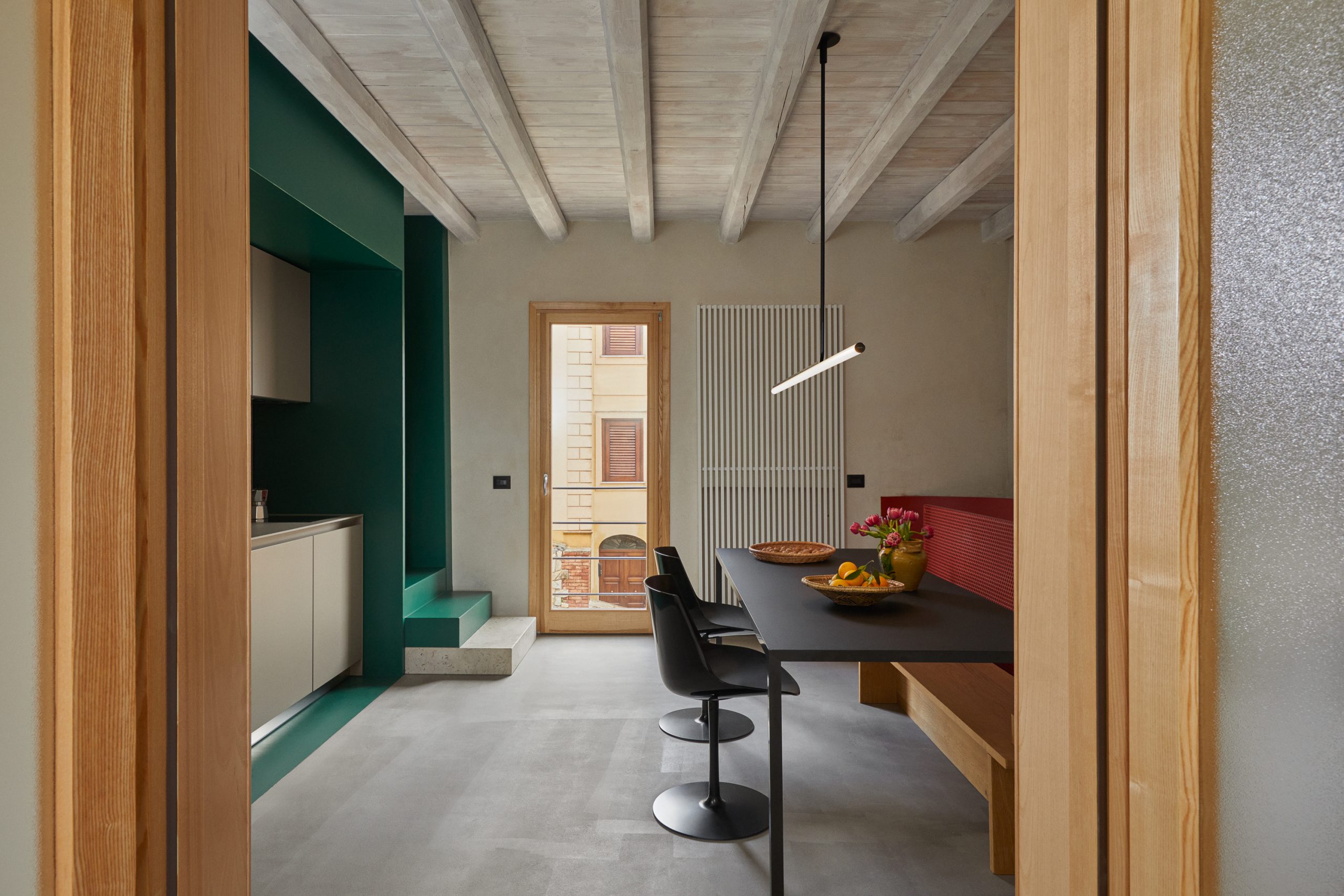
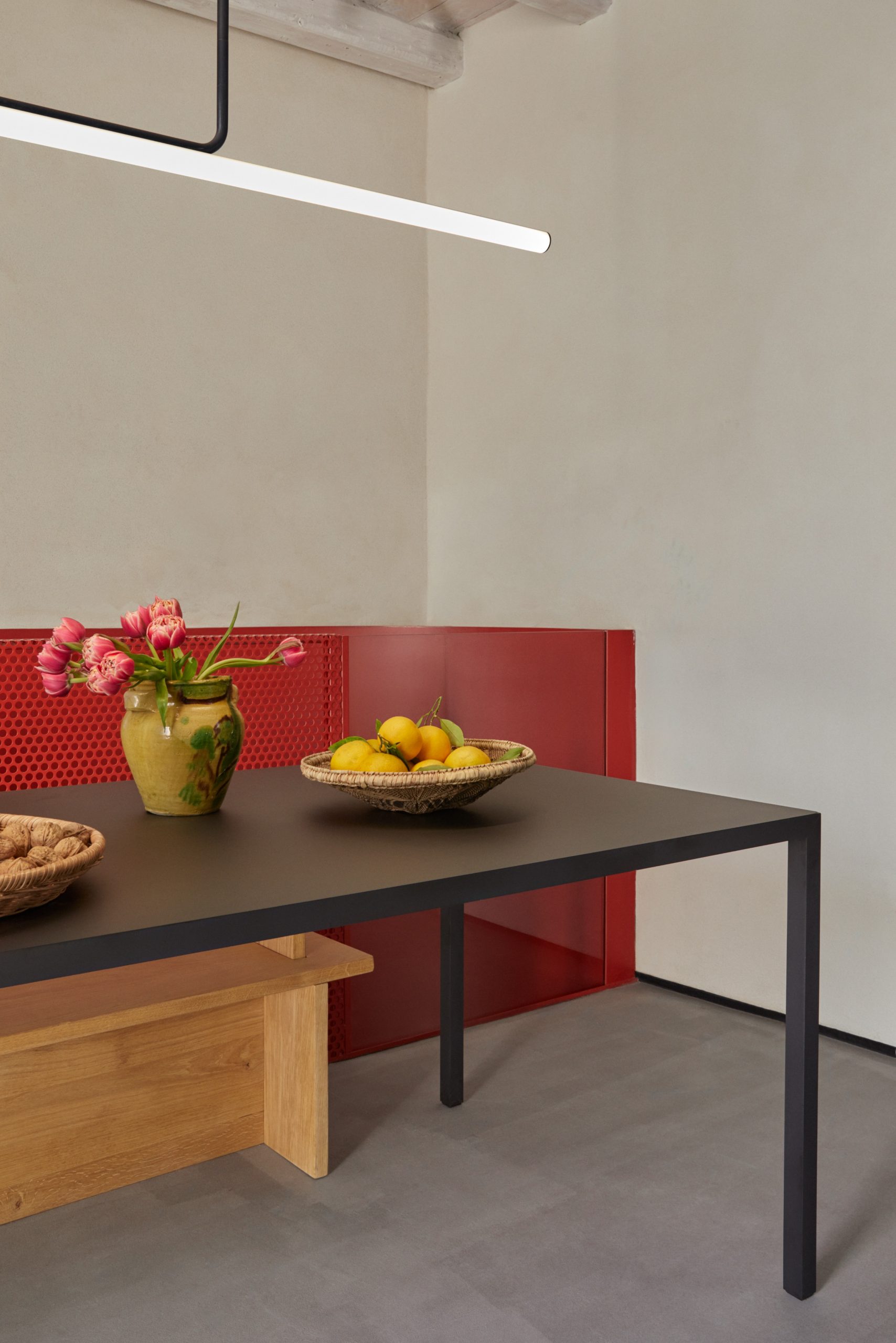
One hundred and thirty-five square metres spread over three levels on a narrow plot: the challenge was vertical circulation. The response is the project’s most visible feature. Two perforated steel staircases, one red, the other green, rise from the street to the top floor and become the structuring element of the house, serving as a passageway, balustrade and a splash of colour in deliberately muted rooms.
The rest is all about restraint. The ashlar stone walls are left exposed where they survived, with their irregularities and repairs. Elsewhere, lime and raw earth plasters even out the surfaces without smoothing them. The furniture is low, and the openings have been kept to their original dimensions.
Comfort without air conditioning
The choice of materials is not decorative. Lime and raw earth breathe, regulate humidity and cushion temperature fluctuations, which is crucial in inland Sicily, where summer temperatures regularly exceed thirty-five degrees. The project achieves its thermal comfort through the inertia of the walls rather than mechanical equipment, which is also the most cost-effective solution to maintain over time.
This is where the demonstration succeeds. A one-euro ruin implies a considerable renovation budget, and the classic mistake is to spend it on technical installations. Here, it was invested in the structure and the plasterwork.

What this says about the scheme
One clarification is necessary, as it changes how we view it: the project was completed in 2022. This is not an inauguration but a documented project, which the platform has since used to offer a free one-year residency. The initiative is therefore as much a showcase as it is a rehabilitation.
This takes nothing away from it. Municipalities selling houses for one euro are primarily looking to publicise their scheme, and a house photographed worldwide is worth more than any billboard campaign. Sambuca has seen its programme fill up. Yet the question remains, one that design cannot solve: a village is repopulated with year-round residents, not with one-year stays.
For the traveller, the appeal lies elsewhere. Inland Sicily, around Agrigento and the Belice valley, remains one of the island’s least visited regions, an hour and a half from Palermo and forty minutes from the temples of Selinunte. It is a base for a stay, not just a stopover.
- →Airbnb Rankings: Three Normandy Towns in the Top 10 Summer 2026 Destinations
- →Morimoto at Mondrian Bordeaux launches a 33-euro lunch served in 45 minutes
- →Airbnb Joins TAP Miles Go, Giving 9 Million Members 2 Miles per Euro
- →Airbnb: Experiences push share price target to 220 dollars
- →A Night in the Floating Up’ House: The World’s Most Magical Airbnb