


- 📊 First sustainability report published · rare for an independent five-star hotel, which is under no legal obligation to do so.
- 📍 Via di Ripetta 231, Rome · between Piazza del Popolo and the Ara Pacis, ten minutes from Piazza di Spagna.
- 🏛️ A conservatory founded in 1672 by Pope Innocent XI, which became a five-star hotel in 2022.
- 🔑 78 rooms and suites · a member of Relais & Châteaux, owned by the Ginobbi family since 1950.
- 🌿 Green Key certified · and a signatory to the UNESCO Sustainable Travel Pledge.
Publishing a sustainability report when you are a listed group is a regulatory requirement. When you are a single 78-room hotel in Rome, with no shareholders to reassure, it is a choice. Palazzo Ripetta has just published its own, and the exercise speaks volumes about how an independent five-star hotel is trying to exist alongside the major brands today.
Contents
A 17th-century conservatory turned hotel
The building at 231 Via di Ripetta was not built to welcome travellers. It was founded in 1672 by Pope Innocent XI as a conservatory run by the Sisters of Saint Dorothy, an institution designed to shelter and train underprivileged young girls, who were taught sewing. In 1728, under Benedict XIII, the architect Gerolamo Theodoli added a church.
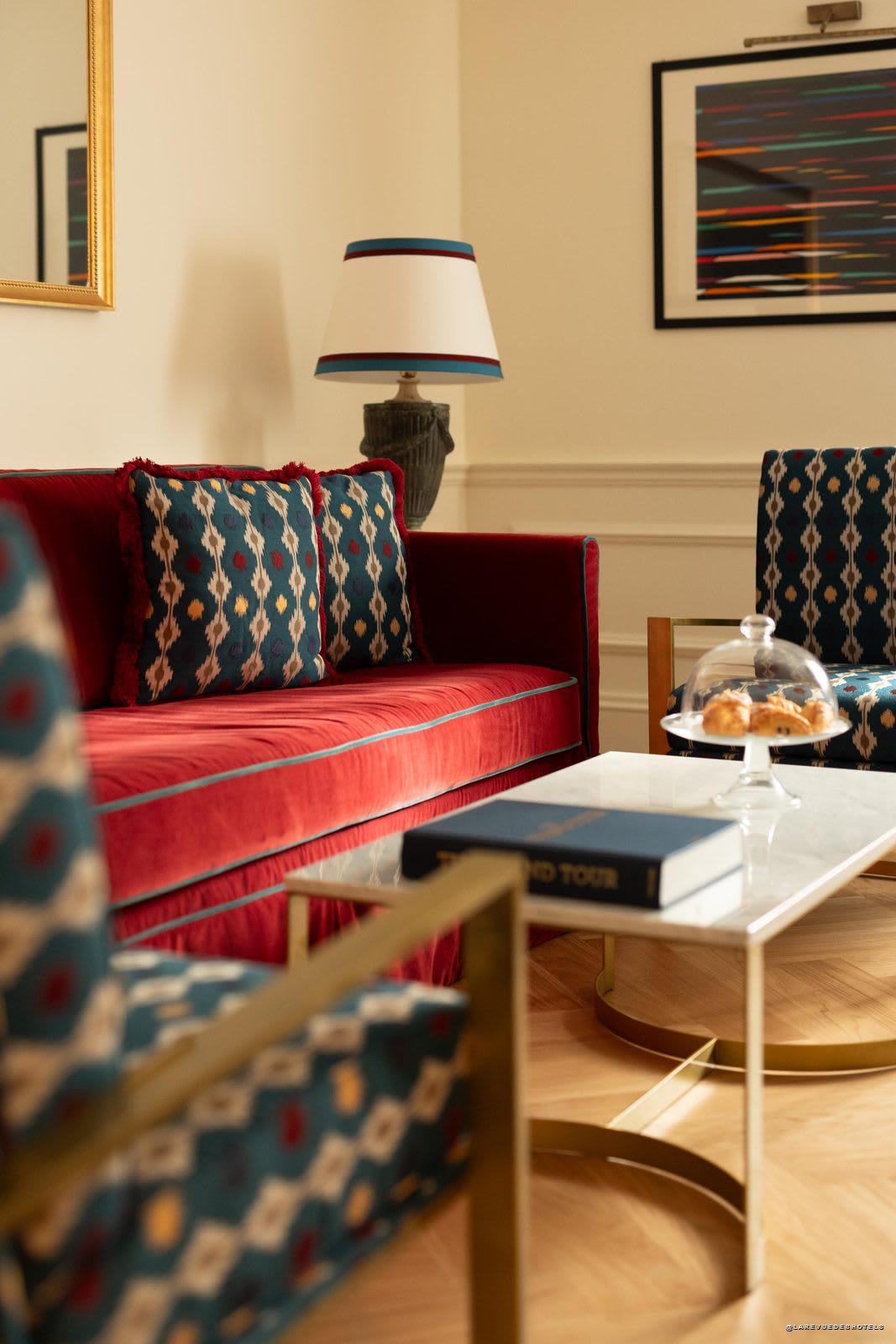
The Ginobbi family acquired the property in 1950. The building then underwent a modernist transformation by Luigi Moretti, one of the major Italian architects of the 20th century, who introduced the curved lines and sinuous volumes that still surprise visitors today when they step through the porch. The conversion into a five-star hotel was completed in 2022, under the direction of interior designer Fausta Gaetani. The property subsequently joined Relais & Châteaux.
What the sustainability report contains
The document sets dated targets rather than mere intentions. The management is committed to integrating eco-design criteria into half of its operational processes, and on the social front, to maintaining a gender pay gap of less than 5%, with a clear focus on parity in management positions. The hotel employs around 86 people.
Two external commitments support this approach and give it verifiable value: Green Key certification, an international label awarded to accommodation based on water, energy and waste management criteria, and the signing of the UNESCO Sustainable Travel Pledge. The cuisine follows the same line, with a commitment to short-supply chains, right down to the olive oil from the Castelli Romani.
This type of publication must be read for what it is: a document produced by the establishment, without an independent audit. Its value lies less in the figures than in the public commitment it creates, and the fact that an independent property agrees to be judged on dated targets.
An economy that holds up without a group
The figures released by the property show an annual turnover of €16.7 million and a footfall of close to 90,000 guests. The operating company’s filed accounts already put revenues at around €14.8 million for 2024, with operating profit exceeding 4.5 million. The growth is therefore real.
American clientele largely dominate bookings, ahead of the Canadian, British, French and Brazilian markets, with continuous growth in Asian and Middle Eastern travellers. This is the classic structure of a Roman five-star hotel, except that it is achieved without the distribution network of a major group. The Ginobbi group, which has also secured €1.5 million in financing from Banca del Fucino, including a subsidised FRI-TUR loan, aims to have six properties by 2030.
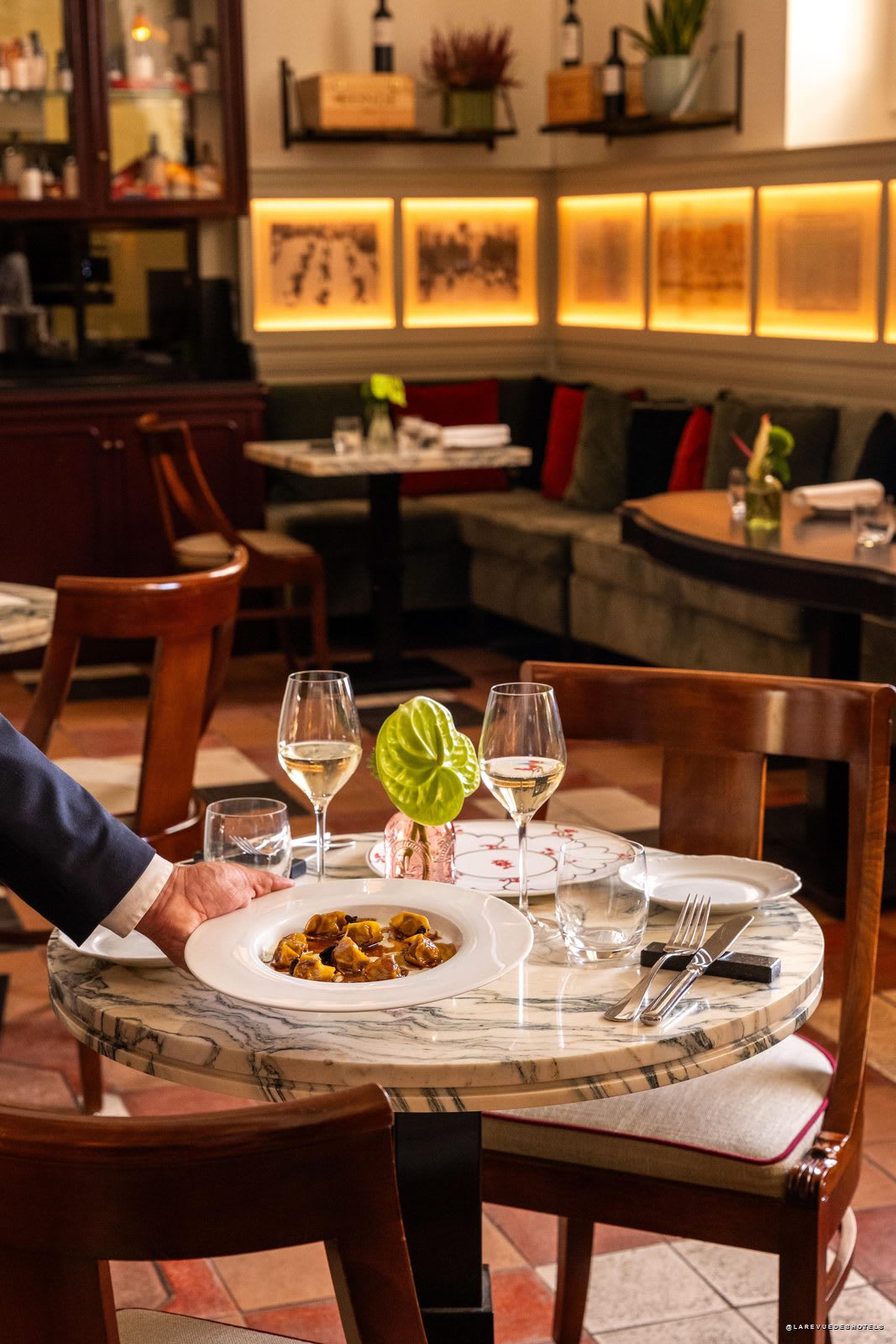
San Baylon and Etere, the property’s two dining venues
San Baylon is already open, at 232 Via di Ripetta, and serves from Monday to Sunday in the evening. The regional and deliberately straightforward cuisine is created by Christian Spalvieri. The menu embraces a form of technical restraint that contrasts with the over-the-top nature of most Roman hotel restaurants.
The Etere rooftop completes the offering, with a terrace bar that is one of the few high points in the neighbourhood. A secret garden in the heart of the building completes the setup. For a hotel of this size, three distinct social spaces is a lot, and this is probably where part of the profitability lies: these spaces attract a Roman clientele who do not stay overnight.
Our take
Roman tourism is splitting. On one side are the major international brands, which have multiplied openings in the capital since 2020 and bring unbeatable loyalty programmes. On the other, a handful of independents who cannot afford this battle and must build a reason to be chosen.
Palazzo Ripetta has chosen heritage and responsibility as differentiators, which is consistent with what it is: a building that no one can copy, run by a family for three generations. There remains the question that will decide everything, and to which a sustainability report does not answer: does the traveller comparing two properties at €600 a night read this kind of document? Nothing is less certain. But the property has at least set a benchmark.