


Two and a half years after their launch, the MICHELIN Keys distinguish 2,832 hotels worldwide, including 220 in France and Monaco. Hotels display them in their press releases, groups celebrate them, and we ourselves relay them every week. But what is this distinction, often written “Clés Michelin”, really worth? Method, economic model, customer reviews, effect on bookings: we looked at what is measurable, and what is not.
- 🔑 The distinction · launched on 8 April 2024, it classifies hotels from one to three Keys, much like stars for restaurants.
- 🌍 The scale · 2,832 distinguished hotels in 2026 across 79 destinations, out of more than 5,000 hotels recommended by the guide.
- 🛏️ The method · five criteria and anonymous “stays or visits”: Michelin does not commit to sleeping in every hotel.
- 💶 The blurring of lines · the guide that distinguishes hotels also sells their nights, on its website and application.
- 📉 The impact · no public figures measure the effect of a Key on bookings or prices.
- 🧭 Our view · a good benchmark for finding an address with character, not a verdict on the quality of a stay.
Contents
A young distinction, already very broad
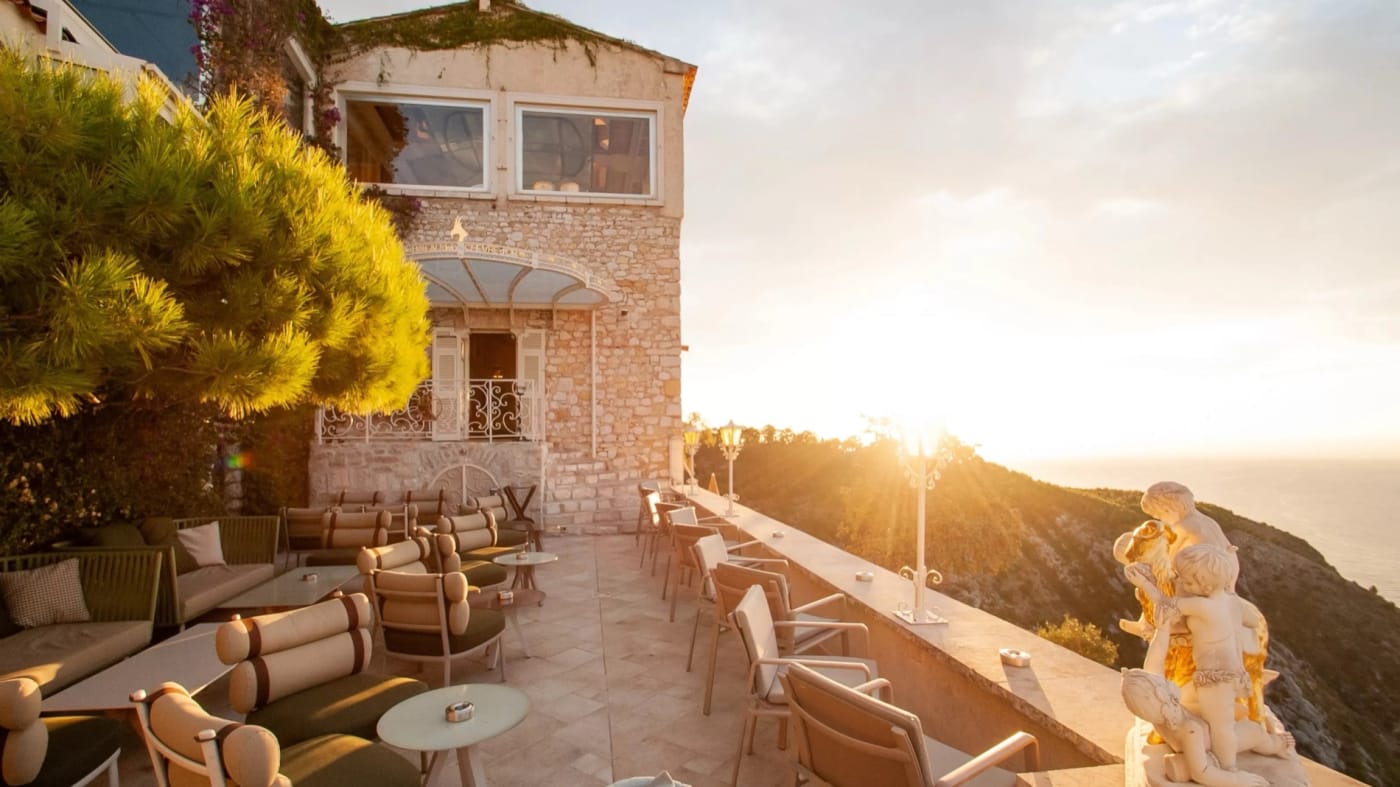
Michelin announced its Keys on 8 April 2024, with an initial French selection of 189 hotels: 24 with three Keys, 38 with two, 127 with one. The United States, Spain, Italy and Japan followed within the year. The 2026 global selection, unveiled on 18 September, features 2,832 hotels in 79 destinations, including 470 new entries.
More than seven out of ten distinguished hotels have only one Key. The summit remains rare, with 155 addresses bearing three Keys worldwide, including Le Couvent des Minimes and La Chèvre d’Or this year. But the base is widening fast: in France, numbers rose from 189 distinguished hotels in 2024 to 220 in 2026, including Monaco, and Italy (224) overtook France this year.
Five criteria, and a touch of subjectivity
The guide assesses five criteria: architecture and interior design, quality and consistency of service, personality and character, value for money, and the hotel’s contribution to its environment or neighbourhood. One Key signals a “very special” stay, two an “exceptional” stay, three an “extraordinary” stay.
Regarding methodology, vocabulary matters. Michelin speaks of Keys awarded on the basis of “anonymous stays or visits”: a visit is not an overnight stay, and the guide does not commit to sleeping in each of the 2,832 hotels. Inspectors are salaried employees, anonymous, whose expenses are covered by Michelin, but their number is not published for the hotel sector. During a professional roundtable organised after the initial awards in 2024, hoteliers pointed out criteria that rely on the “inspector’s feeling” and the lack of explanation for houses left without a Key.
The guide that rates also sells the night
This is the most delicate point. In 2018, Michelin acquired Tablet Hotels, a luxury hotel booking platform, and the MICHELIN Guide now sells overnight stays on its website and application. On the profiles of the Crillon or the Royal Monceau, consulted on 1 October 2026, every room category features a “Book” button. The exact same player distinguishes the hotels and earns a commission on their sales.
Michelin defends the independence of its teams: according to Gwendal Poullennec, international director of the guide, inspectors have no connection with the hotels, and commissions earned on bookings do not influence listings. There is no evidence to suggest otherwise. However, the model has a precedent: in several countries, the arrival of the guide was funded by the local tourism board, as in Thailand, which committed 144 million baht over five years in 2017. The guide remains a business, and its selections also serve a commercial function.
Palaces with only two Keys
Hierarchies do not always align. The Crillon and the Royal Monceau hold the Palace distinction, awarded in France by Atout France following an audit based on written criteria. Yet the MICHELIN Guide grants them only two Keys. This is not illogical: Michelin’s grid primarily rewards character rather than the level of amenities. However, for the traveller, two official labels that contradict each other muddy the message rather than clarifying it.


Guests do not vote like Michelin
In 2024, in the wake of the inaugural selection, guest review specialist ReviewPro compared Parisian Keys with ratings left by travellers. The result: three-Key hotels achieved a satisfaction index of 94.60%, compared with 95.15% for two Keys and 95.25% for one Key. The hotels with the highest distinctions were not the highest-rated by their guests, and only 12 of the 39 Parisian hotels with a Key ranked among the city’s top 50 best-rated. The authors considered the gap insignificant. At the very least, it shows that the Key does not measure the same thing as guest satisfaction.

An impact no one puts figures on
How many bookings does a Key generate? No one says. Michelin does not publish sales figures for its platform, and no hotel group has released data regarding the effect of a distinction. In 2024, Thibault Le Gouis, of Maison Villeroy, considered it “too early” to measure the impact. Two years later, quantifiable proof still does not exist publicly.
On the restaurant side, where stars have existed for nearly a century, research is more nuanced than commonly believed. A study published in 2015 in the journal Economic Inquiry showed that starred tables in New York charged significantly higher prices. However, another study published in the Strategic Management Journal observed that over 40% of starred restaurants in its sample had closed by the end of 2019, compared with one in five for others. In 2018, Sébastien Bras handed back his three stars, citing pressure. A distinction attracts, but it also compels.
For hotels, the most visible effect is editorial: each Key becomes a press release, as seen with Six Senses London, distinguished six months after its opening. It is a selling point rather than a guarantee.
Our view: a benchmark, not a verdict
The Key has a genuine quality: it highlights houses with character that official star ratings, based on amenities, leave in the shadows, such as country inns, lodges and small village hotels. It also has three limitations. Its methodology lacks transparency, its publisher sells the nights it recommends, and its effect is unmeasured. A Key says a hotel is worth the detour, it does not say your stay will be flawless.
This is why our reviews are based on complete stays and a detailed score out of 10 evaluated across six criteria, published with its flaws. You can find them in our ranking of the best-rated hotels and in the 50 best hotels in the world according to La Revue des Hôtels.