

- Capella Kyoto is a new luxury hotel located in the historic Gion district, designed through a collaboration between Kengo Kuma and Associates and Brewin Design Office.
- The property features 89 rooms and suites, many of which provide views of the Kennin-ji temple or the Kaburenjo theatre.
- The hotel offers 3 distinct dining venues, including the regional restaurant Sonoma, the late-night spot Yoi, and the French brasserie Lanterne.
- The design is inspired by the traditional machiya architecture, utilizing a layered spatial logic and materials like hand-washed plaster and wood reclaimed from the site’s former primary school.
In the heart of Gion, Kyoto’s iconic historic district, a new prestigious address has opened its doors: Capella Kyoto. The result of a visionary collaboration between Kengo Kuma and Associates and the Singaporean firm Brewin Design Office (BDO), this luxury establishment stands out for its profound respect for local architectural traditions, notably the celebrated machiya. Erected on the site of a former primary school, Capella Kyoto blends harmoniously into its surroundings, seeking to capture the very essence of these typical wooden townhouses of the region. The objective was to transcribe the “coherent spatial logic” and the unique “rhythm and progression” of the machiya, offering guests an immersive and serene experience.
The Soul of Machiya Reimagined
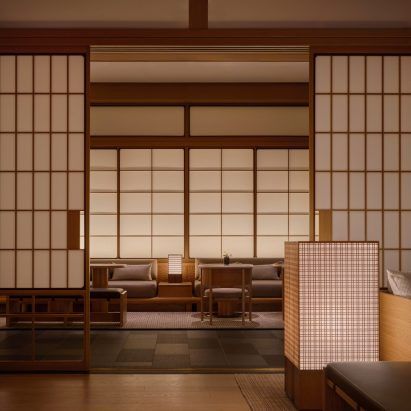
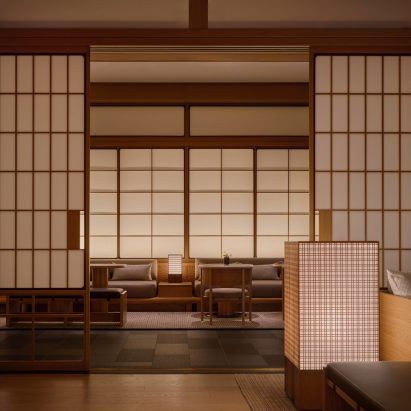
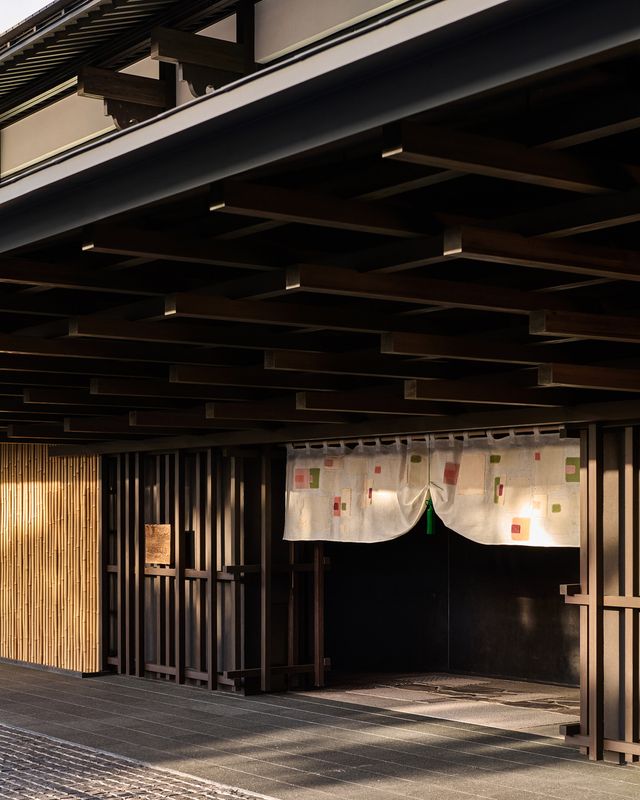
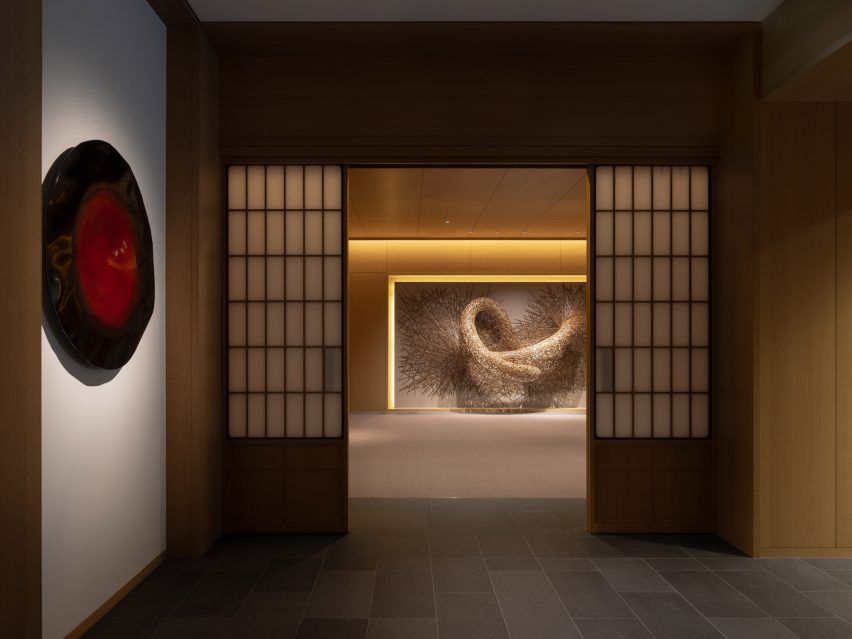
Machiya are characterised by their deep and narrow footprint, often incorporating a small shop at the front and more intimate living spaces at the rear, punctuated by gardens or inner courtyards. Inspired by this unique layout, Brewin Design Office designed the interior of Capella Kyoto with a similar layered composition. Arrival at the hotel is an experience in itself: guests traverse a long walkway lined with shoji screens, gradually leading to a wood-clad lobby. An imposing twisted sculpture, evoking the shimenawa, a sacred rope used in Shinto purification rituals, emerges from a wall, marking the passage towards a sanctuary of tranquillity. Robert Cheng, founder of BDO, highlights the importance of this approach: “What is fascinating about machiya is that their characteristics are not isolated ideas, but part of a coherent spatial logic. We were particularly inspired by the machiya’s sense of rhythm and progression, expressed through a sequence of spaces that transition from more public and open areas to increasingly private and contemplative zones.” The entrance was conceived as a series of superimposed thresholds, vestibules, and controlled sightlines, inviting a gentle transition and a welcome pause between the city’s hustle and inner serenity.
A Haven of Peace in the Heart of the Hotel
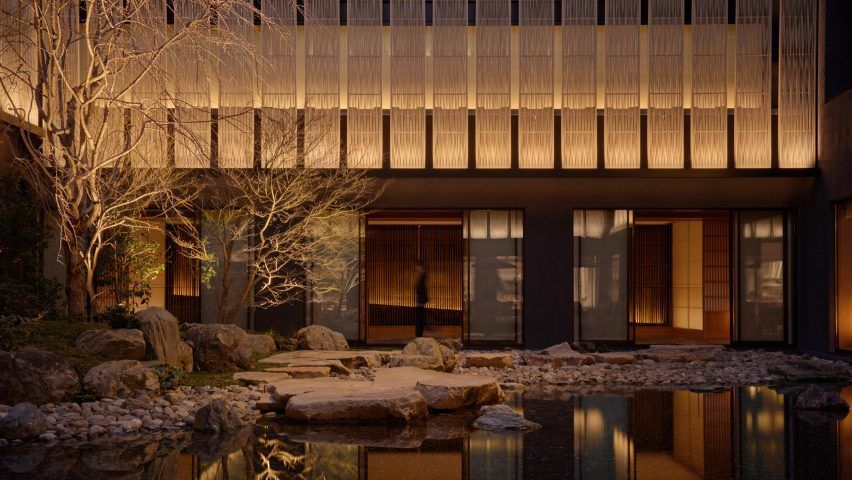
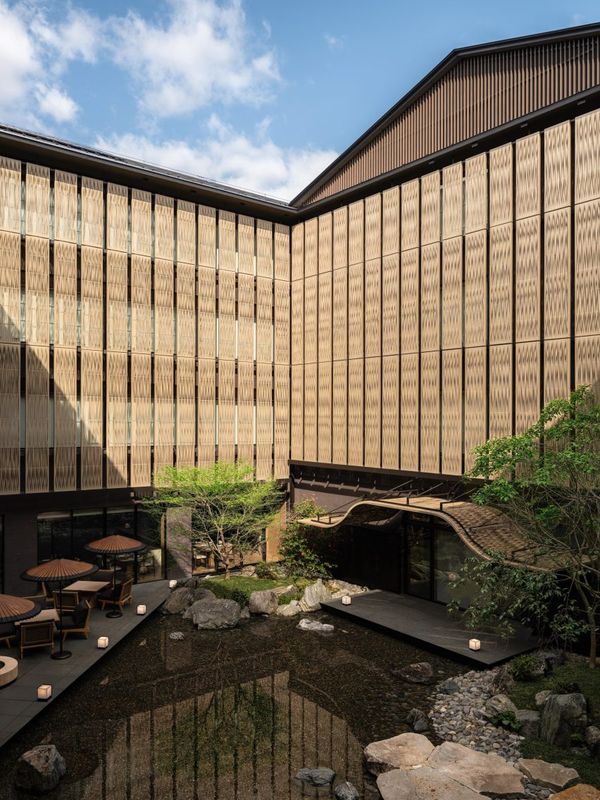
Beyond the lobby, a vast inner courtyard unfolds, forming the true epicentre of the hotel. At its centre, a shallow basin is bordered by rocks and trees, creating an atmosphere of calm and contemplation. This central space embodies the hotel’s desire to forge a deep connection with Japanese nature and culture, offering its occupants a bubble of serenity.
Exceptional Craftsmanship and Refined Details
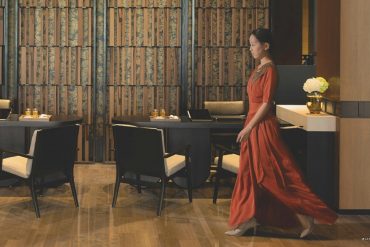
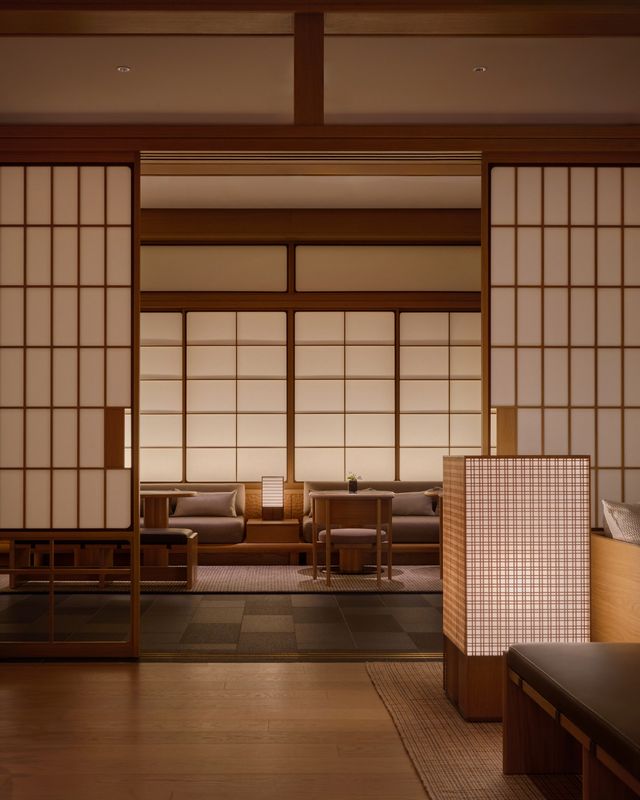
In Capella Kyoto’s communal areas, BDO has integrated iconic elements of Kyoto craftsmanship and machiya. Walls are adorned with hand-washed plaster, woodwork is finely crafted, and delicate woven textures enrich the surfaces. The guest lounge, in particular, is delineated by lattice screens which, when illuminated, evoke the appearance of a traditional Japanese lantern, the andon. For Robert Cheng, working in Kyoto was an “enriching experience”, reminding him that the city lives its history daily, offering the opportunity and responsibility to design a contemporary space while respecting its cultural heritage.
A Culinary Journey of Diverse Flavours
Capella Kyoto offers its guests a varied gastronomic experience through three distinct restaurants. Sonoma presents a regional menu with an open kitchen, inviting discovery of local flavours. Yoi, more relaxed, is a late-night venue, decorated with reclaimed wood from the former school that once occupied the site. Finally, Lanterne, a French brasserie, offers an unexpected Parisian touch with its marble columns and herringbone floors, in an elegant reinterpretation of timeless chic.
Rooms and Suites: Symbols of Elegance and Tradition
The hotel’s 89 rooms and suites extend this alliance between tradition and modernity. Wooden surfaces and shoji screens are found in every space, creating a warm and soothing ambience. Most rooms offer breathtaking views of the neighbouring Kaburenjo theatre or Kennin-ji, Kyoto’s oldest Zen Buddhist temple. For an even deeper immersion into Japanese culture, six of the suites are equipped with a private bathtub, a nod to the famous onsen hot springs. This new luxury address follows in the footsteps of Kengo Kuma’s bold projects in Kyoto, who the previous year had already designed the Banyan Tree, nestled in the foothills of the Higashiyama mountains, a lush site featuring terraced gardens and a wooden stage dedicated to Noh theatre. Capella Kyoto once again confirms the ability of major names in architecture and design to create places that celebrate heritage while looking towards the future.
Practical Information for Capella Kyoto
- Address: 146 Komatsucho, Yamatooji-dori, Higashiyama district, Kyoto, Japan
- District: Gion (Miyagawa-cho), a stone’s throw from the Zen temple Kennin-ji and the Miyagawa-cho Kaburenjo theatre
- Architect: Kengo Kuma and Associates
- Interior Designer: Brewin Design Office (Singapore)
- Capacity: 89 rooms and suites
- Opening: 22 March 2026 (first Capella address in Japan)
- Official Website: capellahotels.com · Kyoto