
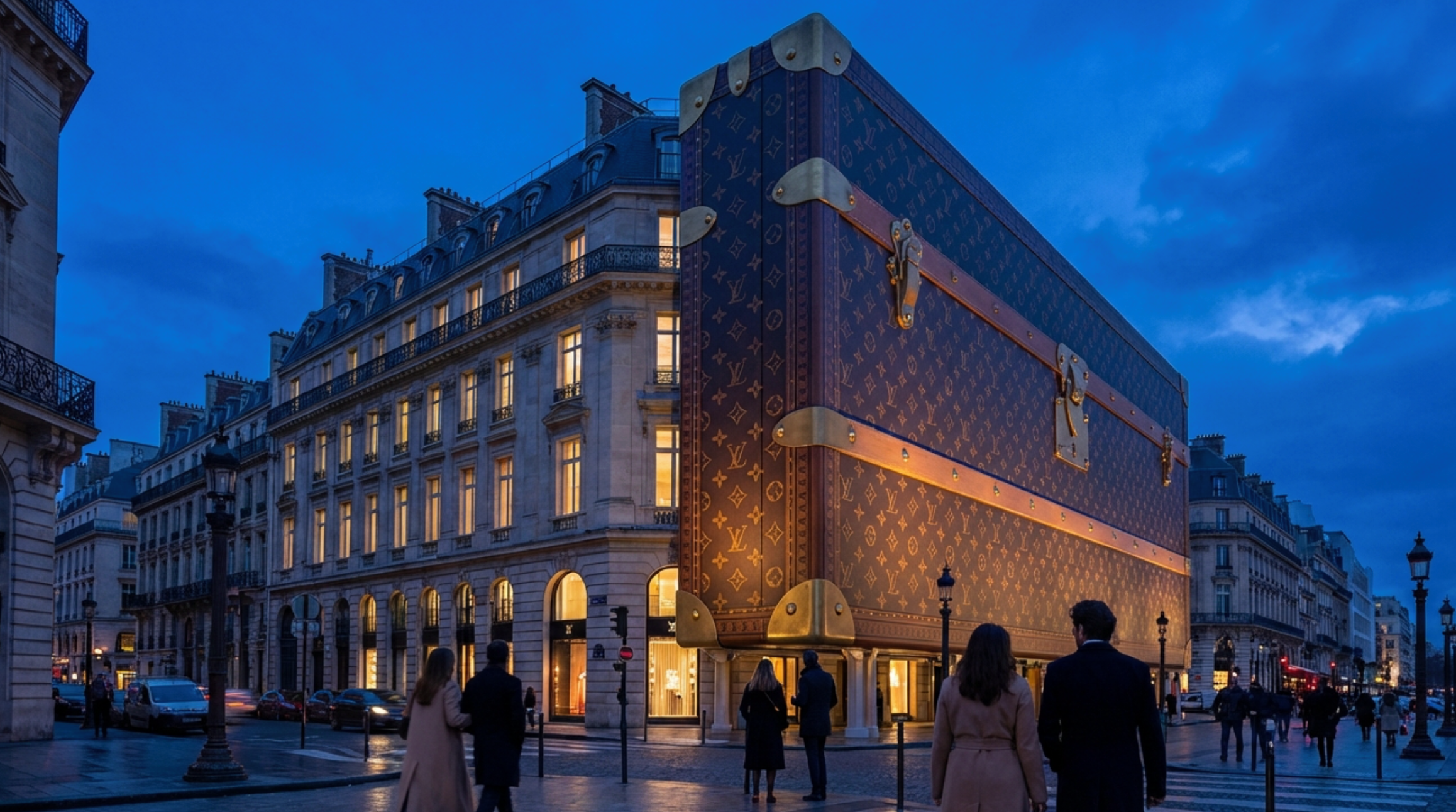

◉ First GlanceOur report on opening day
- An email from architectural firm Barthélémy quelque chose requested the removal of 3 visuals from an article about the 103 Champs-Élysées project, citing confidentiality.
- On January 30, 2026, Bernard Arnault stated there would be no Louis Vuitton hotel, emphasizing the brand’s focus on leather goods and trunks.
- The architectural firm’s request, dated January 29, 2026, described the project as ‘confidential’ rather than ‘cancelled’, raising questions about its true status.
By La Revue des Hôtels Team | Saturday 07 February 2026
There are moments in the world of luxury when the unsaid becomes more eloquent than any official statement. This Thursday, 29 January, at precisely 4:26 PM, my inbox welcomed one of those deafening silences, disguised as a simple administrative request.
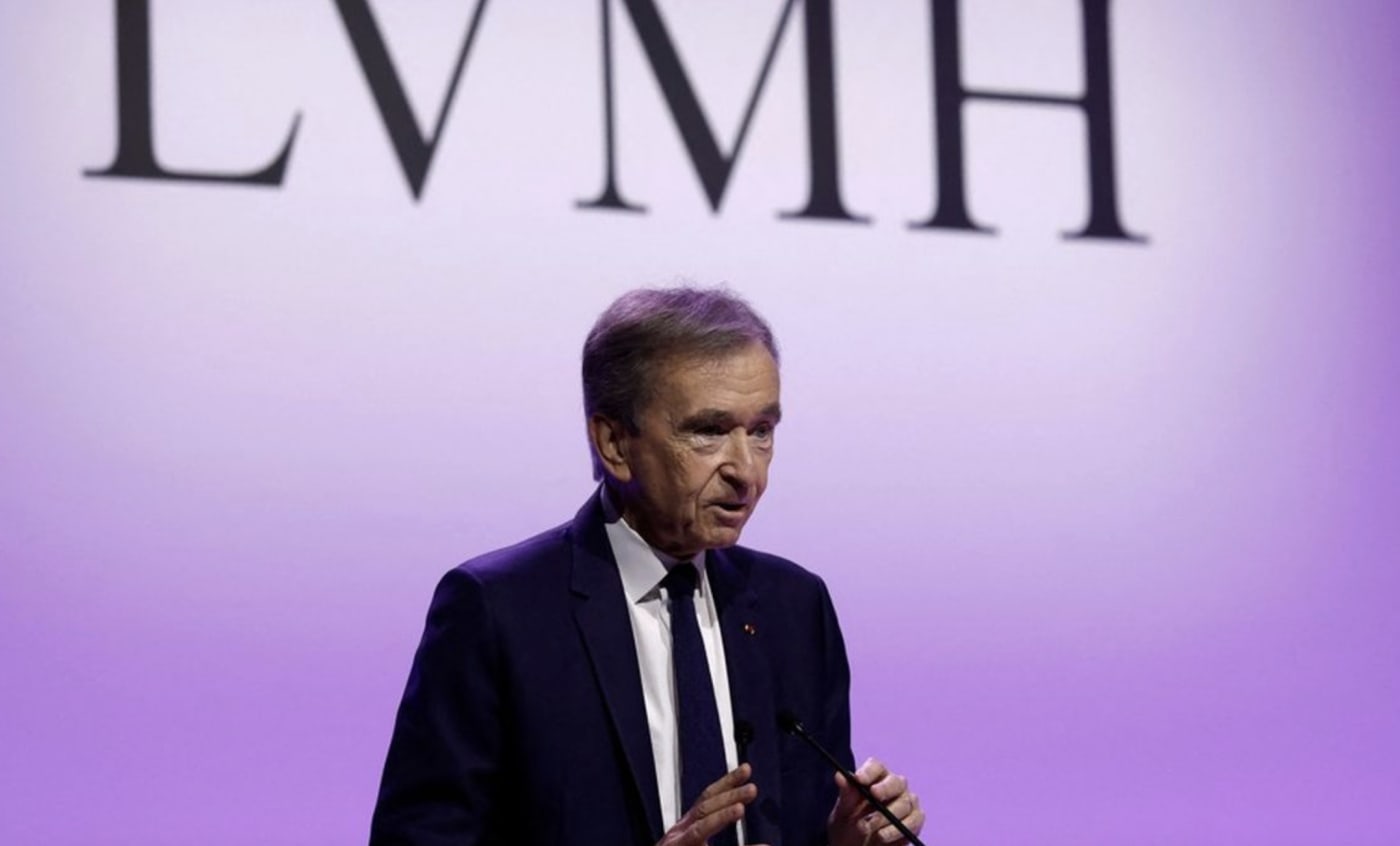
Twenty-four hours later, on 30 January 2026, Bernard Arnault, the architect of the LVMH empire, whose decisions reshape the global luxury landscape, spoke during the group’s annual results presentation. His statement, clear and unequivocal, was: “There will be no Vuitton hotel.”
Between these two moments, a story unfolds that deserves to be told.
The Email
The email came from Barthélémy quelque chose, a Parisian architectural firm whose name discreetly appears at the bottom of some of the capital’s most ambitious projects. The tone is courteous, almost deferential. But behind the polite words, something more imperious can be sensed…
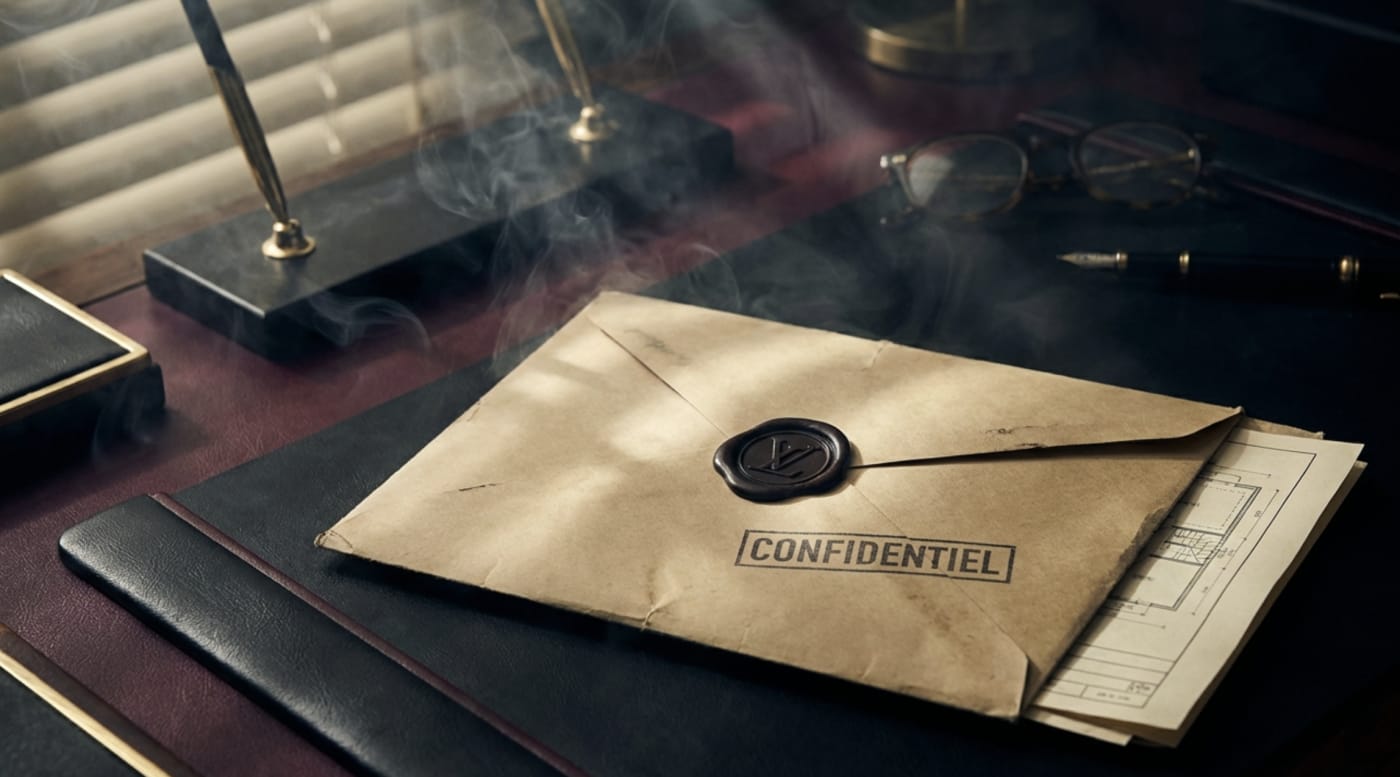
Illustrative image.
From: Communications, Barthélémy quelque chose – Architects
Date: Thursday 29 January 2026, 4:26 PM
Subject: Request to remove visuals
Good day,
We have identified the following article on your website, concerning the 103 Champs-Élysées project, for which we are the appointed architect:
[lien vers l’article]
We noted that visuals (2 perspectives and 1 section) illustrate this article.
However, we were not consulted and it appears the project is confidential.
Therefore, we would be grateful if you would remove the 3 visuals in question from your site.
Thanking you in advance for your understanding,
Kind regards,
Head of Communications and Management
Note the wording. No denial of the project. No rectification. Simply this sentence: “the project is confidential.” In the present tense.
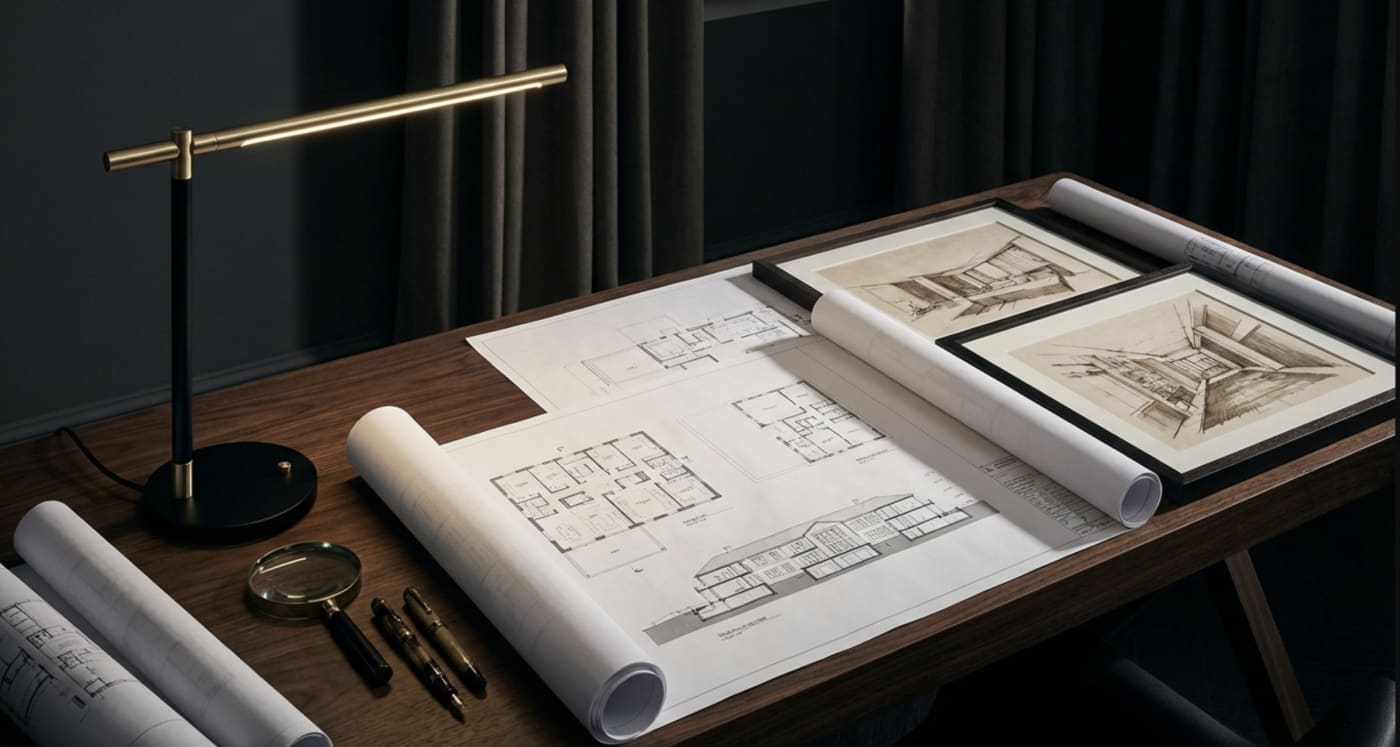
Illustrative image.
Bernard Arnault’s Statement
The next day. Auditorium at 22, avenue Montaigne.
Facing the assembled analysts and journalists, Bernard Arnault spoke of the past year’s performance. Then came the moment when the inevitable question was posed. The Louis Vuitton hotel on the Champs-Élysées. The rumours. The speculations.
His response was crystal clear: “Regarding Vuitton, it is not a brand that we particularly wish to diversify. Instead of diversifying somewhat erratically, we remain focused. There will be no Vuitton hotel.”
He added, with the precision that characterises his management style: “Vuitton is not a fashion company, but a manufacturer of leather goods and trunks; that is where the focus lies.”
The message is clear. The matter appears closed.
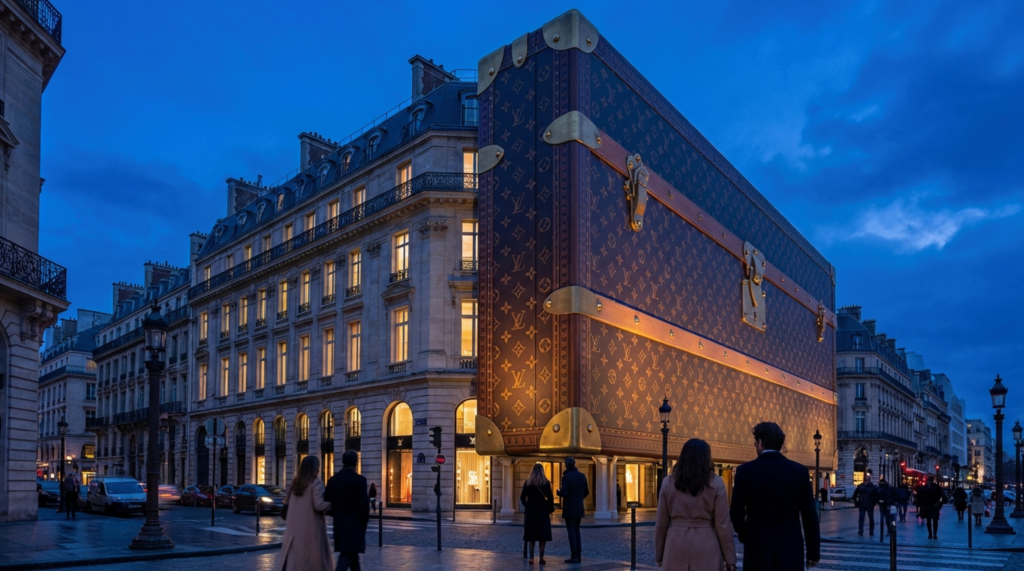
Illustrative image.
The Dissonance
But here’s the thing. In the rarefied world of Parisian luxury, where every detail matters, where every word is weighed, where unspoken elements structure reality as much as official statements, this chronological sequence raises questions.
If the project does not exist, why:
· An architectural firm presents itself as “appointed architect”?
· Do technical documents exist, perspectives and sections, mature enough to be circulated?
· Is the project described as “confidential” rather than “cancelled” or “abandoned”?
· Does this request occur precisely twenty-four hours before Arnault’s public statement?
Behind the scenes of luxury, it is known that major houses never play just one tune at a time. They orchestrate several simultaneously, each intended for a different audience.
Illustrative image.
Our Hypotheses
First reading: The semantics of secrecy
Perhaps we should listen carefully to what Bernard Arnault said. Not a “Louis Vuitton accommodation venue”. Not “private apartments”. Not a “private club”. But a “hotel”.
In legal and commercial terms, a hotel implies public operation, open bookings, and a star rating. What Dior offers on Avenue Montaigne, those discreet suites where the house’s muses and ambassadors stay, does not bear that name. They are “private reception spaces”.
For decades, Hermès has maintained apartments on Rue du Faubourg Saint-Honoré. Chanel owns its legendary apartment above the boutique at 31, Rue Cambon, the very one where Mademoiselle entertained. Brunello Cucinelli has his Umbrian guest houses.
None of these places is a “hotel”. Yet, all embody a form of absolute hospitality, reserved for a global elite.
103 Champs-Élysées could follow this tradition. Not a commercial palace, but a discreet sanctuary. A few suites, five, perhaps ten at most. Accessible by personal invitation only. Reserved for clients whose annual purchases amount to hundreds of thousands of euros. For celebrities invited to fashion shows. For the group’s strategic partners.
A place spoken of only in whispers. Whose very existence is part of the privilege.
Second reading: Image management
The timing suggests another interpretation. Perhaps between December 2025 and January 2026, too much information leaked. The media got carried away. Expectations crystallised.
Faced with this situation, LVMH might have orchestrated a double manoeuvre: first, discreetly removing the circulating visuals (the email of 29 January). Then, publicly cutting short the speculations (the statement of the 30th).
This allows them to regain control of the narrative. To reassure shareholders worried about a risky diversification in a difficult economic context (the group recorded a 1% decrease in its turnover in 2025). To also create an even more desirable rarity.
“Luxury begins where advertising ends,” said Jean-Louis Dumas, the former president of Hermès. Perhaps LVMH is applying this maxim to the letter.
Third reading: The metamorphosis
There is a third possibility. That the project has indeed evolved. That a commercial hotel was considered, then abandoned in favour of something else.
The building could become: A spectacular extension of the flagship at 101, already the world’s largest Louis Vuitton store
· A cultural space, gallery or museum, in the vein of the Fondation Louis Vuitton
· Private lounges for ultra-exclusive events
· Workshops and showrooms for exceptional collections
But then, why maintain such extreme confidentiality? A simple commercial expansion would not justify this level of secrecy.
What We Know – The Documents
We still have them.
The two perspectives. The technical section. These visuals that Barthélémy quelque chose asked us to remove on 29 January at 4:26 PM. These plans which, in their own words, concern “the 103 Champs-Élysées project, for which we are the appointed architect.”
These documents exist. They are in our possession. They tell a story, that of a project developed enough to have been drawn, modelled, and conceived in its smallest architectural details.
We have complied with the request for removal. Out of professional courtesy. Out of respect for copyright. Because in luxury journalism, certain forms matter as much as the substance.
But these images remain. Silent. Eloquent.
They attest to a reality that public statements cannot erase: at 103 Champs-Élysées, something has been designed. Something significant enough to require the assistance of an appointed architectural firm. Something sensitive enough to be placed “under confidentiality.”
These plans do not represent a simple shop expansion. They do not depict ordinary commercial spaces. What we have seen suggests something else. A different ambition. A vision of hospitality that goes beyond the ordinary scope.
We will not publish them, at least not without the architects’ consent or an overriding reason of public interest. But we know what they reveal. And this knowledge changes the nature of the question.
It is no longer a question of knowing if a project exists. The documents confirm it.
It is a matter of understanding why its existence must remain secret.
And for whom it is intended.