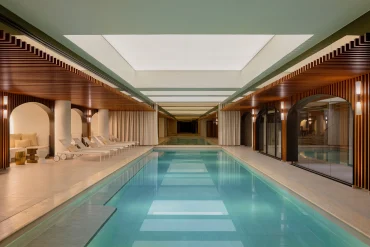


- When the city grid fails, luxury hotels do not depend on public power: they seamlessly switch to their own sources.
- An automatic transfer switch (ATS) detects the outage and starts the generators in a matter of seconds.
- Uninterruptible power supplies (UPS) cover critical systems without the slightest perceptible outage while the generators power up.
- The law already mandates autonomous emergency lighting in all public-access buildings: palaces go far beyond this.
- Redundancy (N+1, 2N), fuel reserves, and regular testing: continuity is an invisible feat of engineering.
The recent electrical disruptions around Place Vendôme raised a question that the general public rarely considers: how can a hotel with hundreds of rooms remain perfectly lit while the street itself is plunged into darkness? The answer is not found in the lobby, but in the basements: the electrical continuity of a palace is an invisible mechanism, designed so that the guest never notices a thing.

Contents
- The city grid is merely a starting point
- The automatic transfer switch, the conductor
- Generators, the muscle of the system
- UPS systems, continuity without the slightest flicker
- N+1, 2N redundancy: planning for the backup’s failure
- Testing, replenishing, maintaining: the invisible work
- What the guest experiences: absolutely nothing
- Our perspective
The city grid is merely a starting point
For a luxury establishment, the public grid supply is not an end in itself: it is merely one source among others. A luxury hotel is designed as a critical site, much like a hospital or a data centre, where interruption is simply not an option. Lifts, kitchens, cold rooms, fire safety, access control, IT networks, reservation systems: dozens of vital functions must run continuously. Indeed, regulations impose an initial safety net: any public-access building must have autonomous emergency lighting capable of guiding evacuation even when the grid is down. Yet a palace does not settle for the legal minimum: it aims for total continuity, where absolutely nothing stops. The strategy is therefore not to hope the power holds, but to plan for it to fail, and to organise the takeover.
The automatic transfer switch, the conductor
At the heart of the system lies a discreet yet decisive component: the automatic transfer switch, commonly known as an ATS. Its role is to constantly monitor the public grid’s voltage and, as soon as it drops or fails, to command the switchover to the backup source. It is the ATS that signals the generators to start, then seamlessly switches back to the public grid once the latter is restored and stabilised. Everything happens without human intervention, in a matter of seconds. A good transfer switch does not just switch: it pauses, verifies that the generator has reached its nominal voltage and frequency before transferring the load, and prevents dangerous backfeeding of power to maintenance crews.
Generators, the muscle of the system
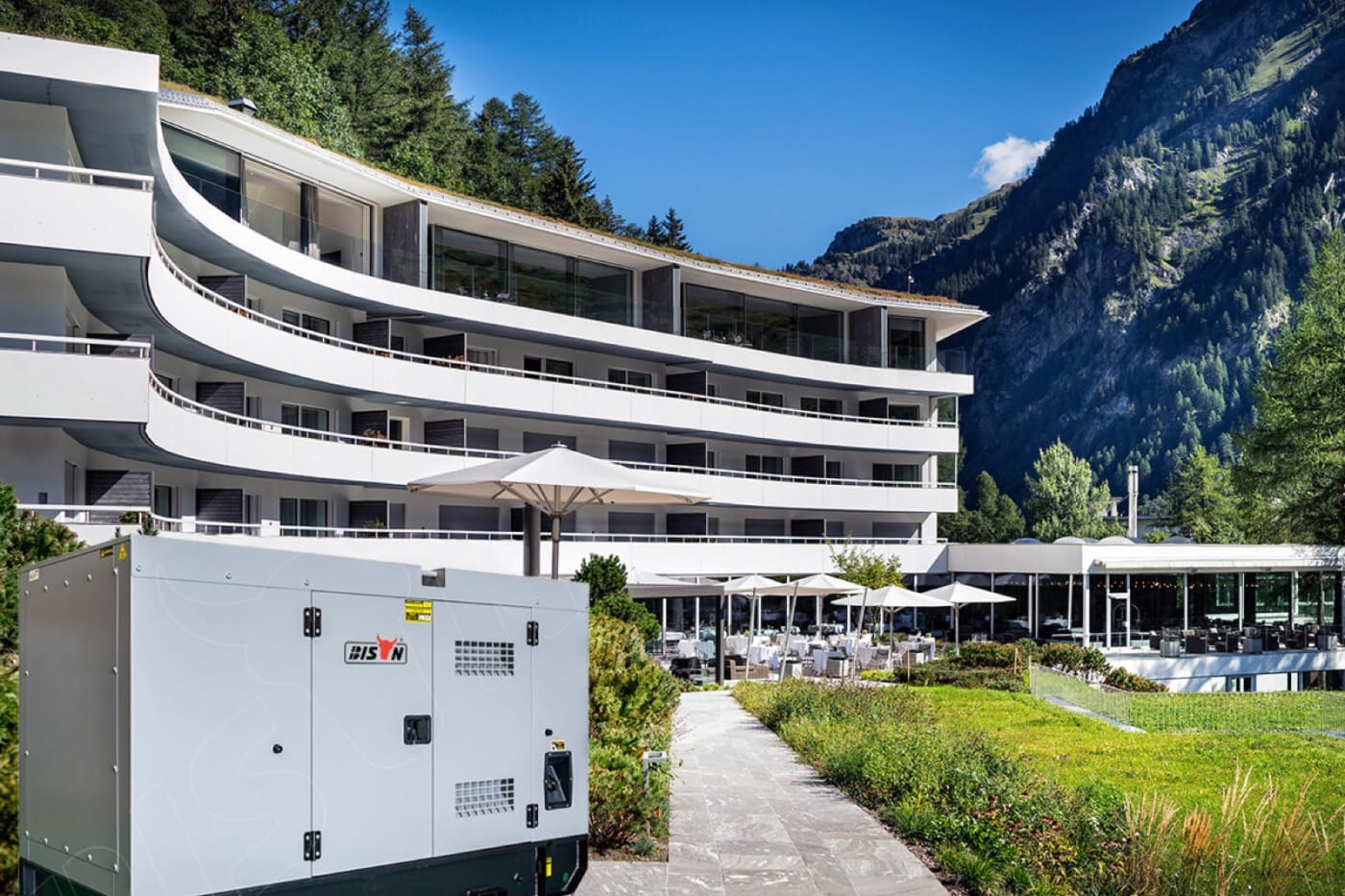
Once the command is given, the generators provide the bulk of the power. These generators, typically diesel-powered, are housed in the basement or on the roof, in soundproofed and ventilated plant rooms. Rated in hundreds of kilovolt-amperes (kVA), they are capable of powering the entire hotel, not just the bare minimum. Their autonomy depends on fuel reserves: a dedicated tank allows them to run for several hours to several days, and priority supply contracts guarantee replenishment during a prolonged crisis. It is this link that explains why a well-equipped establishment can weather a neighbourhood blackout, like the one seen around Place Vendôme, without its guests noticing a thing.

UPS systems, continuity without the slightest flicker
There remains a timing issue. Between the moment of the power cut and the instant the generator reaches full capacity, a handful of seconds elapse. This is brief for a human, but an eternity for an IT server, a security system, a payment terminal, or a moving lift. This is where uninterruptible power supplies (UPS) come in: positioned inline in front of sensitive equipment, they instantly deliver energy stored in their batteries, ensuring a transition without the slightest flicker. ‘Online double-conversion’ models continuously regenerate clean, stable power, filtering out micro-cuts and voltage fluctuations that, while invisible, damage electronics over the long term. Their autonomy is measured in minutes, just enough to cover the transition before the generator takes over and recharges the batteries.
N+1, 2N redundancy: planning for the backup’s failure
A backup system is only as good as its ability to run when needed. The finest establishments therefore apply the principle of redundancy. In an N+1 configuration, one more generator than strictly necessary is installed: if one fails, the system still holds. In a 2N configuration, the entire infrastructure is fully duplicated, featuring two complete and independent chains, ensuring that no single point of failure can bring everything to a halt. This is the standard targeted by the most demanding properties, precisely like critical data centres. This philosophy has an informal name: planning for the failure of the backup.

Testing, replenishing, maintaining: the invisible work
All this engineering is worthless if it does not start when needed. This is why generators are tested regularly, often monthly, under real load conditions, to ensure they take over without fail. UPS batteries are monitored and replaced before they degrade, fuel is checked (diesel degrades over time) and renewed, and comprehensive maintenance contracts oversee the entire setup. This discipline, invisible to the guest, makes all the difference between a theoretical backup system and truly guaranteed continuity.
What the guest experiences: absolutely nothing
The paradox of this mechanism is that its success is measured by its invisibility. When everything works, the guest perceives no outage, no flicker, and no hum: they continue to dine, sleep, or work as if nothing had happened, while the street outside is plunged into darkness. The ultimate proof of a luxury hotel’s electrical excellence is precisely the one that nobody notices: a blackout that, for them, never took place.
Our perspective
As heatwaves multiply and strain already overburdened urban grids, this energy resilience ceases to be a technical detail and becomes a true benchmark of luxury. Incidents like the one in the Vendôme district remind us that even the most prestigious addresses are not immune to public grid failures: the difference lies in their capacity to absorb them. Establishments investing in these invisible backstages do not merely protect their guests’ comfort; they safeguard the very promise of their reputation. In a luxury hotel, keeping the lights on is not a miracle, it is a profession.