



- Spanish hotels, a key sector in an economy where tourism accounts for approximately 13% of GDP, are struggling to fill their positions.
- The sector is estimated to have over 100,000 vacant positions, and up to 200,000 for the summer season (figures from Hostelería de España and UGT).
- Approximately a quarter of tourism employees are foreign-born, representing nearly 800,000 people (UGT estimate).
- An extraordinary regularisation project, which would concern hundreds of thousands of people, is reigniting the legal debate.
- The Supreme Court ruling STS 414/2024 has tightened access to residency through work (« arraigo laboral »).
A driving force behind tourist appeal, Spanish luxury hotels find themselves at a crossroads. While the country confirms its status as a premium destination, the most prestigious establishments are struggling to recruit the staff needed to guarantee the expected quality of service. This challenge is now amplified by a major legal and social debate, focused on the regularisation of foreign nationals present in the territory.
A staff shortage primarily affecting the high-end sector
The figures put forward by sector organisations illustrate the scale of the problem. The Hostelería de España association mentions over 100,000 unfilled positions, and nearly 200,000 for the summer season alone, a significant portion of which is likely to remain vacant. Luxury hotels are, by nature, the most exposed: high staff-to-guest ratios, skilled professions such as concierge, sommelier, housekeeper, or kitchen brigade, and a reputation built on personalised and consistent service. Understaffing is immediately noticeable to a clientele paying top prices.

Regularisation: a legal debate at the heart of the sector
The context is marked by a project for extraordinary regularisation prepared by the Spanish government, which would concern hundreds of thousands of people in irregular situations via the various « arraigo » routes. This initiative reignites a debate settled by the Supreme Court: ruling STS 414/2024 indeed judged that time spent in Spain as an asylum seeker does not count towards acquiring residency through work. The announced regularisation partly aims to circumvent this obstacle by facilitating access to a provisional work permit for profiles desperately needed by the sector.

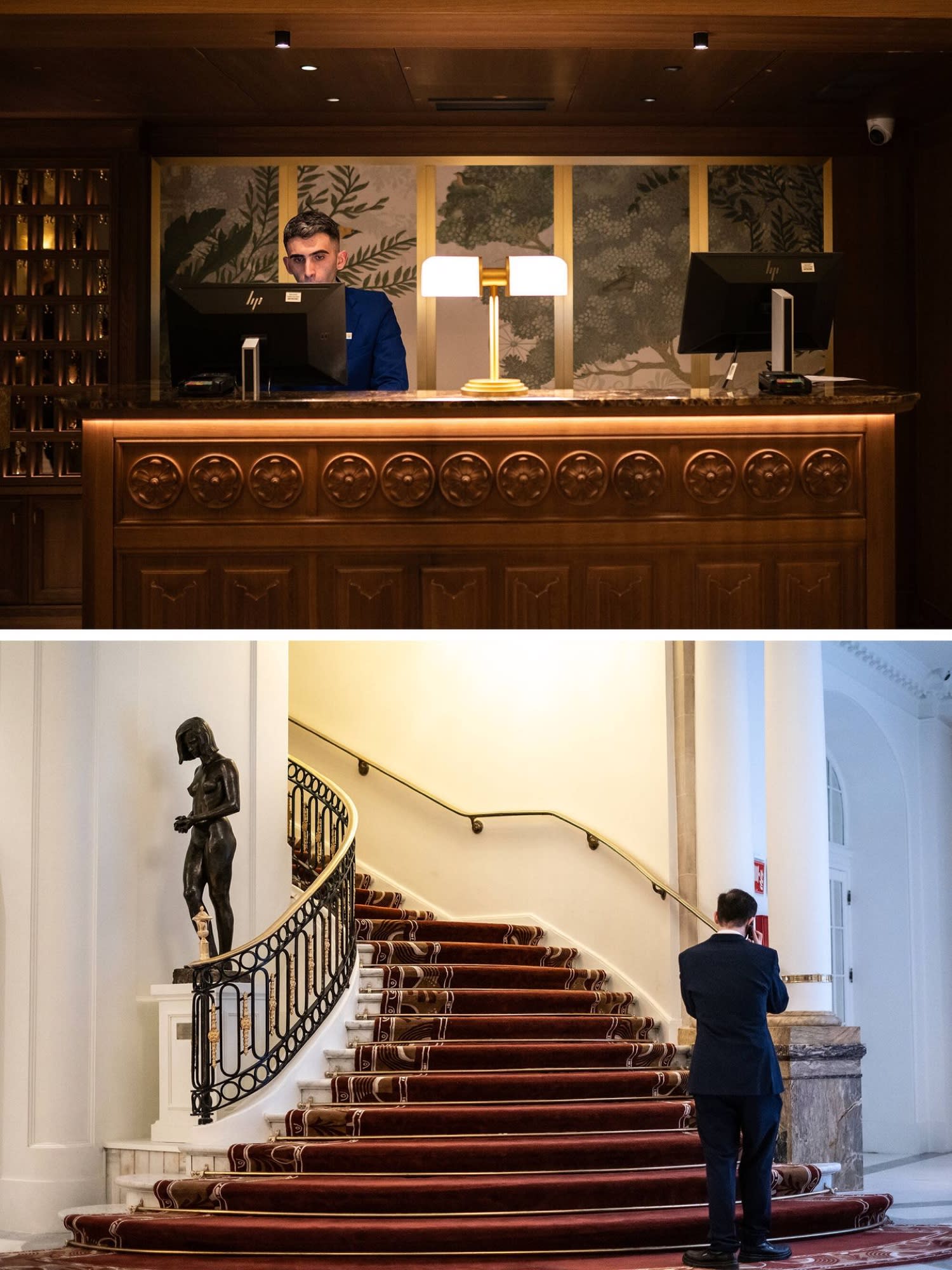
Exceptional service reliant on foreign labour
The link between migration and service quality has become explicit. For the UGT union, foreign labour is now central to maintaining the level of excellence in Spanish tourism, provided that decent employment, quality training, and appropriate working conditions are guaranteed. In the restaurant and hotel sectors, foreign-born workers represent nearly three out of ten employees. In other words, the Spanish five-star experience relies, more than ever, on a workforce from elsewhere, and partly awaiting regularisation.